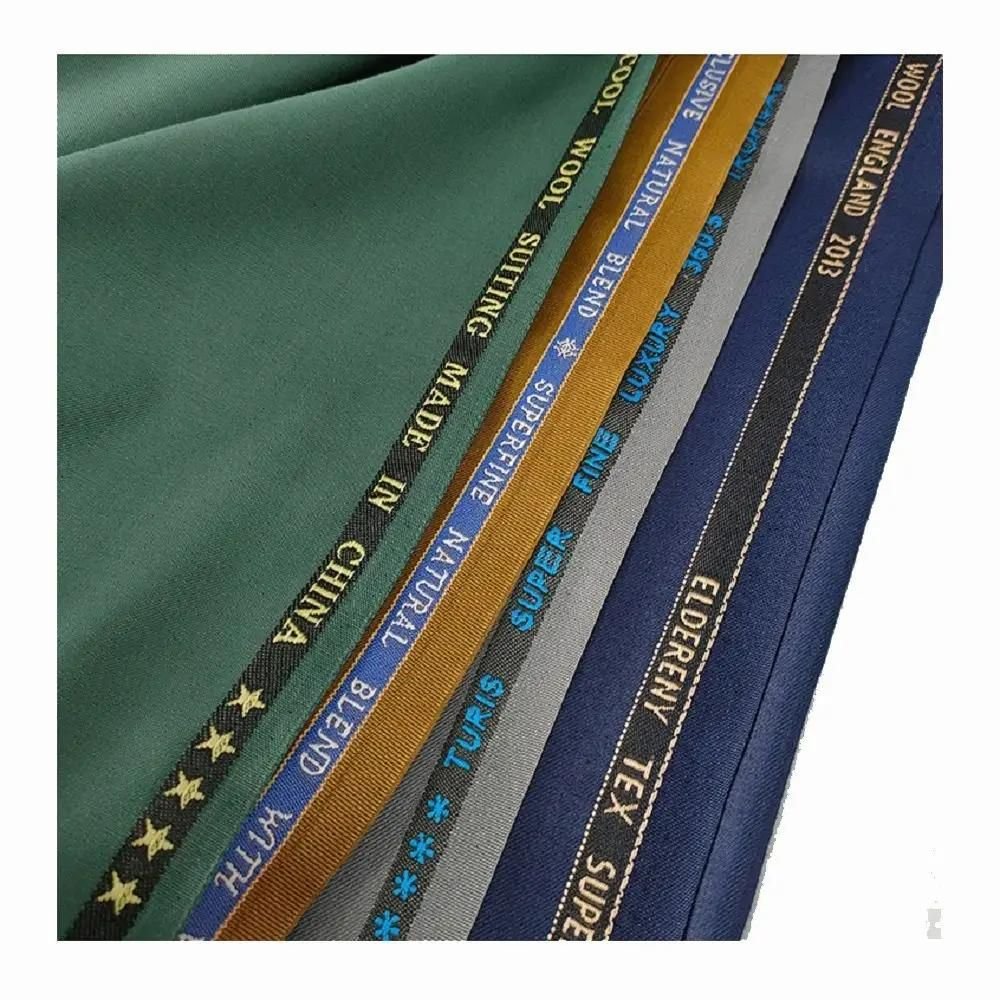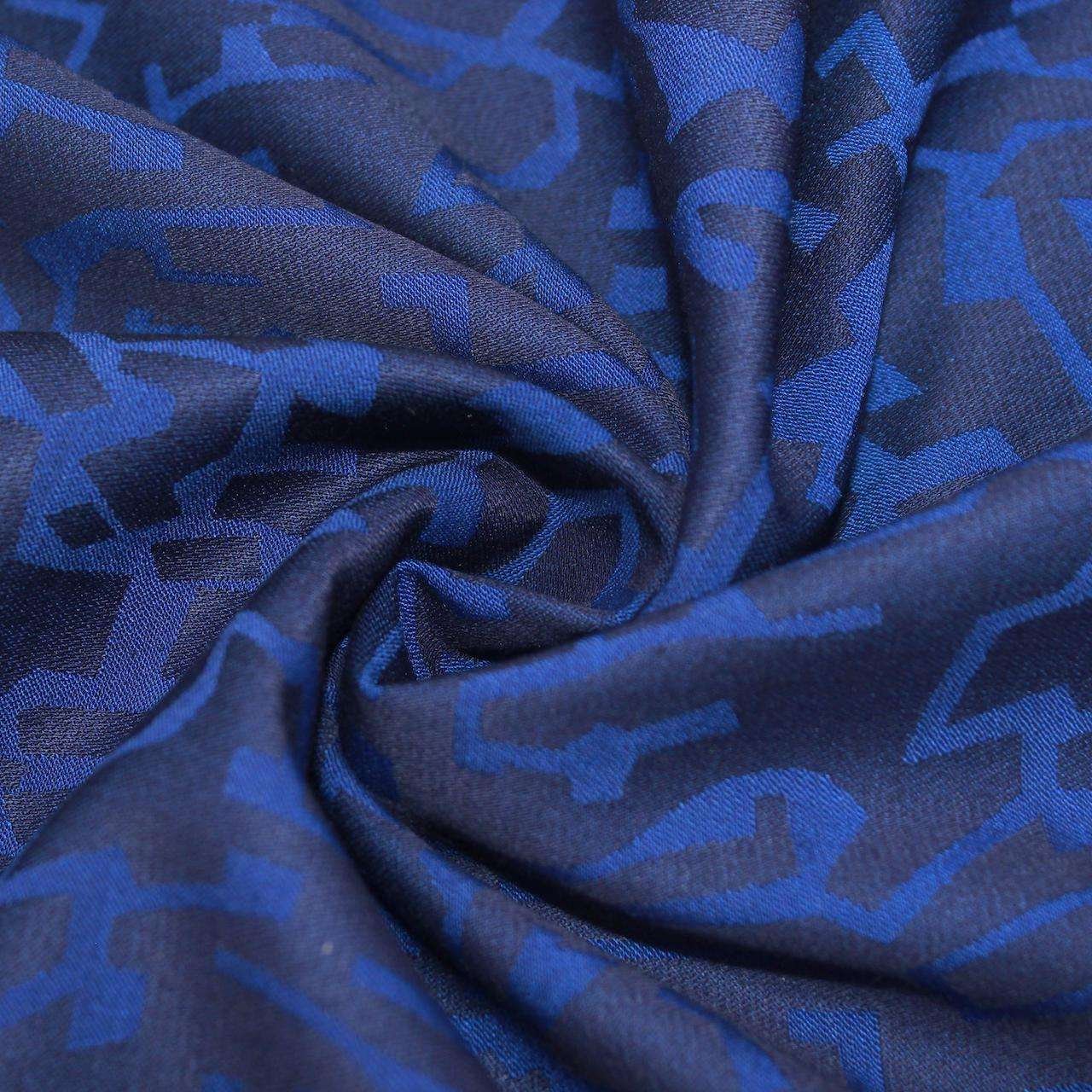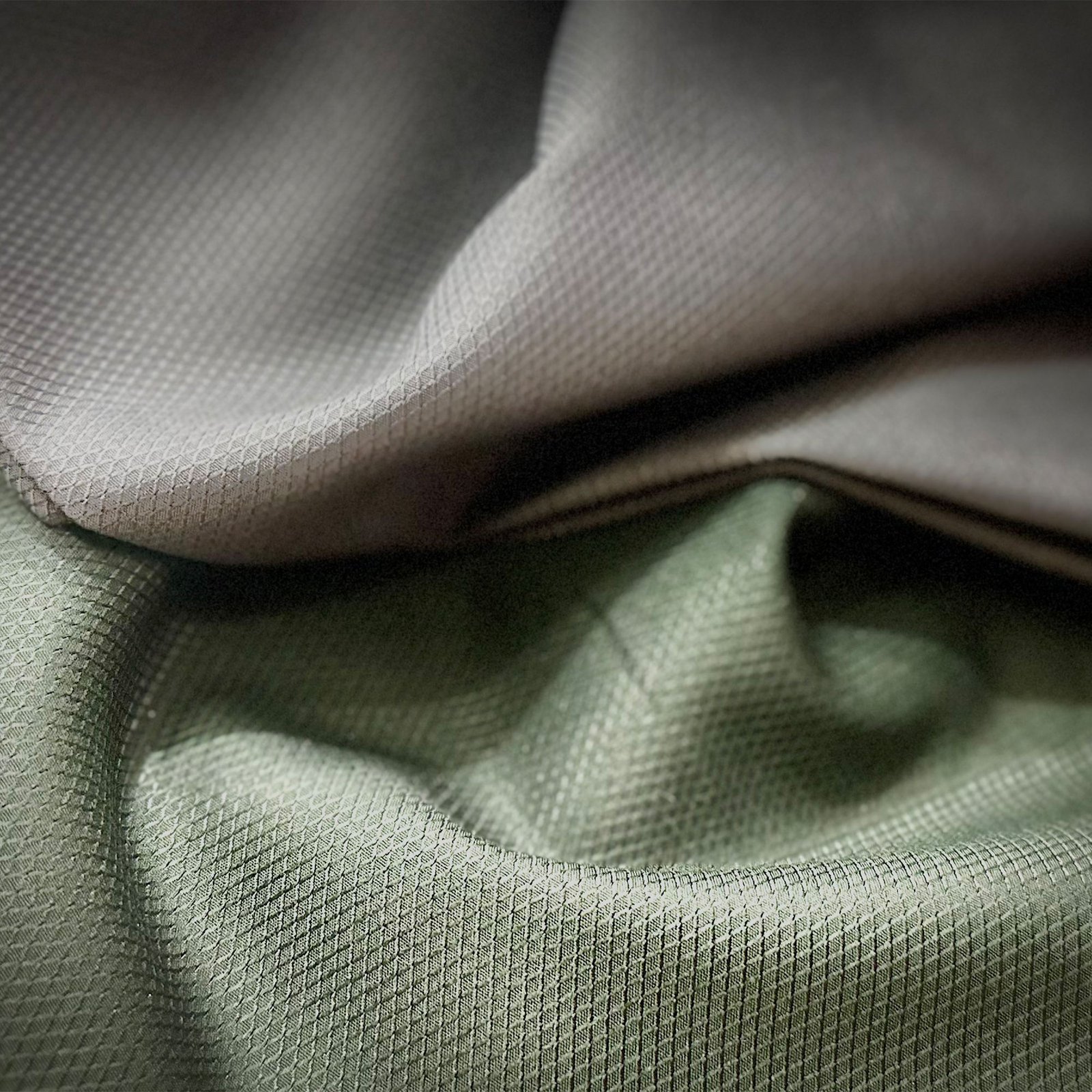
Thobe fabric types fall into seven commercial groups — standard spun polyester, soft-finish polyester sold under style codes such as BS, micro polyester, TC poly-cotton, TR poly-viscose, dobby and jacquard — and for a Saudi or Emirati garment programme the two that matter most are standard spun polyester at 125–145 GSM for daily wear and TR or dobby at 145–170 GSM for retail and ceremonial lines, priced from $0.65 to $3.60 per meter FOB in 2026. Everything else on a quotation sheet is a variation on those seven, and the reason Gulf buyers keep asking the same questions is that the industry runs on trade names and style codes rather than published standards.
This guide answers the twelve questions that come up most often from wholesalers, garment factories and private-label buyers in the GCC, with the numbers attached. It is written from ten years of exporting woven thobe and dishdasha fabric from our own mill in Shaoxing into Saudi Arabia, the UAE, Kuwait and Qatar.
The Short Answer: How Many Types of Thobe Fabric Are There?
There are seven commercial types, and they differ by fibre blend, finish and weave rather than by any formal classification. Two mills can both quote “polyester thobe fabric” and deliver cloth at opposite ends of the market, so the useful question is never “what type” but “what specification”.
The seven types, in the order a buyer usually moves through them:
- Standard spun polyester — 100% polyester, plain or twill weave, 120–160 GSM. The volume workhorse for daily-wear thobes and uniform tenders.
- Soft-finish polyester (BS and similar codes) — the same fibre base with a brushed or soft finish that kills surface sheen. One step up in hand feel.
- Micro polyester — finer yarn, tighter construction, lighter weight. Chosen for summer programmes and premium daily wear.
- TC (poly-cotton, typically 65/35) — adds cotton for skin comfort at a cost premium over polyester.
- TR (poly-viscose, typically 65/35) — the drape and matte finish that reads as tailoring. The premium tier for ceremonial thobes.
- Dobby — self-patterned weave that creates a small geometric texture without printing. Specification fabric for a defined line.
- Jacquard — larger woven patterns, ordered for wedding and Eid programmes.
There is a seventh question hiding inside this list: does the type need to be one cloth for the whole programme? Usually not. Most of our GCC customers split a season across three types — an entry cloth for volume, a mid cloth for retail shelves and one premium cloth for the flagship line.
What GSM Do You Need for Each Type?
GSM is set by season and by price position, not by fibre, and the useful Gulf range runs from 110 GSM for summer to 170 GSM for winter ceremonial. A thobe is worn loose and unlined, so weight translates directly into how hot the garment feels.
| Type | Typical GSM | Season fit | Main risk |
|---|---|---|---|
| Standard spun polyester | 120–160 | Year-round daily wear | Lower grades crease badly above 150 GSM |
| Soft-finish / BS polyester | 120–160 | Winter, ceremonial, private label | Finish washes out if not heat-set properly |
| Micro polyester | 110–135 | Summer, hot-climate retail | Low weight can turn semi-sheer in white |
| TC 65/35 | 120–150 | Year-round comfort tier | Shrinkage higher than 100% polyester |
| TR 65/35 | 130–180 | Retail, ceremonial, weddings | Needs careful ironing at low temperature |
| Dobby | 130–170 | Textured retail lines | Pattern sharpness varies between lots |
| Jacquard | 150–220 | Wedding and Eid lines | Heavier cloth, higher minimum order |
Two practical rules follow from this table. First, anything below 120 GSM must be checked for opacity in white before you commit — a summer cloth that goes see-through in sunlight will cost you more in returns than the weight ever saved. Second, keep the GSM spread across a single programme narrow, ideally within 20 GSM, so that the three tiers you buy still look like the same brand on the shelf.
What Do “Toyobo” and “Qazza” Actually Mean?
Both are trading shorthand for a hand feel and a finish, not for a fibre or a certificate. A Gulf buyer asking for Toyobo is asking for soft, fine, low-sheen polyester; a buyer asking for Qazza is asking for crisp, slightly stiffened polyester that holds its shape.
That distinction drives real specification decisions:
- Toyobo-type cloth is chosen when the finished thobe will be photographed, hung in a boutique, or worn at a ceremony. It reads as an expensive garment under studio light.
- Qazza-type cloth is chosen when the programme is uniform, tender or high-volume daily wear, where shape retention and crease resistance beat hand feel on the priority list.
Because neither term is standardised, the same three letters or six letters can describe cloth that differs by 30 GSM and by $0.80 per meter. The defence is a written specification sheet naming composition, yarn count, weave, GSM with tolerance, whiteness target and finish. We send one with every quotation, and the buyers who return season after season are the ones who keep it on file.
What Price Should You Expect in 2026?
FOB China price bands in 2026 run from about $0.65 per meter for entry spun polyester to $3.60 per meter for jacquard, with the mainstream daily-wear tiers sitting between $0.90 and $1.60. The Arab thobe and abaya fabric market was valued at around $1.21 billion in 2026 and is forecast to reach roughly $1.72 billion by 2035, a compound growth rate of about 3.6% — steady demand rather than a spike, which means buyers are competing on specification quality, not on scarcity.
| Fabric | FOB price per meter | Typical MOQ |
|---|---|---|
| Standard spun polyester | $0.65–$0.95 | 500–1,000 m per colour |
| Soft-finish (BS-type) polyester | $0.90–$1.45 | 500–1,000 m per colour |
| Micro polyester | $1.00–$1.60 | 1,000 m per colour |
| TC 65/35 | $1.30–$1.90 | 1,000–2,000 m per colour |
| TR 65/35 | $1.45–$2.20 | 2,000 m per colour |
| Dobby | $1.60–$2.40 | 2,000–3,000 m per colour |
| Jacquard | $2.20–$3.60 | 3,000 m per colour |
Four factors move a price inside its band: order volume (dyeing setup is charged per lot, so more meters per colour lowers unit cost), whiteness target (a bright optical-white requirement adds finishing cost), yarn count (finer count means slower weaving), and payment terms (T/T against documents prices differently from an irrevocable L/C at sight).
What MOQ and Lead Time Are Realistic?
Stock qualities ship in 7 to 10 days at 500–1,000 meters per colour; custom constructions take 25 to 35 days after lab dip approval at 2,000–3,000 meters per colour. Buyers who plan around Ramadan and Eid need to add the sampling stage in front of that: each lab dip round costs 3 to 5 days, and most programmes use two rounds before approval.
A realistic timeline for a 2027 Ramadan programme looks like this:
- Specification and quotation — 2 to 3 working days.
- Lab dips and swatches — 3 to 5 days per round, usually two rounds.
- Bulk weaving, dyeing and finishing — 25 to 35 days.
- Inspection and packing — 3 to 4 days.
- Sea freight to Jeddah or Dammam — 18 to 25 days, or 5 to 8 days by air for urgent reorders.
Working backwards, bulk production needs to be released by early December for a programme that has to be on shelves before Ramadan. We have written separately about the full Ramadan and Eid fabric planning calendar for buyers who want the dates mapped out.
How Do You Verify a Thobe Fabric Lot Before Bulk?
Five checks catch most of the problems that reach a Gulf cutting floor. Run them on the production lot, not on the development sample.
- Whiteness index. Measure with a spectrophotometer against your approved standard. Visual assessment under Gulf daylight will not catch a half-grade drift between lots.
- Blind hand-feel panel. Have two or three people who did not see the sample bag rank the lot against the approved swatch. Soft-finish fabrics fail here more often than any other type.
- Shrinkage. Wash and dry per your customer care label, then re-measure. Anything above 3% will show in the finished thobe after the first wash.
- Colour fastness. Grade 4 or better on both rubbing and washing for white and light shades; grade 4 is the minimum most Saudi retailers will accept.
- Measured GSM. Weigh a known area of the production lot. Accept plus or minus 5 percent against the specification sheet.
For buyers importing into Saudi Arabia, add certification to the list: SASO compliance for textile imports, plus OEKO-TEX Standard 100 if the finished garments reach European or premium regional retail. Our own programmes run on OEKO-TEX certified finishing, and we supply the test report with the shipment rather than on request.
Ordering Thobe Fabric: The Four-Step Flow
- Send the specification. Composition, GSM with tolerance, yarn count, weave, whiteness target, colourways and quantity per colour.
- Approve the swatch. We courier a matched swatch set with a lab dip report; you approve in writing.
- Confirm the order. Price, MOQ, payment terms and shipment date are fixed on the proforma invoice.
- Produce and ship. Bulk runs, inline inspection, roll packing and shipment, with the inspection report attached.
FAQ: Thobe Fabric Types
- Which type sells best in Saudi Arabia? Standard spun and soft-finish polyester at 125–145 GSM, with TR reserved for retail and ceremonial lines.
- What GSM for summer? 110–125 GSM, checked for opacity in white before approval.
- Toyobo or Qazza? Soft and photographic versus crisp and shape-holding — pick by end use, then write the spec.
- Price per meter? $0.65–$1.60 for the mainstream tiers; $2.20–$3.60 for jacquard.
- MOQ? 500–1,000 m per colour for stock, 2,000–3,000 m for custom and yarn-dyed.
Planning a 2027 thobe programme and need a specification you can quote against? Send your target GSM, composition, colourways and quantity through our contact page or WhatsApp, and we will return a firm price per meter, MOQ, lead time and a matched swatch set within 3 to 5 working days. For the full comparison of how these seven types perform against each other, see what fabric is thobe made of; for GSM bands in detail, read the thobe fabric GSM weight guide.
Frequently Asked Questions
What are the main thobe fabric types?
The Gulf market buys seven types in volume: standard spun polyester, soft-finish polyester sold under style codes such as BS, micro polyester, TC poly-cotton at roughly 65/35, TR poly-viscose at 65/35, dobby self-patterned fabric, and jacquard. Standard spun polyester and soft-finish polyester together cover the great majority of daily-wear programmes, while TC, micro and TR serve the retail and ceremonial tiers. Dobby and jacquard are specification fabrics: buyers order them for a defined line rather than for a full range. Every one of these can be quoted as thobe fabric, which is why the written specification matters more than the label on the sample bag.
What GSM is best for a Saudi thobe?
For year-round wear in Saudi Arabia, most garment factories we export to settle between 125 and 145 GSM. Summer programmes for Riyadh, Jeddah and the Eastern Province run lighter at 110 to 125 GSM, because a thobe is worn loose and any weight above that traps heat once temperatures pass 40 degrees. Winter and ceremonial lines move to 145 to 170 GSM for body and a crisper fall. Above 170 GSM the cloth stops behaving like a thobe fabric and starts behaving like a suit fabric. Ask your supplier to confirm GSM on the production lot, not only on the development sample, and accept a tolerance of plus or minus 5 percent.
What is the difference between Toyobo and Qazza fabric?
Both are trade names Gulf buyers use for polyester qualities rather than fibre names. Toyobo describes a soft, fine polyester with a smooth hand feel and low surface sheen, which photographs well and drapes closer to a suit cloth. Qazza describes a crisp, slightly stiffened polyester that holds shape and resists creasing in the finished garment, which suits uniform and volume daily-wear programmes. Neither term is a published standard, so two mills can quote Toyobo and deliver clearly different cloth. Treat both as a starting point for a specification conversation and lock composition, yarn count, GSM and finish in writing before you approve a bulk order.
How much does thobe fabric cost per meter in 2026?
FOB China bands for 2026 sit at roughly 0.65 to 0.95 US dollars per meter for standard spun polyester, 0.90 to 1.45 for soft-finish polyester, 1.00 to 1.60 for micro polyester, 1.30 to 1.90 for TC, 1.45 to 2.20 for TR, 1.60 to 2.40 for dobby and 2.20 to 3.60 for jacquard. Price within a band moves with GSM, yarn count, whiteness requirement, dyeing method and order volume. A 3,000 meter order in one colour will always beat a 1,000 meter order spread across four colours, because dyeing and finishing setup is charged per lot. Ask for an itemised quote that separates yarn, weaving, dyeing and finishing.
What MOQ should you expect from a Chinese thobe fabric factory?
For stock qualities held in white and the common colourways, MOQ is usually 500 to 1,000 meters per colour, and many mills will go lower for a trial order you intend to repeat. For a custom construction, a new yarn count or a shade developed specifically for you, MOQ rises to 2,000 to 3,000 meters per colour. Yarn-dyed stripes and checks need 3,000 meters per colourway because the yarn itself has to be dyed in batches. Lead time follows the same split: 7 to 10 days for stock, 25 to 35 days for production after lab dip approval, plus 3 to 5 days per lab dip round.