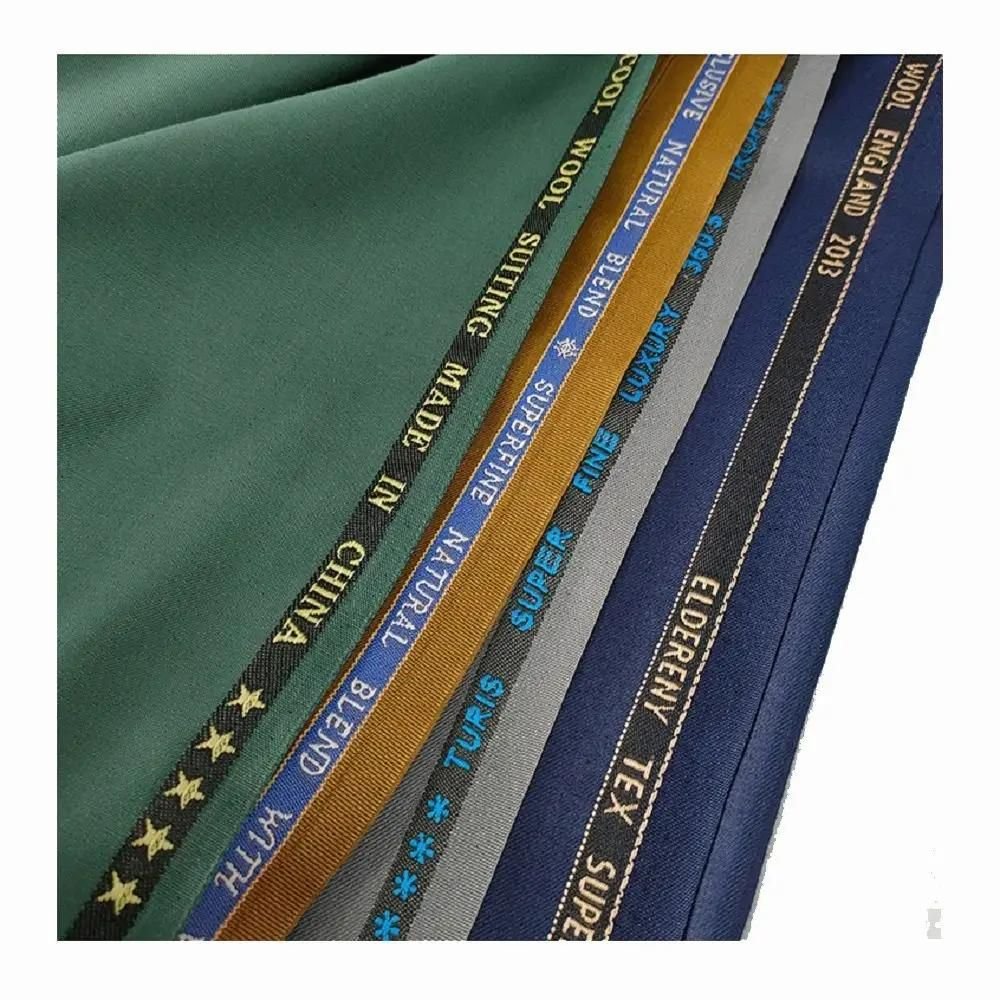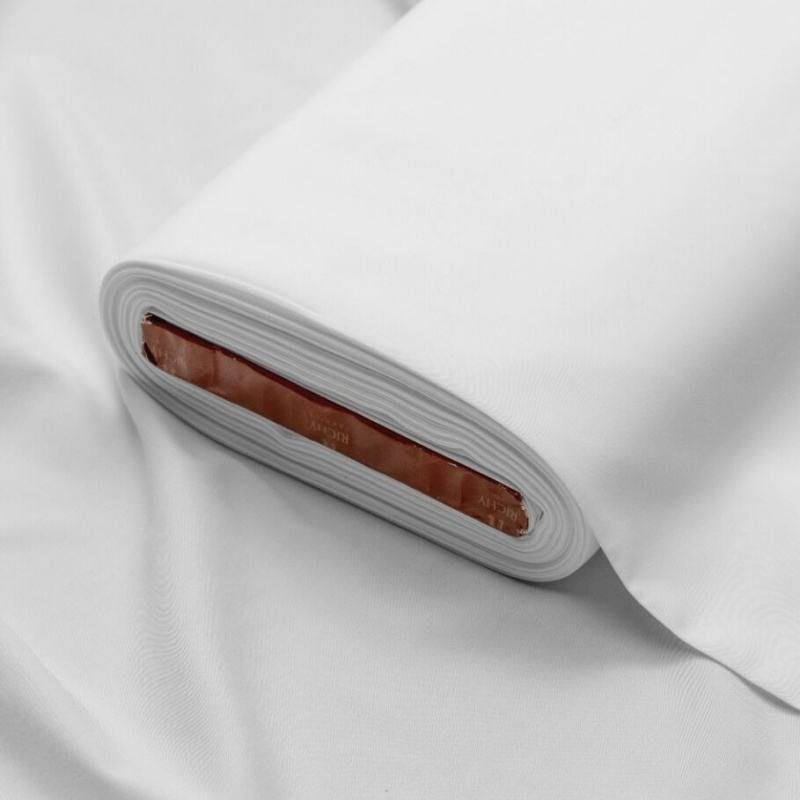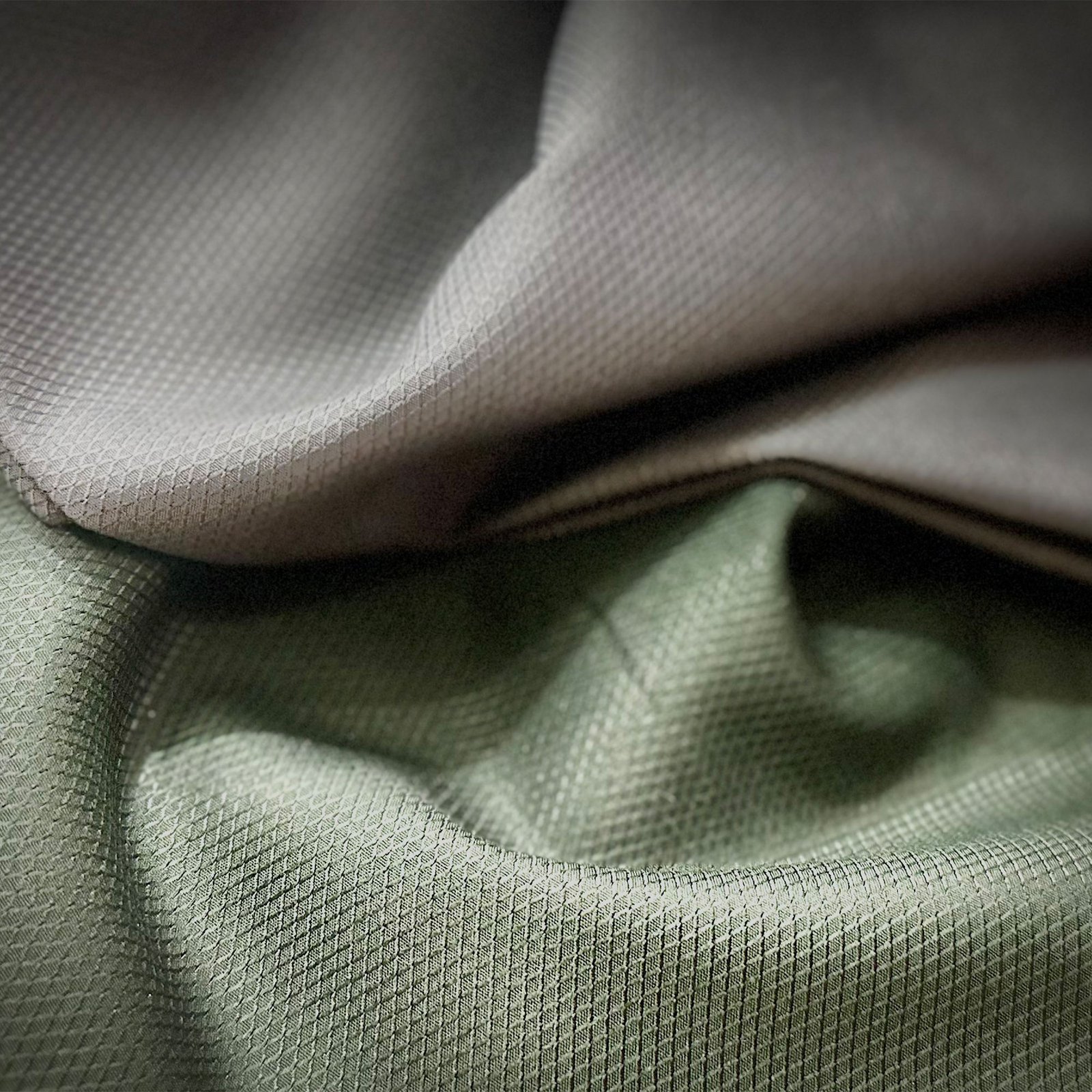
BS fabric for thobe is a soft-finished polyester identified by a factory style code — not a separate fibre — typically 100% polyester at 120–160 GSM with a lightly brushed, low-sheen surface, quoted from $0.90 to $1.45 per meter FOB, and it sits deliberately between standard spun polyester and premium TR in both price and hand feel. For a Gulf buyer the practical consequence is that “BS” is a specification you have to pin down in writing, because two mills can use the same three letters for cloth that feels and performs differently. This guide sets out what the code describes, how the fabric is built, how it compares with the other thobe fabrics you are already buying, and the five checks that decide whether a lot is worth a 3,000-meter order.
The Short Answer: What BS Fabric for Thobe Actually Describes
BS is a finish and hand-feel shorthand used in the Chinese thobe fabric trade, and it tells you about the surface of the cloth rather than its chemistry. A buyer in Riyadh or Jeddah asking for BS fabric is asking for a soft, matte, non-reflective polyester that drapes like a heavier cloth than its GSM suggests.
The abbreviation is worth pinning down, because general searches for “BS fabric” mostly return unrelated products: black silica functional innerwear from Japan, Bangladesh Standard jute grading and blackout curtain ranges all use the same two letters. In the Gulf thobe trade, BS means one specific thing — a soft-finished polyester thobe fabric sold under a mill style code, which is the definition this guide works from.
Three things follow from that definition:
- It is a polyester product. The base is 100% polyester, occasionally polyester-dominant in a blend, spun from short-staple fibre rather than filament.
- The finish is the differentiator. A soft or lightly brushed finish breaks the surface sheen that makes standard polyester read as “shiny” under sunlight — the single complaint Gulf wearers raise most often.
- It is a style code, so it is not standardised. There is no published BS specification, which is why the written spec sheet and the physical swatch carry more weight here than they do for a named fibre like cotton.
If you already buy thobe fabric at volume, treat BS as a starting point for a specification conversation, not as a specification in itself.
Where the Name Comes From — and Why Gulf Buyers Still Ask For It
The code emerged from the trading shorthand factories and buying offices use to distinguish dozens of polyester qualities that share the same fibre content, and it survived because it maps to a real commercial position in the Gulf market.
The logic is straightforward. A thobe programme usually needs three price tiers:
- An entry tier for volume daily-wear thobes and uniform tenders — standard spun polyester, where price per meter is the deciding factor.
- A mid tier for retail and private-label lines where the customer will touch the cloth in the shop — soft hand feel and a matte surface matter, but the retail price will not carry TR.
- A premium tier for ceremonial, wedding and Eid thobes — TR with its rayon drape and higher cost.
BS fabric exists to fill the middle tier. It gives the buyer a visible upgrade over entry polyester for a fraction of the move to TR, and that is why it keeps appearing on enquiry forms from Saudi and Emirati garment factories ten years into our own export programme.
There is a second, less obvious reason it persists: the matte surface is a merchandising asset. A thobe photographed under studio light in a shiny polyester reads as cheap; the same garment in BS fabric photographs with the soft fall that retail catalogues and social media listings need.
What BS Fabric Is Made Of: Construction, Yarn Count and GSM
A commercial BS thobe fabric is normally a plain or micro-twill weave in 100% spun polyester, 120–160 GSM, with a yarn count between 32s and 60s and a density in the 90×78 to 120×80 range.
The specification table below is the one we use when a buyer asks us to match an existing BS quality. Use it as the template for your own enquiry.
| Parameter | Typical BS range | What it controls |
|---|---|---|
| Composition | 100% spun polyester | Base cost, easy care, wrinkle recovery |
| Weave | Plain, micro-twill | Surface texture and light reflection |
| GSM | 120–160 | Body, drape and warmth |
| Yarn count | 32s, 48s, 60s | Hand feel and softness ceiling |
| Density (ends × picks) | 90×78, 110×80, 120×80 | Coverage, opacity and shrinkage |
| Width | 150 cm (58/59 in) | Cutting yield per garment |
| Finish | Soft finish, light brush | The matte surface BS is bought for |
| Whiteness | Buyer-specified index | Retail appearance under daylight |
Two specifications in that table deserve more attention than they usually get.
Yarn count sets the ceiling on hand feel. A 32s yarn gives a fuller, more substantial cloth at a lower cost; a 60s yarn spins finer and delivers a softer surface, but it also costs more and is less forgiving on shrinkage control. If your approved swatch is soft, ask which count it was built on — matching GSM alone will not reproduce it.
Density controls opacity and shrinkage together. Thobe fabric is judged partly on how much it conceals in strong light. A 90×78 construction at 130 GSM will read differently from a 120×80 at the same weight, and the tighter build usually shrinks less after the first wash.
BS vs Micro Polyester vs TR: Which Tier Fits Your Order
Choose BS when the brief is “softer than entry polyester but not TR money”; choose micro polyester when price per meter decides the tender; choose TR when the garment is ceremonial and the retail price can absorb a 40–60% higher fabric cost.
| Standard spun polyester | BS fabric | TR (poly–rayon) | |
|---|---|---|---|
| Composition | 100% polyester | 100% polyester, soft/brushed finish | 70/30–85/15 poly/rayon |
| GSM | 100–125 | 120–160 | 120–220 |
| Surface | Noticeably shiny | Matte, low sheen | Soft, subtle lustre |
| Drape | Light, crisp | Softer, more body | Best-in-class fall |
| Care | Easy, wrinkle resistant | Easy, wrinkle resistant | Easy, slightly more care |
| Price per meter FOB | $0.76–$1.05 | $0.90–$1.45 | $1.60–$2.20+ |
| Best use | Daily wear, uniform tenders | Retail lines, winter and Eid thobes | Ceremonial, premium retail |
A practical pattern we see from Gulf buyers is to run two tiers in one programme: standard polyester for the volume styles, BS for the styles that carry the brand, and a small TR capsule for the top of the range. That structure keeps the average fabric cost per garment low while still giving the retail floor something to point at.
How to Verify BS Fabric Quality Before You Commit
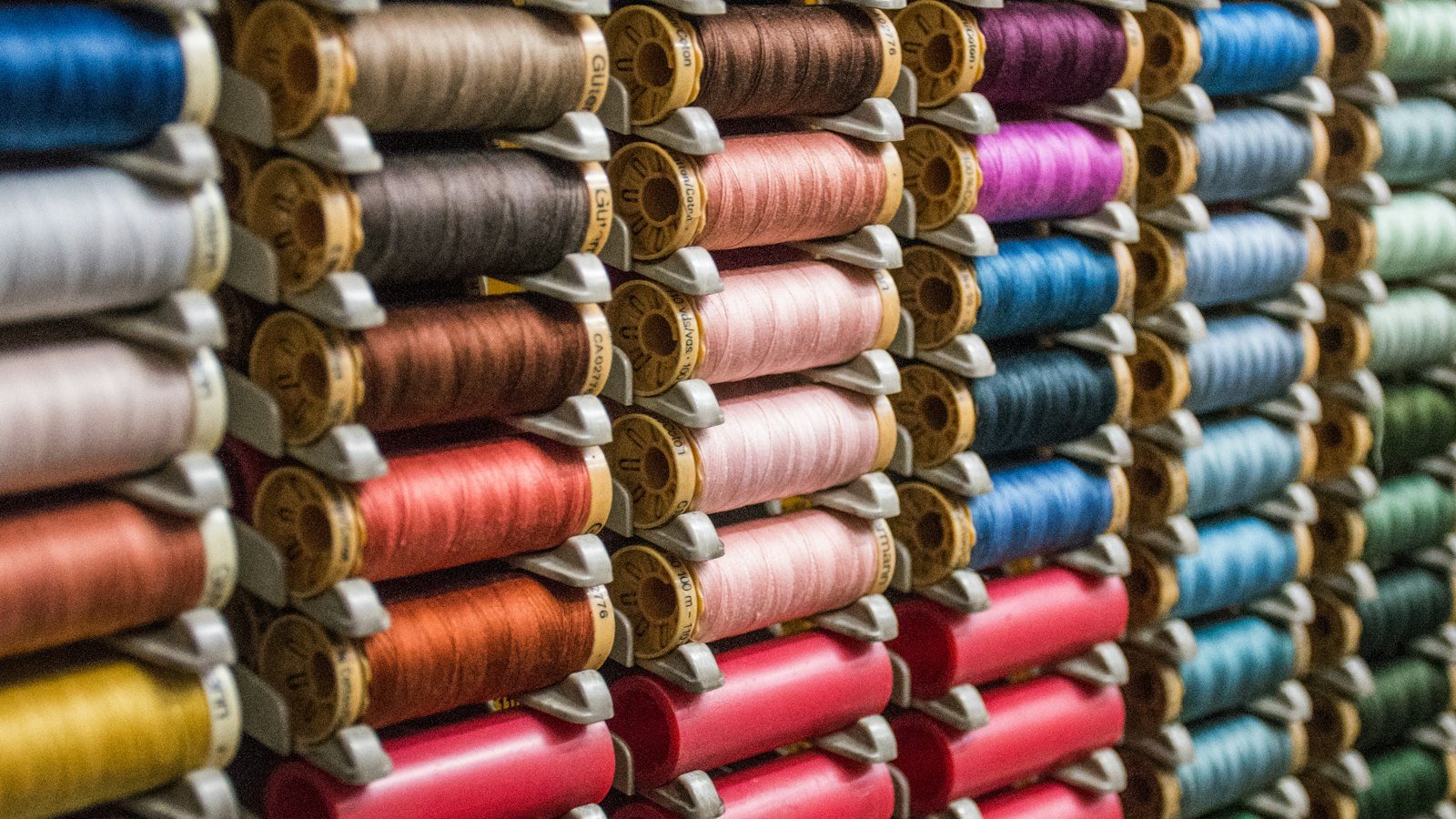
Five checks — whiteness index, hand feel against your own swatch, shrinkage, colour fastness and actual measured weight — catch almost every BS fabric problem before it reaches your cutting table.
Run them in this order:
- Whiteness index. BS fabric is bought substantially for its clean white point. Ask for the measured index on the production lot and compare it with the lot you approved. A drop of two points is visible in Gulf daylight and will show up as inconsistency across a retail line.
- Hand feel, assessed blind. Have three people handle the new swatch against your approved reference without being told which is which. If the panel splits, the finish has drifted.
- Shrinkage. Test warp and weft separately after a standard wash. Target is 3% or below in both directions; anything above 4% will distort a thobe after the first few wears.
- Colour fastness. Grade 4 minimum for washing and grade 4 for rubbing, higher if the fabric is going into a programme with printed or embroidered panels.
- Measured weight. Cut a 10 cm × 10 cm square and weigh it. GSM is the specification most often quietly missed by a wide tolerance, and it is the fastest way to confirm the cloth in your hand is the cloth on the sheet.
Ask for all five to be reported against the actual production lot, not a generic quality sheet. A mill that can only supply a specification sheet is telling you it does not test per lot.
Price, MOQ and Lead Time for BS Thobe Fabric
Expect $0.90–$1.45 per meter FOB, an MOQ of 500–1,000 meters per colour on stock qualities or 2,000–3,000 meters per colour on custom development, and 15–25 days production for stock against 30–40 days for custom.
What moves the price most:
- Whiteness specification. A high white point requires better optical brightener and tighter dyeing control, and it is the most common reason two quotes for “the same” BS fabric differ by 10–15 cents.
- Finish type. A simple soft finish is cheaper than a brushed or peach finish, and the brushed surface is what most buyers actually mean when they ask for BS.
- Order size and colour count. Spreading a 3,000-meter order across four colours costs more per meter than one colour, because each colour carries its own dyeing setup.
- Packaging. Roll or board, and whether you need lot-separated rolls for a multi-factory programme.
Add 18–25 days of sea freight to Jeddah, Dammam or Dubai when you build the delivery date into your production calendar, and remember that Ramadan and Eid demand compresses mill capacity in the two to three months before the season.
Ordering BS Thobe Fabric: The Four-Step Flow
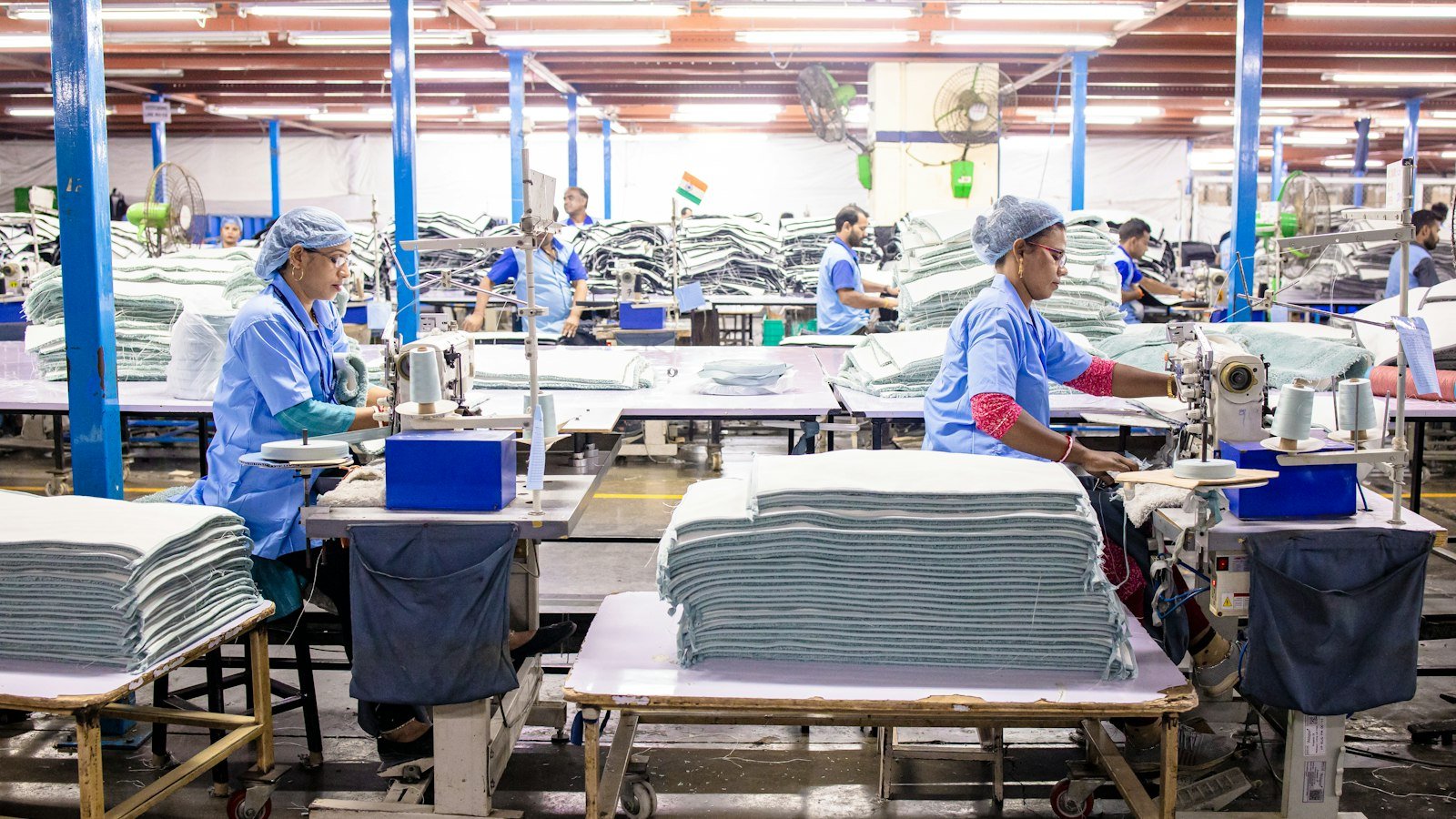
The order runs on four steps — specify, sample, approve, produce — and the first two are where a BS programme is won or lost, because the term is not standardised.
- Specify. Send the composition, GSM, yarn count, width, finish, whiteness target and target price per meter. If you have an approved reference swatch from a previous order, send it; matching a physical reference is faster and more reliable than matching a written description of “BS”.
- Sample. We issue a lab dip for the shade plus a swatch of the proposed construction, typically within 3–5 working days. Lab dips run in rounds, so budget two rounds if your white point is tight.
- Approve. Sign off the swatch against the five checks above, and confirm MOQ, price, packaging and delivery date in writing.
- Produce. Bulk runs in 15–25 days for stock qualities, with lot test reports issued before shipment covering GSM, shrinkage, colour fastness and whiteness.
Because the code is informal, the specification sheet you write in step one becomes the contract. Keep it and reuse it — a buyer who orders BS fabric three seasons running with the same written spec stops getting surprises.
FAQ: BS Fabric for Thobe
- What is BS fabric for thobe? A soft-finished polyester style code, not a separate fibre — normally 100% polyester, plain or micro-twill, 120–160 GSM, with a lightly brushed matte surface.
- Is BS fabric good for thobe? Yes, for the mid tier: softer and more matte than entry polyester, cheaper than TR. Best for winter, ceremonial and private-label lines.
- What GSM should it be? 120–160 GSM commercially; 130–145 for year-round Gulf retail, 140–160 for winter and ceremonial.
- What does it cost? $0.90–$1.45 per meter FOB, with MOQ of 500–1,000 m per colour for stock and 2,000–3,000 m for custom.
- How do I verify it? Whiteness index, blind hand-feel panel, shrinkage at or below 3%, colour fastness grade 4+, and measured GSM on the production lot.
Ordering BS thobe fabric for a 2027 programme? Send your target GSM, yarn count, whiteness requirement and quantity through our contact page or WhatsApp — we will come back with a firm price per meter, MOQ and a matched swatch set within 3–5 working days. For the wider picture of how BS sits alongside micro polyester, TC and TR, see our guide to what fabric is thobe made of, and for volume pricing structures read how to buy thobe fabric wholesale.
Frequently Asked Questions
What is BS fabric for thobe?
BS fabric for thobe is a soft-finished polyester fabric identified by a style code, not a separate fibre. The letters describe the finish and hand feel a factory is delivering, not a chemical composition: a lightly brushed, low-sheen polyester with a matte surface that drapes more softly than standard shiny polyester. The typical build is 100% polyester, plain or micro-twill weave, at 120-160 GSM, with a yarn count in the 32s to 60s range. Because the name is a trade shorthand rather than a published standard, two mills can quote BS fabric and deliver noticeably different cloth. Always confirm composition, GSM, yarn count and finish on a written specification sheet and approve a physical swatch before production.
Is BS fabric good for thobe?
Yes, for a specific position in the range. BS fabric sits between standard spun polyester and premium TR: it keeps the price and the easy-care behaviour of polyester while adding a softer hand feel and a matte, non-reflective surface that photographs well and reads as a more expensive cloth in the finished thobe. That makes it a strong choice for winter thobes, ceremonial and Eid lines, and private-label programmes where the buyer wants visible upgrade without moving to a $2.20-plus TR price. It is less suitable for the lightest summer thobes, where a 110-125 GSM micro polyester or a cotton-rich TC blend will feel cooler against the skin in 45 degree heat.
What GSM should BS thobe fabric be?
The mainstream commercial range is 120-160 GSM. Below 120 GSM the cloth starts to lose the body that gives a thobe its crisp fall, and the brushed surface can turn limp after washing. Above 160 GSM the fabric becomes warm and stiff and stops being practical for a garment worn in Gulf heat. For a winter or ceremonial line, 140-160 GSM is the sweet spot. For year-round retail programmes in Saudi Arabia and the UAE, most buyers settle on 130-145 GSM. Ask for the GSM to be stated on the production lot test report rather than the marketing sheet, and check the tolerance, because a mill running a wide tolerance can deliver 118 GSM against a 130 GSM order.
How much does BS thobe fabric cost per meter?
From a China factory direct, BS fabric typically lands at $0.90-$1.45 per meter FOB, depending on GSM, yarn count, whiteness requirement and finish. That places it above standard micro polyester, which we quote from $0.76 per meter, and below premium TR, which reaches $1.80 per meter and above. The variables that move the number most are the white point specification, whether the finish is a simple soft finish or a brushed peach finish, and order volume. MOQ is 500-1,000 meters per colour for stock qualities and 2,000-3,000 meters per colour for custom GSM, custom colour or a bespoke finish. Lead time runs 15-25 days for stock and 30-40 days for custom development.
How do I verify BS fabric quality before ordering?
Five checks settle it. First, whiteness: ask for the whiteness index on the production lot, because BS fabric is bought largely for its clean white point and a 2-point drop is visible under Gulf daylight. Second, hand feel against your own approved swatch, assessed by three people independently rather than one. Third, shrinkage, which should sit at or below 3% in warp and weft after a standard wash test. Fourth, colour fastness, with a minimum of grade 4 for washing and grade 4 for rubbing. Fifth, weight, by cutting a 10 cm by 10 cm sample and weighing it, because GSM is the single specification most often quietly missed. Ask for all five to be reported on the actual production lot, not on a generic specification sheet.