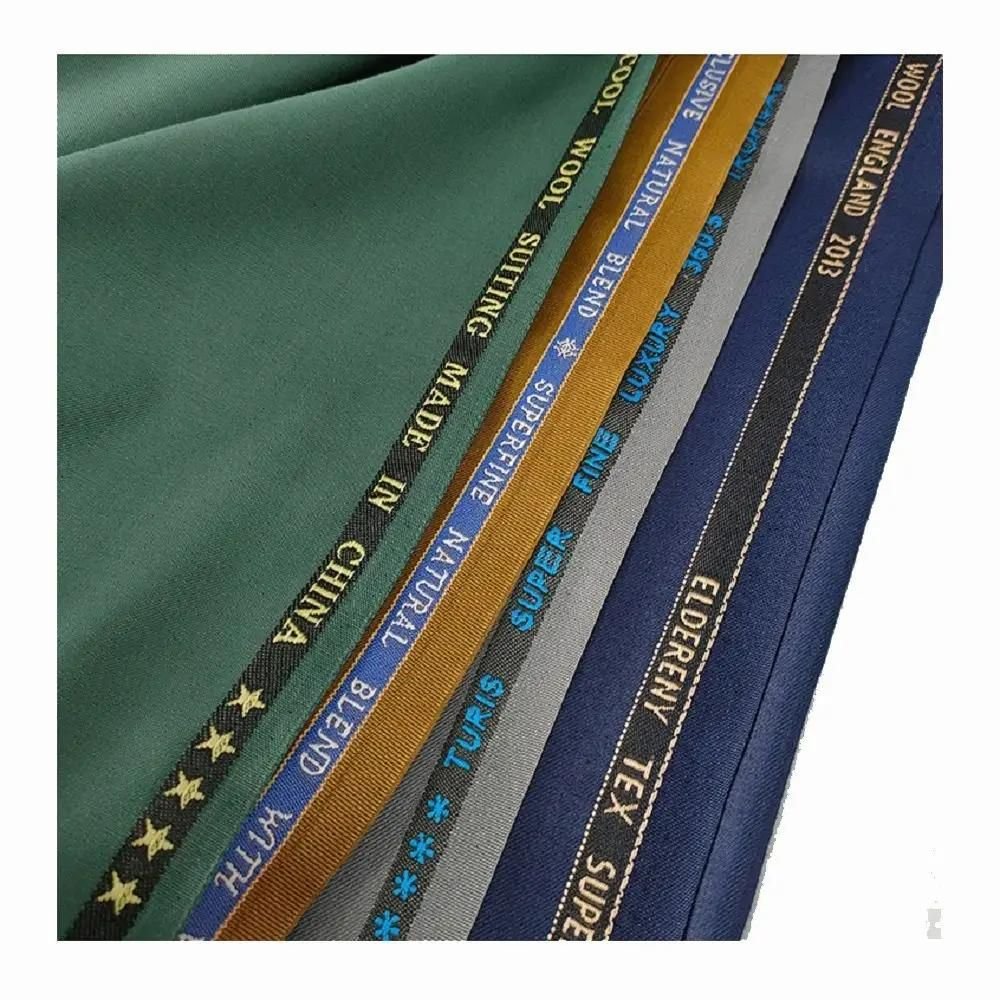
Thobe fabric suppliers in the UAE and Dubai sell availability, while Chinese thobe fabric mills sell price and specification control — a Dubai wholesaler typically resells the same Chinese or Indian cloth at a 15–30% margin, so a 3,000-meter order costs roughly $1,050–$2,100 more through a local counter than direct from a mill, but it arrives in days rather than weeks and can be bought in 300-meter lots. The correct answer for most Gulf garment factories and wholesale traders is therefore not one route or the other; it is a split: local counters for urgent top-ups and market tests, a Chinese mill for the repeating programme that carries the year.
This comparison sets out the three routes a GCC buyer realistically has in 2026, puts the cost, MOQ and lead time side by side, and gives the vetting checks that apply whichever route you choose. It comes from ten years of exporting woven thobe fabric from our own mill into Saudi Arabia, the UAE, Kuwait and Qatar, including programmes where we compete against local wholesalers quoting the same construction.
The Short Answer: Where Gulf Buyers Actually Buy Thobe Fabric
There are three routes — UAE wholesale counters, Saudi domestic supply, and direct from a Chinese mill — and they differ far more in MOQ, lead time and specification control than in the cloth itself. Price differences of 20 to 40 percent on identical construction are normal, and they come from the number of hands the fabric passes through rather than from fibre quality.
The three routes in practice:
- UAE wholesale and trading houses, concentrated in Deira and Naif in Dubai and in Ajman, selling cut lengths from stock.
- Saudi domestic supply, where local traders and small converters serve Riyadh and Jeddah with imported cloth.
- Direct from a Chinese weaving mill, usually in the Shaoxing and Keqiao cluster, where the fabric is actually woven, dyed and finished.
The useful way to think about it: route three is the source, routes one and two are distribution. Distribution costs money, and the only question is whether the service it delivers is worth the margin to your specific programme.
Route 1: UAE Wholesale Counters in Dubai and Ajman
A UAE wholesaler gives you same-week delivery, small cut lengths and a person you can meet, at a unit price that carries one to two layers of margin. For a factory that has run out of a colour mid-season, that is often the cheapest option in real terms, because a stopped cutting floor costs more per day than the fabric margin.
What the UAE route does well:
- Availability. Stock rolls in white and the common shades, released the same day.
- Small quantities. 100 to 500 meters per colour is normal, with no development cost.
- Low currency and freight risk. You pay in dirhams, you collect locally, and there is no customs paperwork on your side.
- Physical inspection. You can unroll the cloth before you pay.
Where it becomes expensive:
- Unit price. The wholesaler buys the same cloth you could buy, then adds 15 to 30 percent. On a 3,000-meter soft-finish polyester order at $1.20 per meter, that is $540 to $1,080 of pure distribution cost.
- Specification opacity. Ask what the GSM tolerance is, which yarn count, and how the whiteness is controlled, and the answer is often the label on the roll.
- Batch consistency. Stock bought opportunistically from different mills means the next roll may not match the last one, which shows up in a finished thobe line.
Route 2: Saudi Domestic Supply in Riyadh and Jeddah
Saudi traders and converters serve the local market with imported cloth, and they are strongest where you need Saudi-compliant paperwork and local invoicing rather than the lowest price. Saudi Arabia requires SASO conformity for textile imports, and a local supplier absorbs that process for you.
The trade-off is the same as in the UAE, one layer deeper: the cloth has usually travelled from a Chinese or Indian mill to a Gulf trader to a Saudi trader before it reaches you, and each step adds cost. For volume programmes that need to be price-competitive on a retail shelf, that structure rarely survives a comparison with direct sourcing, which is why we set out the route in detail in our guide to thobe fabric suppliers in Saudi Arabia.
Route 3: Direct from a Chinese Thobe Fabric Mill
A Chinese mill sells you the fabric at the point it is made, which removes distribution margin, exposes the full specification, and allows the construction to be built to your requirement — in exchange for a higher MOQ and a longer lead time. Mainstream FOB bands in 2026 run from $0.65 to $0.95 per meter for standard spun polyester and $0.90 to $1.45 for soft-finish cloth, with TR at $1.45 to $2.20 and jacquard at $2.20 to $3.60.
Two facts about the cluster matter more than most buyers realise. The Shaoxing and Keqiao area hosts thousands of fabric businesses, and roughly two thirds of the suppliers you will meet online are trading companies rather than owners of looms. That does not make them useless, but it does mean the licence check and the live floor walkthrough are not formalities. Mill pricing is also seasonal: March to April and September to October, off-peak for the Chinese weaving calendar, frequently return 8 to 15 percent better pricing and more willingness to accept a lower MOQ.
Side-by-Side Comparison
| Factor | UAE wholesale | Saudi domestic | China mill direct |
|---|---|---|---|
| Unit price (soft-finish polyester) | $1.40–$1.90 | $1.50–$2.00 | $0.90–$1.45 |
| MOQ per colour | 100–500 m | 300–1,000 m | 500–1,000 m stock / 2,000–3,000 m custom |
| Lead time | Same day to 1 week | 1–3 weeks | 3–5 weeks production + 12–25 days freight |
| Specification control | Low | Low to medium | Full, written spec sheet |
| Batch consistency | Variable | Variable | Lot-controlled by order |
| Certification support | Sometimes | SASO handled locally | OEKO-TEX, test reports per lot |
| Payment terms | Cash or 30 days | Local credit | T/T or irrevocable L/C |
| Best fit | Urgent top-ups, 300 m tests | Local paperwork, small retail | Repeating programmes above 1,000 m/colour |
Read the table as a buying rule rather than a ranking. If your order is under 500 meters and needed this month, buy locally. If it is above 1,000 meters per colour and repeats next season, buy from the mill.
The Real Cost Difference on a 3,000-Meter Order
Take a soft-finish polyester thobe fabric at 135 GSM, three colours, 1,000 meters each.
- Through a Dubai wholesaler at $1.65 per meter: $4,950, delivered from stock in under a week.
- Direct from a Chinese mill at $1.15 per meter: $3,450, plus roughly $380 in sea freight and clearing, and about four to five weeks in total.
- Difference: roughly $1,120 on a single order, or about 23 percent.
Run the same comparison across four seasons and the gap becomes the cost of a second production line. That is why the buyers who stay with us year after year started on a 1,000-meter trial and then moved their whole programme across, rather than switching on price alone.
If you want the numbers for your own construction rather than a benchmark band, send your GSM, composition and quantity through our contact page or on WhatsApp and we will quote against the mill cost, not a market list price. For the wider pricing structure across all thobe qualities, see how to buy thobe fabric wholesale.
How to Vet a Thobe Fabric Supplier in Any Market
Five checks separate a mill from a reseller, and they work in Dubai, Riyadh and Shaoxing alike.
- Licence scope. The business licence must list textile production or weaving. A licence covering only wholesale and retail signals an intermediary.
- Live floor walkthrough. Ask for a video call moving freely through yarn storage, the weaving hall and the dyeing line, taken when you ask rather than sent from a folder.
- Certification verification. Take the OEKO-TEX or test report number and check it on the issuing authority database. Screenshots prove nothing.
- Itemised quotation. Yarn, weaving, dyeing, finishing and packing quoted separately. A single lump-sum number usually hides a trader margin.
- Two regional references. Ask for buyers in your own market who will take a call. A mill that has shipped into the GCC will have them.
Add a sixth for volume orders: a physical production-lot sample before shipment, weighed for GSM and checked for whiteness. Buying on a development sample alone is how colour drift gets into a retail line.
Which Route Fits Your Business?
- A small tailoring workshop or boutique ordering 200 to 500 meters a season: stay local. The margin is the price of not carrying inventory.
- A garment factory running 2,000 to 10,000 meters per season: split the programme. Local counters for mid-season top-ups, a Chinese mill for the planned bulk.
- A wholesaler or private-label brand building a repeatable range: go direct, invest one season in getting the specification sheet right, and treat the mill as a manufacturing partner rather than a vendor.
FAQ: Thobe Fabric Suppliers in the UAE and Dubai
- Are UAE suppliers cheaper than China? No — expect a 15–30% margin over mill price, in exchange for availability.
- Can UAE wholesalers sell under 500 m? Yes, from 100 m, but only in colours and weights they already hold.
- What is the China MOQ? 500–1,000 m per colour for stock, 2,000–3,000 m for custom constructions.
- How long to the Gulf? 12–16 days to Jebel Ali, 18–25 days to Jeddah or Dammam by sea.
- Do I need an agent? Only if your order is small, multi-construction or your team lacks local presence.
Comparing routes for a 2027 programme? Send us the construction you are buying today, the price you are paying and the volume you need, through our contact page or WhatsApp — we will tell you honestly whether direct sourcing beats your current supplier at that volume, and quote a matched swatch set if it does. Our thobe fabric wholesale price and sourcing guide breaks the cost build-up down further.
Frequently Asked Questions
Are thobe fabric suppliers in UAE cheaper than buying from China?
No, in almost every case they are more expensive per meter. A Dubai or Ajman wholesaler is usually buying the same Chinese or Indian cloth and reselling it, so the shelf price carries a 15 to 30 percent margin on top of the landed cost. On a 3,000 meter order of soft-finish polyester, that margin is worth roughly 1,050 to 2,100 US dollars. What the UAE supplier sells is availability: no shipping delay, no MOQ on some lines, and a counter you can walk into tomorrow. If your requirement is small, urgent or experimental, that convenience can be worth the premium. If your requirement is a repeating programme of 1,000 meters or more per colour, direct sourcing wins on price and on specification control.
What MOQ do thobe fabric suppliers in Dubai work with?
Wholesale houses in Deira, Naif and Ajman commonly sell in cut lengths from 100 to 500 meters, and many have no formal minimum because they break bulk from stock rolls. That flexibility is their main commercial advantage and it disappears once you need a specific GSM, yarn count or whiteness level that they do not hold. A Chinese mill runs the opposite model: 500 to 1,000 meters per colour for stock qualities and 2,000 to 3,000 meters per colour for a custom construction. If your programme is 4,000 meters across three colours, the Chinese MOQ structure is not a barrier at all. If you need 300 meters to test a market, the Dubai counter is the faster tool.
How do I verify a thobe fabric supplier before placing a bulk order?
Ask for five things and check each one independently. First, a business licence showing textile production in the registered scope, not wholesale or trading only. Second, the mill address and a live video walkthrough of the weaving and dyeing floor rather than a pre-recorded clip. Third, an OEKO-TEX or equivalent test report with a certificate number you verify on the issuing authority database. Fourth, an itemised quotation that separates yarn, weaving, dyeing and finishing so you can see where the cost sits. Fifth, at least two references from buyers in your own region. Any supplier who cannot produce all five in a normal working day is either a trading intermediary or not confident in the floor behind the quotation.
What is the lead time for thobe fabric from China to the Gulf?
Plan the full chain, not just the weaving. Stock qualities ship 7 to 10 days after order confirmation. Custom constructions take 25 to 35 days of production after lab dip approval, plus 3 to 5 days for each lab dip round, and most programmes use two. Sea freight from Shanghai or Ningbo runs 18 to 25 days to Jeddah or Dammam and 12 to 16 days to Jebel Ali. Air freight is 5 to 8 days and is normally reserved for reorders or a late window. End to end, a custom thobe fabric programme should be released about ten weeks before the fabric has to be on a cutting floor. For a Ramadan season, that means releasing by early December.
Should I use a buying agent in Dubai instead of sourcing directly?
A buying office earns its place when your order is small, spread across several constructions, or your team has no Mandarin and no local presence. Agents typically charge 3 to 10 percent of order value, or a fixed per-meter fee, and a good one will consolidate three fabrics from three mills into one shipment. The trap is the agent who forwards emails to a factory they have never visited and takes a margin on the difference. Ask how many times they have physically inspected the mill they are recommending, and whether their fee is a commission on the mill invoice or a markup on a quote. Transparent agents bill a percentage; the ones to avoid quote a single all-in number and never show the factory price.