The Short Answer: Thobe Fabric for Hajj and Umrah Is a Lightweight, High-Cover, Fast-Dry White Cloth
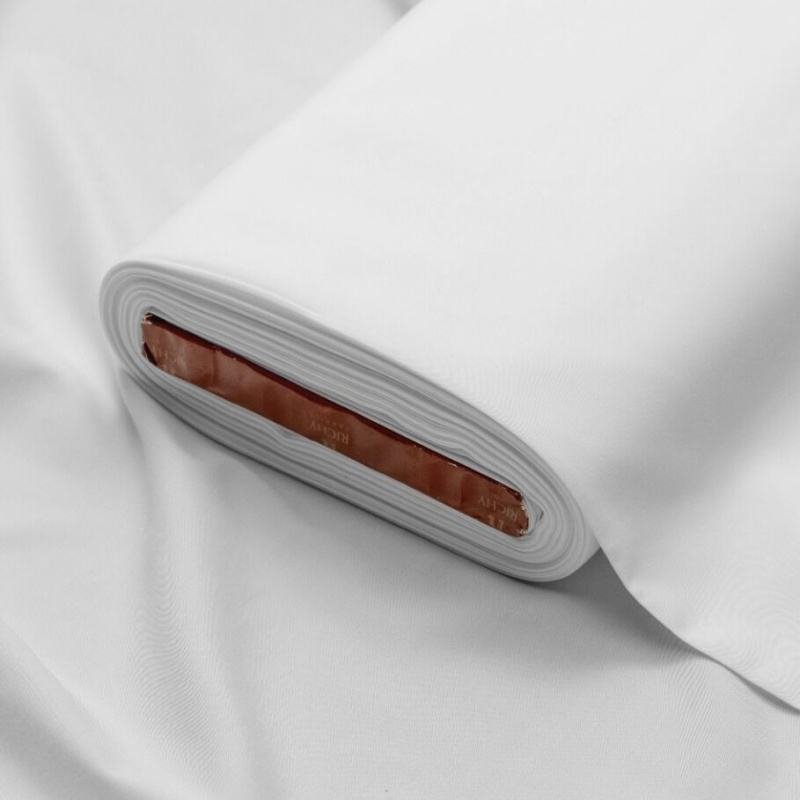
Thobe fabric for Hajj and Umrah is 100 to 125 GSM white woven cloth with enough cover to stay opaque when wet, shrinkage under 1.5 percent after five washes, and a finish that does not trap heat, because the garment is worn for 14-hour days above 40 degrees Celsius and washed every night.
That combination is not the same as a good everyday Saudi thobe, and it is not the same as the cheapest roll in the market. It is a narrow specification, and the buyers who get it wrong usually discover the problem in the third week of the season, when the cloth is already cut.
We have shipped white robe cloth into Jeddah, Riyadh, Dubai, Kuwait City and Doha for more than ten years, and the pilgrimage programme is the one order where three failures repeat every year: the cloth turns see-through when it is soaked, the hem climbs after a week of hotel laundry, and the collarband yellows where sweat dried. All three are preventable at the PO stage.
Why the Pilgrimage Season Rewrites the Spec
A pilgrimage thobe is not a Friday thobe used more often; it is a garment used under different physics, so the specification has to change with it.
Four conditions separate this programme from a normal Gulf retail order:
- Sustained heat. Makkah and Madinah sit in the high thirties to mid forties through the season, and a pilgrim is outdoors for long stretches rather than moving between air-conditioned rooms.
- Distance on foot. A pilgrim commonly walks 5 to 15 km a day across marble, asphalt and gravel, which loads the hem and the underarm seam far more than office wear does.
- Continuous sweat. In that heat an adult loses roughly 0.5 to 1.5 litres of sweat per hour. The cloth is damp for hours at a time, which is when opacity and salt staining become visible.
- Nightly washing. Hotel and camp laundries run hot and fast, often at 60 degrees with strong detergent, and then tumble dry. Five to ten cycles in a week is normal.
None of these stresses a fabric to destruction. Each one exposes a different weakness, and each weakness has a number attached to it that can be written into an order.
The Six Numbers That Decide Comfort at 42 Degrees
Comfort in pilgrimage cloth is set by six measurable values — weight, air permeability, cover factor, dimensional change, colour fastness and wet opacity — and a buyer who specifies all six has covered the failure modes that actually generate claims.
| Specification | What to write on the PO | Why it decides the outcome |
|---|---|---|
| Weight | 100–125 GSM for men’s pilgrimage thobes | Below 100 GSM the cloth clings and turns transparent; above 140 GSM it holds heat |
| Air permeability | 150–300 mm/s to ISO 9237 at 100 Pa | Under 120 mm/s the garment reads as plastic in still air |
| Cover factor | ≥ 80 percent (Pierce) on plain and dobby | Cover is what keeps a white cloth opaque without adding weight |
| Dimensional change | ≤ 1.5% warp, ≤ 1.0% weft after 5 washes to ISO 6330 | Controls hem rise and sleeve shortening |
| Colour fastness | ≥ 4 to washing (ISO 105-C06) and ≥ 4 to perspiration (ISO 105-E04) | Stops sweat staining and cross-staining in a mixed wash |
| Wet opacity | ≥ 88 percent contrast ratio to ISO 2471 after soaking | The number almost no supplier quotes, and the one pilgrims notice |
Two of those deserve a closer look, because they are the ones that get skipped.
Air permeability is measured at a fixed pressure drop, so it compares like with like. A 120 GSM plain weave in textured polyester typically reads 180 to 260 mm/s. Put the same weight through a heavy calender and it can drop under 100 mm/s, which is why a lustrous, crisp white can feel suffocating in the sun even though the weight is right.
Wet opacity is not in any standard buying checklist, and yet it is the complaint that reaches the retailer first.
Wet Opacity: The Test Almost Nobody Runs
White thobe fabric loses four to twelve points of contrast ratio when it is soaked, because water fills the air spaces between yarns and removes the refractive index difference that scatters light back to the eye.
Dry white cloth is opaque for a simple reason: light hits thousands of fibre surfaces and air gaps and scatters in every direction. Fill those gaps with water and the fibre-to-void difference falls from roughly 1.55 against 1.00 to 1.55 against 1.33, so more light travels straight through.
The practical numbers on plain white robe cloth look like this:
| Construction | Dry contrast ratio | After 5-minute soak |
|---|---|---|
| 100 GSM, 90 × 58, 150 cm | 92–94% | 78–82% |
| 120 GSM, 110 × 70, 150 cm | 95–96% | 84–87% |
| 130 GSM, 120 × 76, 150 cm | 96–97% | 88–90% |
| 145 GSM, 120 × 76, twill | 97–98% | 90–92% |
The lesson is that weight alone does not buy wet opacity. Set density and yarn fineness do most of the work, which is why two 120 GSM cloths can differ by six points once wet.
A mill can run this test without new equipment. Cut a 10 cm square, soak it for five minutes in water at 25 degrees, blot it once on a paper towel, and measure contrast ratio over black and white tiles under D65. Anything below 85 percent wet will show the body through the cloth at midday.
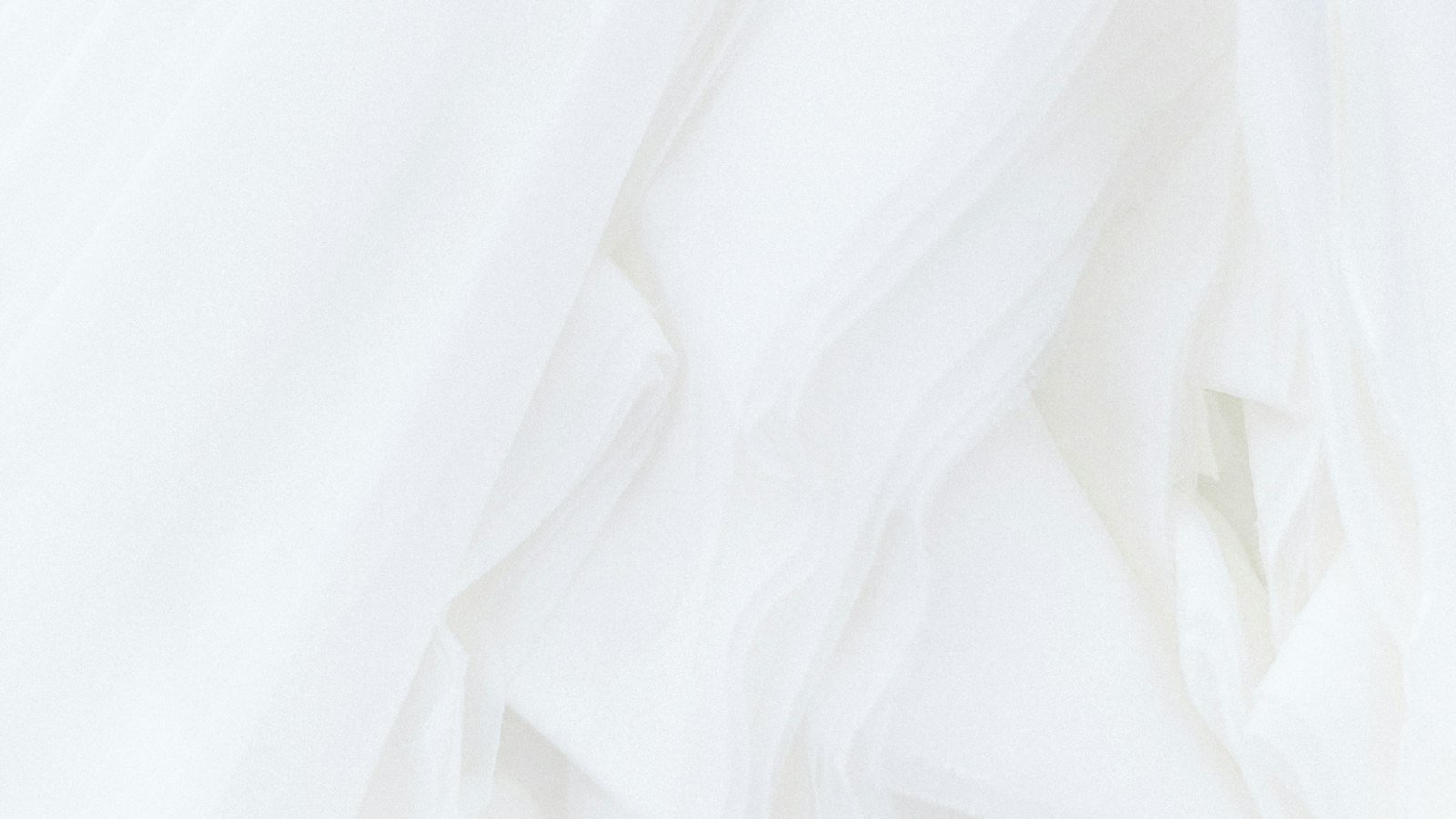
For a deeper treatment of dry opacity and how sett density drives it, our guide to white thobe fabric opacity sets out the measurement method and the PO wording.
Weight Bands by End Use
Weight should be chosen by who wears the garment and for how long, not by what the mill has on the shelf.
| End use | Recommended weight | Notes |
|---|---|---|
| Daily wear thobe for pilgrims | 100–115 GSM | Fastest drying, best airflow, needs cover factor over 80% to stay opaque |
| Umrah and Ramadan prayer wear | 110–125 GSM | Slightly better drape and opacity for indoor mosque use |
| Premium tailored pilgrimage sets | 125–145 GSM | Dobby or fine twill, sold on hand feel rather than volume |
| Children’s pilgrimage thobe | 90–110 GSM | Lighter weight, but watch abrasion at the knee |
| Institutional or group issue | 110–120 GSM | Chosen so one specification covers men and youths |
Retailers sometimes ask for a 150 GSM cloth because heavier feels more expensive on the hanger. In a Makkah summer that decision reverses in the first hour of wear, and the returns arrive too late to reorder a lighter quality.
Fibre Choice: Polyester, Poly-Cotton or Cotton
Textured polyester is the default for pilgrimage volume because it dries fastest and holds its shape, with poly-cotton for buyers who need a softer hand and cotton only where the market pays for it.
| Fibre route | Dry time in shade | Wrinkle recovery | Wet opacity | Indicative FOB |
|---|---|---|---|---|
| 100% textured polyester | 1–1.5 hours | Excellent | Good at equal cover | $0.76–1.10/m |
| 65/35 poly-cotton | 2–2.5 hours | Good | Very good | $0.95–1.30/m |
| 100% cotton, pre-shrunk | 4–6 hours | Poor without resin | Good when dry, weak when wet | $1.30–1.90/m |
| Poly-viscose (TR) | 2–3 hours | Good | Very good | $1.05–1.45/m |
Cotton has one real advantage: at low humidity it conducts heat away from the skin better than polyester does. Its disadvantage is water retention, which is exactly the wrong property when the cloth is damp for hours and has to dry overnight in a shared room.
Where a market insists on cotton, ask for a pre-shrunk, low-formaldehyde easy-care finish and test the formaldehyde level. A white robe cloth that fails the resin cure will pass on hand feel and fail on the import certificate.
Shrinkage, Laundry and the Hem That Climbs
Pilgrimage fabric shrinkage matters more than retail shrinkage because the garment is washed five to ten times in a single week, and each wash compounds the last.
An unpre-shrunk cotton can move 4 to 6 percent in the warp. On a 145 cm thobe that is 6 to 9 cm of length lost at the hem, which converts a floor-length garment into an ankle-length one by the end of the trip.
Three routes hold the tolerance:
- Heat-setting on polyester, which relaxes built-in tension and keeps warp movement near 0.5 to 1.0 percent. Cost: roughly $0.02–0.05/m.
- Sanforizing on cotton and poly-cotton, mechanically compressing the cloth. Cost: roughly $0.04–0.09/m.
- Relaxed washing before finishing, which is slower but gives the softest hand. Cost: roughly $0.05–0.12/m.
Whichever route is used, the test has to match the laundry. A mill report at 40 degrees does not describe a 60-degree hotel cycle, so ask for both. Our note on thobe fabric shrinkage control covers the tolerance table by construction and the four test standards involved.
Sweat, Salt and Why White Turns Cream
Sweat staining on white robe cloth is a chemistry problem rather than a dyeing problem, and it is usually caused by the finish or by a delayed wash rather than by the fibre.
Fresh sweat is mildly acidic, with a pH between about 4.5 and 7. It leaves urea, lactate and sodium chloride in the cloth. Left for two or three days in a warm room, the protein fraction oxidises and locks into the fibre as a yellow-brown mark that survives a normal wash.
Three controls reduce the risk:
- No phenolic antioxidants. BHT and similar phenolics gas-phase yellow on contact with nitrogen oxides, which are present in vehicle exhaust and in some packaging films.
- A brightener system tested after five washes. Whiteness measured on the greige roll means little if the cloth drops five points by the third wash.
- Fastness to perspiration at grade 4 or better. This is the single most useful number for a pilgrimage programme and it costs one test report.
On the consumer side, the instruction that matters is to wash the garment the same day. A note on the hangtag is worth more than another finishing chemical.
What Belongs on the Purchase Order
A pilgrimage thobe order should carry twelve lines, and the six that mills most often leave vague — cover factor, wet opacity, perspiration fastness, wash temperature, shrinkage test method and shade band — are the six that generate claims.
| Line | Value to write |
|---|---|
| Composition | 100% polyester textured, or 65/35 poly-cotton |
| Construction | Plain 1/1 or dobby, state ends × picks |
| Weight | 100–125 GSM, tolerance ±3% |
| Width | 150 cm cuttable, or 160 cm for wider markers |
| Cover factor | ≥ 80% Pierce, state method |
| Opacity | ≥ 95% dry, ≥ 88% wet to ISO 2471 |
| Shrinkage | ≤ 1.5% warp / 1.0% weft, ISO 6330 at 40 °C and 60 °C |
| Colour fastness | ≥ 4 washing (ISO 105-C06), ≥ 4 perspiration (ISO 105-E04), ≥ 4–5 light |
| Whiteness | CIE L ≥ 93, b within −1.5 to +1.0 |
| Finish | Non-yellowing optical white, no phenolic antioxidant |
| Packing | Roll length, poly wrap, desiccant, container loading |
| Documentation | Test report per lot, shade band, packing list with roll grading |
Two of these lines cost nothing at quotation and everything at claim time.
Booking the Season: Timing and Volume
Pilgrimage demand arrives in two waves, and a wholesaler who plans only for Hajj will be short in Ramadan and long in June.
| Milestone | Date (2027) | Action for the buyer |
|---|---|---|
| Ramadan begins | February 2027 | Umrah and prayer wear peak; stock qualities must be in warehouse by January |
| Hajj 1448 | May 2027 | Volume programmes must be cut and sewn by April |
| Custom dyeing and finishing | 45–70 days | Book by December 2026 for a March arrival |
| Stock quality reorder | 7–15 days | Usable for top-up, not for a full season |
| Cut and sew | 20–30 days | Add to the fabric lead time, not instead of it |
The arithmetic is unforgiving. A 25,000 metre programme booked in February 2027 for a May Hajj arrival will not ship in time, and air freight on robe cloth is rarely economic. Our Ramadan 2027 planning calendar sets out the same timeline from the mill side, and the peak season capacity note explains why the calendar quarter before each festival is the bottleneck rather than the mill’s loom capacity.
How to Verify Before You Commit
Five checks separate a mill that can hold a pilgrimage specification from one that can only quote it.
- Ask for a wet opacity reading, not an opinion. A mill without the number has not tested it.
- Ask for shrinkage at 60 degrees. A 40-degree result describes a home laundry, not a hotel one.
- Ask for a perspiration fastness report. Grade 4 or better on both acid and alkaline.
- Wash a sample five times yourself. Measure the hem length before and after; that single figure predicts the season.
- Ask how many dye lots the order will run. A 12,000 metre order is eight to ten lots, and they must sit inside one shade band.
None of these takes more than a week, and all of them are cheaper than a container of cloth that turns transparent in Makkah.
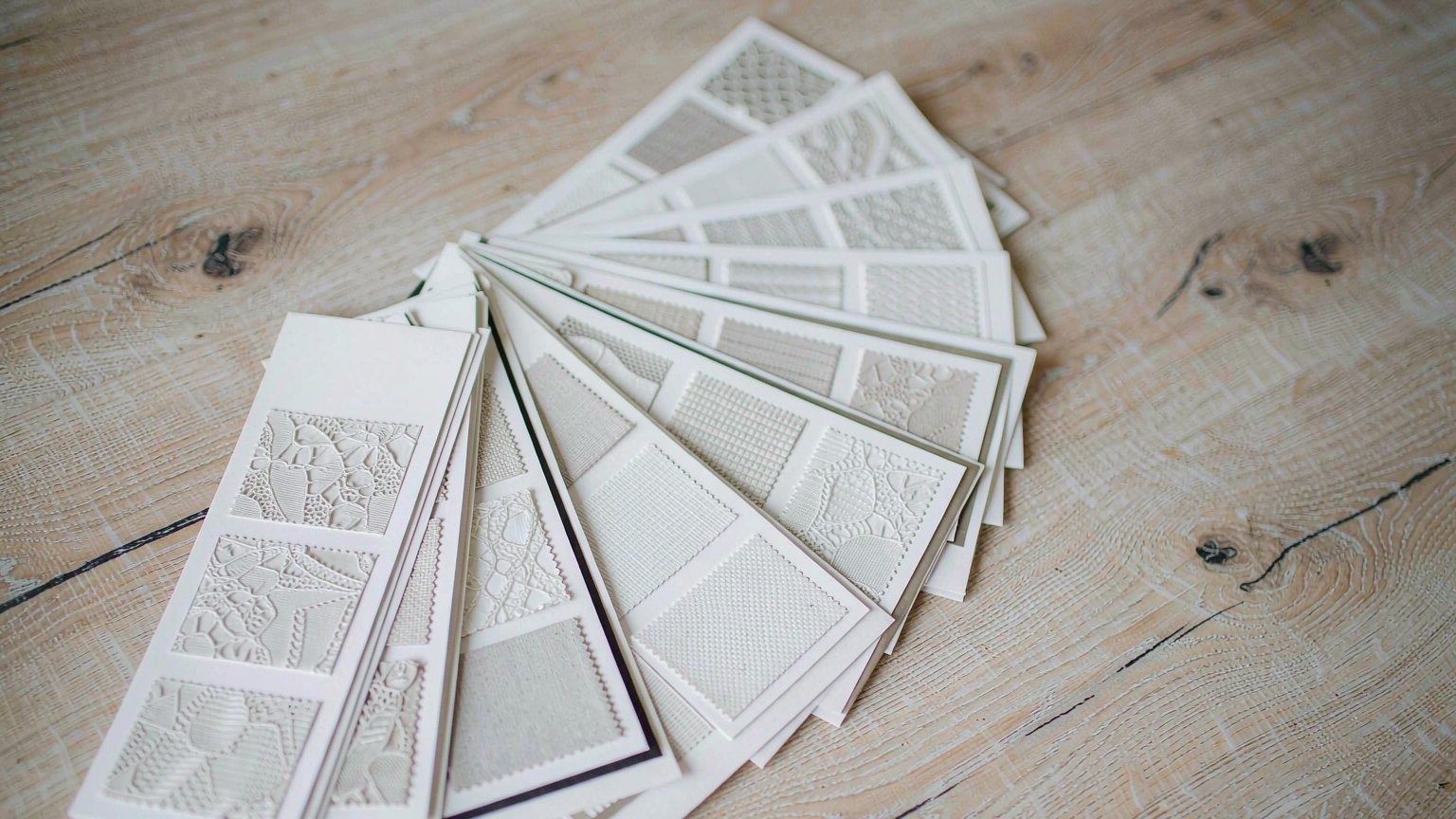
If you are building a pilgrimage programme for 2027 and want the specification tested against your own construction, send us the GSM, width, composition and target market. We will send back wet and dry opacity, air permeability, shrinkage at both wash temperatures and a graded swatch set from the last three lots, so your own inspection can confirm the numbers before you commit a season.
Request a pilgrimage thobe fabric quote and swatch set with the season, the volume and the market — a Makkah summer programme and a Madinah winter programme do not carry the same weight band.
Frequently Asked Questions
What GSM thobe fabric is best for Hajj and Umrah?
Most pilgrimage programmes sit between 100 and 125 GSM in a plain or dobby white. A 100 to 110 GSM textured polyester keeps a man cooler during the walking hours, while 115 to 125 GSM holds opacity better once the cloth is damp with sweat and survives repeated washing with less seam grin. Anything above 150 GSM is a winter thobe and will feel heavy on a 42 degree afternoon in Makkah. The useful test is not the weight alone but weight with cover: a denser 110 GSM sett can be more opaque than a loose 130 GSM one.
Why does white thobe fabric go transparent when it gets wet?
Opacity in a white woven cloth comes from light scattering at the fibre surfaces and at every air space between the yarns. When water or sweat fills those spaces, the refractive index difference at the yarn surface drops from about 1.55 to 1.33 against 1.00 for air, so less light is scattered back and more passes through. On a 120 GSM plain weave, contrast ratio measured to ISO 2471 can fall from around 96 percent dry to 84 percent wet. Raising sett density, going to a finer yarn with more ends per inch, or adding two grams of weight usually recovers four to six points.
How much shrinkage is acceptable in pilgrimage thobe fabric?
Write a limit of 1.5 percent in warp and 1.0 percent in weft after five washes to ISO 6330 at 40 degrees, and ask for the mill to test at 60 degrees as well, because hotel and camp laundries run hotter than a home machine. Unpre-shrunk cotton can move 4 to 6 percent in the warp, which shortens a 145 cm thobe by 6 to 9 cm at the hem. Polyester and poly-cotton constructions that have been heat-set or sanforized hold inside 1 percent, and a pre-shrunk roll costs roughly 0.04 to 0.09 US dollars more per metre.
Does sweat damage white thobe fabric?
Sweat itself is mild, with a pH between 4.5 and 7, but the salts and the bacteria that follow it are not. Urea and sodium chloride dry into the cloth, and if the garment sits unwashed for two or three days the protein residue oxidises and reads as a yellow patch that no normal wash removes. Two mill-side choices reduce the risk: keep phenolic antioxidants and BHT out of the finish, because they yellow on contact with nitrogen oxides, and use a non-yellowing optical brightener system that holds whiteness after five washes rather than only on the greige roll.
When should a wholesaler book thobe fabric for the Hajj season?
Hajj 1448 falls in May 2027, and Ramadan 2027 begins in February, so the two peaks sit about three months apart. A stock quality can ship in 7 to 15 days, but a dyed or finished programme needs 45 to 70 days plus 20 to 30 days for cut and sew, which puts the booking date in December 2026 for anything that has to reach a Riyadh or Jeddah warehouse by March. Wholesalers who order against the Ramadan peak and then reorder for Hajj usually reserve a parent lot so the second shipment matches the first.
Is polyester or cotton better for pilgrimage thobes?
Polyester wins on drying speed, wrinkle recovery and price, which is why most volume pilgrimage programmes use it. Cotton wins on hand feel and heat conduction at low humidity, but it holds water, dries slowly and creases badly in a suitcase. A 65/35 poly-cotton sits between the two: it feels closer to cotton, dries in roughly two hours in shade, and costs about 15 to 25 percent more than straight polyester. For garments that will be washed nightly by a hotel laundry, textured polyester at 110 to 120 GSM remains the most forgiving choice.