Thobe fabric lead time from a Chinese mill runs 45 to 75 days from deposit to shipment: 7 to 10 days for sampling and lab dips, 25 to 35 days for weaving and dyeing, 5 to 8 days for finishing and inspection, and 3 to 7 days for packing and booking. Add 18 to 35 days of sea freight plus 5 to 10 days of clearance before the rolls reach a Gulf warehouse. For an order that has to be on shelves before Ramadan 2027, which begins around 8 February, every one of those blocks has to be scheduled against a fixed retail date rather than against a price.
We have exported thobe, kandura and dishdasha fabric to Gulf wholesalers, garment makers and retail brands for more than ten years, and the orders that go wrong are almost never the ones that were quoted badly. They are the ones that were quoted well and confirmed late, with too many shades, in a month when every other buyer was doing the same thing.
The Short Answer: Thobe Fabric Lead Time Runs 45–75 Days From Deposit to Shipment
Thobe fabric lead time is 45 to 75 days from deposit to ex-factory, and the range exists because of sampling rounds and colour count rather than production speed. Four blocks make up the total:
- Sampling and approval: 7–20 days. A lab dip takes 7 to 10 days per round. One round is common on white and stock shades; two or three rounds are normal when a buyer is matching a competitor’s reference.
- Production: 25–35 days. Warping and weaving 12 to 20 working days, dyeing 4 to 7 days, finishing 3 to 5 days.
- Inspection and packing: 5–11 days. Four-point inspection, mending where needed, roll packing, labelling and container booking.
- Freight: 20–40 days to a Gulf port. Sea freight plus port handling and customs clearance.
The number buyers should hold in their plan is 60 days ex-factory for a three-shade order confirmed from stock yarn, and 75 days when the order needs yarn booked from the spinner or runs more than eight shades.
Stage by Stage: Where Thobe Fabric Lead Time Actually Goes
Every stage has a floor below which it cannot be compressed without moving the risk to the buyer, and the floors are set by machine time rather than by goodwill.
| Stage | Typical working days | What stretches it |
|---|---|---|
| Enquiry to priced quotation | 1–2 | Unclear GSM, width or finish |
| Sample swatch and lab dip | 7–10 per round | Matching an unlabelled reference shade |
| Deposit, contract and yarn reservation | 5–10 | Yarn unavailable in the required count |
| Warping and weaving | 12–20 | Loom allocation, warp changeover, colour changes |
| Dyeing | 4–7 | Shade changes, lot batching with other orders |
| Finishing (softening, calendering, anti-static) | 3–5 | Shared finishing line queues in peak months |
| Four-point inspection and mending | 2–4 | Defect rate on first quality |
| Roll packing, labelling, container booking | 3–7 | Container availability and space booking |
| Sea freight and clearance to Gulf port | 20–40 | Route, transhipment, customs |
Two of those lines carry more weight than the rest. Sampling is the stage buyers control and underestimate, and dyeing is the stage that quietly absorbs every extra shade on the order.
Why Peak Season Adds Weeks Rather Than Days
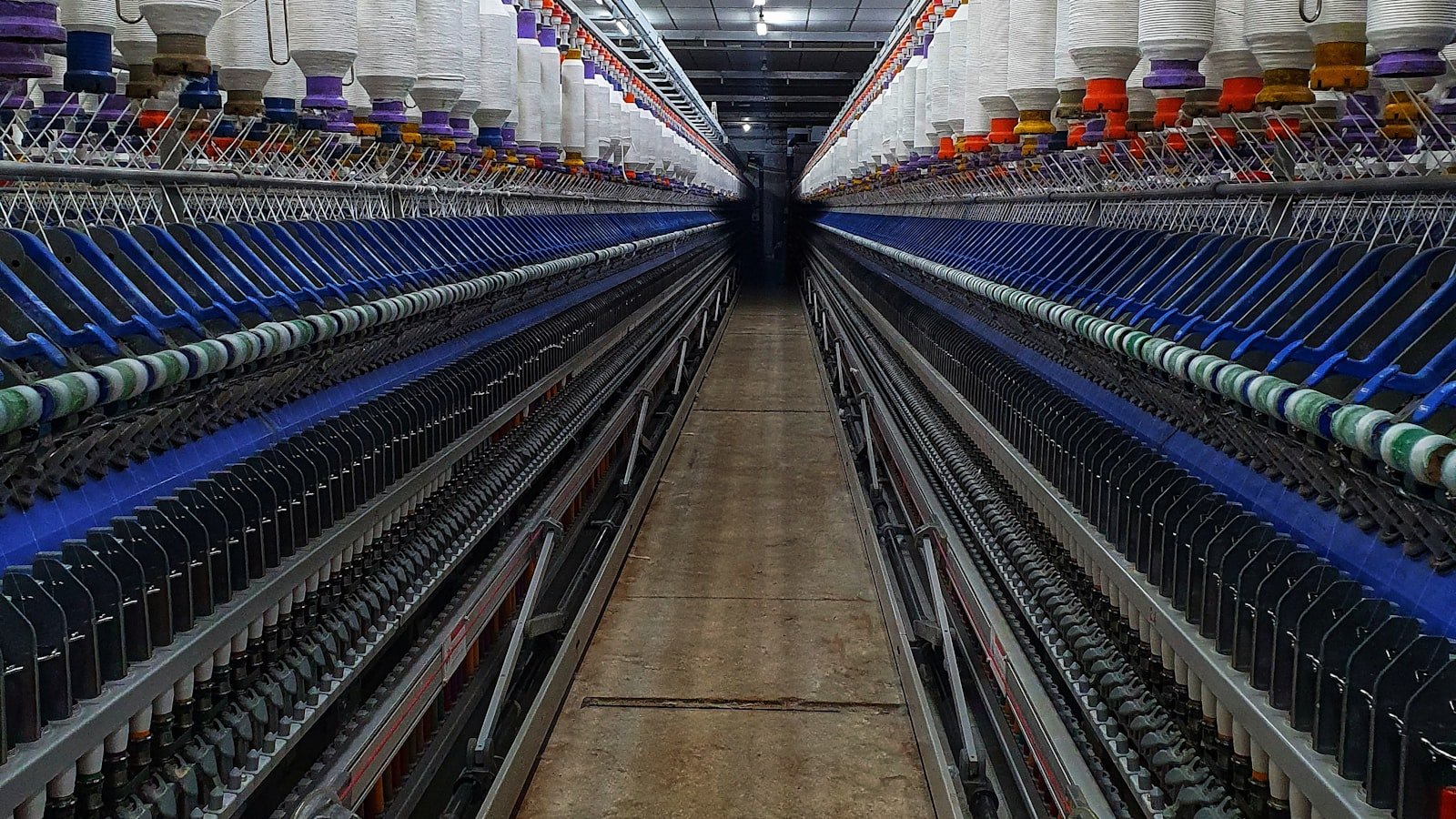
In the three months before Ramadan, the constraint stops being production speed and becomes available machine time. Loom and dyeing slots are finite, and they are committed in the order deposits arrive.
Ramadan 2027 begins around 8 February and Eid al-Fitr falls around 9 to 11 March. The dates that matter to a fabric buyer sit well before those:
- Retail shelves need to be stocked three to four weeks ahead of Ramadan, which is early January 2027.
- Wholesalers deliver to retail in the first half of January, so they need goods in their warehouse by late December.
- Garment makers run cut-and-sew in December, so they need fabric at the door by the first week of December.
- Fabric has to clear Gulf customs by late November, which means it has to sail in early to mid November.
- Ex-factory therefore lands in the first three weeks of November, and the deposit has to be in by late September to mid-October.
Two calendar facts make 2027 harder than a normal season. Chinese New Year falls on 6 February 2027, and Ramadan begins around 8 February 2027, so the mill closure and the retail season arrive within days of each other. Any order that has not shipped before the February closure waits until March, which is already inside the season it was placed for.
Backward Planning Table for the Ramadan 2027 Season
A programme built backwards from the shelf date is the only version that survives contact with a peak season. The table below uses a Jeddah or Dammam destination and a three-shade order.
| Milestone | Target date | Consequence of missing it |
|---|---|---|
| Deposit and yarn reservation | By 10 October 2026 | Production slot moves to December, shipment slips past the CNY closure |
| Lab dip and shade approval | By 25 October 2026 | Weaving starts late; dyeing queues behind programme work |
| Warping, weaving, dyeing, finishing | November 2026 | Ex-factory slides into December |
| Ex-factory, inspection, container loaded | By 20 November 2026 | Arrival in Gulf slips into January |
| Sea freight and customs clearance | 10–20 December 2026 | Garment maker cuts in January, retail delivery slips |
| Cut-and-sew at the garment maker | December 2026 | Wholesale delivery moves past mid-January |
| Wholesale to retail, shelves stocked | Mid-January 2027 | Ramadan opens with gaps in the range |
Buyers who want to read the retail-side version of this calendar, including shop stocking patterns and the Eid al-Fitr tail, will find it in our Ramadan 2027 thobe fabric planning calendar. The version above is the factory-side schedule that has to feed it.
Capacity, Not Price, Is the Real Constraint in Peak Months
In October and November the question is not what thobe fabric costs but whether a loom, a dye machine and a finishing slot are still free, and colour count is what decides the answer.
Three technical facts explain why:
- Weaving output is fixed. A plain 118 GSM thobe cloth woven at roughly 130 ends and 80 picks per inch yields around 220 to 300 metres per loom per day across three shifts. Twenty looms on one quality give 4,400 to 6,000 metres a day nominal, and less once warp changeovers are counted.
- Dyeing is charged by changeover, not by metres. Each shade change costs one to two hours of machine time plus cleaning. A 600-metre lot occupies a dye machine for a full cycle, so mills batch small lots together and the waiting time alone can reach 5 to 10 days.
- Finishing is the shared bottleneck. Softening, calendering, anti-static application and optical brightener top-up all run on the same lines that every other programme is also queuing for.
This produces one rule that matters more than any negotiation: six shades at 1,000 metres each will schedule faster than twelve shades at 500 metres each, even though the total metres are identical. Consolidating the palette is the single largest lead time saving available to a buyer, and it costs nothing except a decision made earlier.
Where the palette cannot be reduced, the alternative is to hold the core shades on a stock programme in white, cream, ivory and grey, and limit dyed shades to the accent colours that carry the range. Stock shades ship in 15 to 25 days rather than 25 to 35, because they skip warping for a new shade and the dyeing queue entirely.
Shipping Thobe Fabric to Gulf Ports: Transit Times for Your Plan
Freight is the block buyers most often leave out of the schedule, and it is the one where a two-week error is normal rather than exceptional.
| Route from Ningbo or Shanghai | Transit time | Notes |
|---|---|---|
| Jeddah, Saudi Arabia | 22–30 days | Direct services; add 5–10 days clearance |
| Dammam, Saudi Arabia | 20–28 days | Some services tranship via Jebel Ali |
| Jebel Ali, Dubai | 14–20 days | Fastest Gulf gateway; frequent sailings |
| Sohar or Muscat, Oman | 16–22 days | Good option for Omani and UAE re-export |
| Alexandria or Damietta, Egypt | 20–28 days | Relevant for djellaba programmes |
| Air freight to Riyadh or Dammam | 3–6 days | $3.50–6.00 per kg; used only to bridge a shortfall |
Three planning points sit on top of the transit time. LCL consolidation adds 7 to 12 days compared with a full container and increases handling damage, so part-loads should be filled with a second quality rather than consolidated. A 20-foot container carries roughly 18,000 to 22,000 metres of 115 GSM cloth at 150 cm width, and a 40-foot high cube about 42,000 to 52,000 metres, because the limit is volume rather than weight. And customs documentation should be prepared during production, not after inspection, since a missing lot report or certificate of origin is enough to add a week at the port.
If you are aligning a container plan with a production slot, our bulk thobe fabric ordering page sets out how stock and dyed programmes are scheduled against each other, and the quality checks that apply before bulk cover what has to be signed off before a container is sealed.
Six Terms to Write Into the PO Before You Book
A production slot is only as reliable as the clauses attached to it. These six terms convert a verbal schedule into an enforceable one.
- A fixed production slot with dates. Name the ex-factory date, not a lead time in weeks. “Shipped by 20 November” is actionable; “60 days” is not, because nobody can prove when the clock started.
- A sealed shade reference with a numbered limit. Attach the approved sample and state the acceptable colour difference, for example within 1.0 ΔE at 30 washes, so batch approval is objective.
- A shipment window and partial shipment rights. Allows the order to leave in two consignments if one shade finishes early, which recovers a week when the palette is wide.
- A late delivery remedy. A per-week discount or a shared air freight cost. This is the clause that changes how the order is scheduled internally.
- A documents list attached to the PO. Packing list, lot report, test reports for colour fastness and shrinkage, and the correct HS code for the destination.
- Inspection rights before shipment. Four-point inspection results and photographs before the container is loaded, plus balance payment against the bill of lading copy.
None of these are unusual requests. Mills that resist a written ex-factory date are telling you something about how they schedule, long before the season starts.
Four Steps From Enquiry to Shipment
A thobe fabric order moves through four decisions, and each one carries its own slice of the lead time.
- Select the quality. GSM, composition, weave, width and finish, confirmed against a reference shade or an existing garment. Allow 1 to 2 days for a priced specification. Our cutting yield guide helps fix the metres per garment, which is what turns a garment order into a fabric quantity.
- Sample and approve. Lab dip plus a full-width yardage sample, 7 to 10 days per round. Approve the shade, the hand feel and the measured GSM in one pass to avoid a second loop.
- Confirm and reserve. Deposit, signed PO with the six terms above, and yarn reservation. Production slot is issued at this point, not before.
- Produce, inspect and ship. Weaving, dyeing, finishing, four-point inspection, packing and booking, 25 to 45 days, followed by 20 to 40 days of freight.
To reserve capacity for the 2027 season, send the target GSM, the shade count and the destination port through our thobe fabric enquiry form, and we will return a dated production slot rather than an open-ended lead time. WhatsApp works too if the specification is already settled and only the schedule is in question.
Two Orders, Two Outcomes
The difference between a comfortable season and an expensive one is usually a four-week gap in confirmation dates, not a price difference.
A garment maker in Jeddah confirmed 6,000 metres of 118 GSM in three shades on 28 September, with the deposit paid the same week. Weaving ran through October, dyeing in the first half of November, and the container was loaded on 18 November. The fabric arrived in Jeddah on 12 December, cleared customs in six days, and the cut-and-sew line started the following week. Retail delivery landed in mid-January with three weeks in hand.
A wholesale importer confirmed a larger order of 9,000 metres in the third week of November, spread across fourteen shades. The shade approvals ran into December, the dyeing queue pushed the width change twice, and the February mill closure left no remaining buffer before Ramadan. The importer air freighted 1,200 metres at around $4.80 per kilogram to cover the launch range and carried the balance into the season at a discount.
The metres were similar. The colour count and the confirmation date were not, and those two variables decided the outcome before a single loom started.
Booking for the 2027 Season Starts Now
Peak season capacity is committed in the order deposits arrive, so the useful conversation in September and October is about slots rather than prices.
Send us four numbers and we can return a dated schedule the same week: target GSM, total metres, number of shades, and the destination port. If you are still comparing qualities, we will send a full-width sample and a lab dip first, and hold a provisional slot while the shade is being approved.
- Reserve a production slot: contact our thobe fabric team
- Review the quality standards behind the dates: pre-bulk quality checks
- Plan the retail side of the season: Ramadan 2027 planning calendar
Frequently Asked Questions
How long does thobe fabric take to produce?
Thobe fabric lead time from a Chinese mill runs 45 to 75 days from deposit to shipment. Sampling and lab dips take 7 to 10 days per round, and most programmes run two rounds, so allow 14 to 20 days. Warping and weaving run 12 to 20 working days depending on loom allocation, dyeing 4 to 7 days, finishing 3 to 5 days, four-point inspection and mending 2 to 4 days, and packing plus container booking 3 to 7 days. Add 18 to 35 days of sea freight to a Gulf port plus 5 to 10 days of customs clearance. For an order confirmed in late September with three shades, 60 days ex-factory is a realistic planning figure.
When should I order thobe fabric for Ramadan?
For Ramadan 2027, which begins around 8 February, the fabric should be ex-factory by mid-November 2026. Work backwards from retail: shelves need filling three to four weeks before Ramadan, so stock has to reach the wholesaler by mid-January, which means cut-and-sew runs through December, which means the fabric must be in the garment maker hands by the first week of December. Sea freight plus clearance takes 25 to 35 days, so the container has to sail in early November. That places the deposit and yarn reservation in late September to mid-October. Waiting until November removes the buffer entirely.
Does Chinese New Year affect thobe fabric lead time?
It does, and in 2027 the timing is unusually tight. Chinese New Year falls on 6 February 2027 and Ramadan begins around 8 February 2027, so the two events overlap almost exactly. Most mills close for two to three weeks from mid-February and many dyeing and finishing subcontractors shut for four. Any order not shipped before the closure waits until March, which is already inside the Ramadan season. The practical consequence is that the December shipping window is the last safe departure for a 2027 Ramadan programme. Buyers who miss it either accept late delivery or pay air freight, which runs roughly three to five times the sea freight cost per metre.
How much thobe fabric fits in a container?
A 20-foot container holds roughly 18,000 to 22,000 metres of 115 GSM thobe fabric at 150 cm width, and a 40-foot high cube holds about 42,000 to 52,000 metres. The limit is volume, not weight, because thobe cloth is light and bulky, so raising the GSM reduces the metre count per container. Rolls packed on board with double-fold and a firm core load more efficiently than soft rolls. If a programme splits across shades, plan on filling a container with complementary qualities rather than holding a part-load, because LCL consolidation adds 7 to 12 days to the transit and introduces handling damage.
Can thobe fabric lead time be shortened?
It can be shortened by four to six weeks, but only by changing the order, not by asking the mill to hurry. Holding the colour count to three or four instead of twelve removes dyeing changeover time. Ordering stock shades in white, cream, ivory and grey avoids dyeing altogether. Approving the shade on the first lab dip round saves 7 to 10 days. Confirming width and packing before sampling rather than after avoids a second approval loop. Paying a deposit that secures yarn early lets weaving start on schedule. The one lever that does not work is compressing the four-point inspection or finishing stages, because those are where defects are caught before they become a claim in Jeddah.