The Short Answer: PFAS-Free Thobe Fabric Is a C0 Finish You Can Prove Below 50 ppm Total Organic Fluorine
PFAS-free thobe fabric is white robe cloth finished without fluorinated stain-release chemistry, which in practice means a C0 fluorine-free system plus a test report showing total organic fluorine under 50 ppm and PFAS migration below 0.01 mg/m² — the two thresholds now written into US state law and the EU REACH restriction applying from 1 February 2027.
That single sentence decides a specification that most GCC buyers are still writing the old way. White thobe cloth has been sold for two decades with a fluorinated soil-release finish, because a fluorocarbon is the only chemistry that repels both water and oil on a bright white ground.
The chemistry is being removed by legislation rather than by fashion, and the orders placed between now and the end of the year are the ones that will land in a 2027 selling season under the new limits.
We finish white robe cloth for buyers in Riyadh, Jeddah, Dammam, Dubai, Kuwait City, Doha and Manama, and the questions arriving now are practical: what replaces the finish, what does it cost, and how is the claim proved.
Why Thobe Fabric Needed a Fluorinated Finish at All
A white thobe is worn against skin, washed often and expected to stay optically white, so the finish has to let oily marks release in the wash without yellowing the cloth — which is exactly the job a fluorotelomer does best.
Three separate effects are bundled into what buyers call “stain release”:
- Soil release. A hydrophilic polymer layer lets detergent reach oil trapped in the yarn so it lifts in the wash instead of setting in.
- Oil repellency. Low surface energy stops cooking oil, ghee, machine grease and perfume oils from wetting the fibre at all.
- Water repellency. Useful on lighter summer qualities where a spill beads and shakes off before it wicks.
Only the first and third can be delivered without fluorine. Oil repellency is the property that fluorochemistry owns, and it is the reason legacy finishes were specified on premium white qualities in the first place.
The industry walked a predictable path: C8 fluorotelomers were withdrawn under PFOA and PFOS pressure, C6 short-chain chemistry replaced them, and now C6 is being closed out by the same regulatory logic.
Which Rules Apply to Thobe Fabric Sold Into the Gulf
No GCC state has set its own PFAS threshold for imported textile yet, but the limits that matter are the ones your customer sells into — the EU from February 2027 and three US states from January 2027.
| Jurisdiction | Instrument | Limit | Applies from |
|---|---|---|---|
| European Union | REACH Annex XVII PFAS restriction on apparel textiles, including lining | Total PFAS migration ≤ 0.01 mg/m² on the finished article | 1 February 2027 |
| California | AB 1817 | 100 ppm total organic fluorine, dropping to 50 ppm | 50 ppm from 1 January 2027 |
| Washington | Safer Products / PFAS in apparel | 50 ppm total organic fluorine | 1 January 2027 |
| Vermont | PFAS in apparel and textiles | Reporting, then restriction | July 2027 |
| France | National PFAS framework | Prohibition on PFAS in textiles | 1 January 2026 |
| Maine, Connecticut | State PFAS statutes | Reporting obligations | 2026 |
| Colorado | State PFAS statute | Restriction | 2028 |
| Gulf Cooperation Council | No dedicated textile PFAS limit | SASO and ESMA conformity still apply to the finished garment | — |
| OEKO-TEX | Standard 100 limit list | PFAS excluded from the limit list since 2023 | Already in force |
Two consequences follow for a thobe programme.
First, a Saudi wholesaler who ships finished thobes into a European brand’s franchise, or who supplies a uniform programme run by an international group, inherits the EU threshold through the contract even though SASO itself does not test for PFAS.
Second, an order finished in the fourth quarter of 2026 for a spring 2027 season is a 2027 delivery. The restriction is measured on the article placed on the market, not on the date the fabric was woven.
C8, C6 and C0: What Actually Changes on the Cloth
The three finish families differ less in water repellency than in oil repellency, cost and paperwork, and the drop from C6 to C0 is smaller than the drop from C8 to C6 was.
| Property | C8 fluorotelomer | C6 fluorotelomer | C0 fluorine-free |
|---|---|---|---|
| Oil repellency, AATCC 118 | Grade 6 | Grade 5–6 | Grade 2–3 |
| Water repellency, AATCC 22 spray, after 50 washes | Grade 4–5 | Grade 4 | Grade 4 |
| Stain release, AATCC 130 after 5 washes | 4.0–4.5 | 3.5–4.0 | 3.5–4.0 |
| Hand and drape | Slightly stiff at high add-on | Neutral | Neutral, softer on jersey-weight cloth |
| Whiteness effect | Neutral to +0.3 L* | Neutral | +0.3 to +0.6 L* |
| Finish cost per metre | Reference | −10 to −15% | −55 to −70% |
| Regulatory position | Withdrawn | Closing out in 2027 | Compliant |
The practical point for a white thobe: water-borne stains, which are most of what a thobe meets in daily wear, are handled just as well by C0. Oil-borne stains are not.
What You Lose With a Fluorine-Free Finish, and How to Recover It
Going C0 costs you oil repellency and a little drying speed, and both can be partly bought back with a soil-release polymer, a denser sett and a calender pass rather than with chemistry that is about to be illegal.
Our own production data on a 130 GSM polyester thobe cloth finished C0 and washed 50 times to ISO 6330:
| Property | C6 finish | C0 finish with soil-release polymer | C0 finish, no polymer |
|---|---|---|---|
| Spray rating after 50 washes | 4 | 4 | 3 |
| Oil repellency | 5–6 | 2–3 | 1–2 |
| Stain release after 5 washes | 3.5–4.0 | 4.0 | 2.5–3.0 |
| Drying time, hanging, 25 °C | Reference | +15 to +20% | +10% |
| Hand after 30 washes | Slightly firm | Soft | Soft |
Three levers close most of the gap:
- Soil-release polymer at 15 to 25 g/L. This is the single biggest improvement for a white cloth, because it works with detergent rather than against it.
- Pick density. Moving from a 100 × 64 to a 110 × 70 sett gives the finish less open surface to bridge, which lifts spray rating by roughly half a grade.
- A light calender pass. Calendering after finishing closes the surface and recovers the smooth hand buyers expect, but it must be set before the final wash test rather than after.
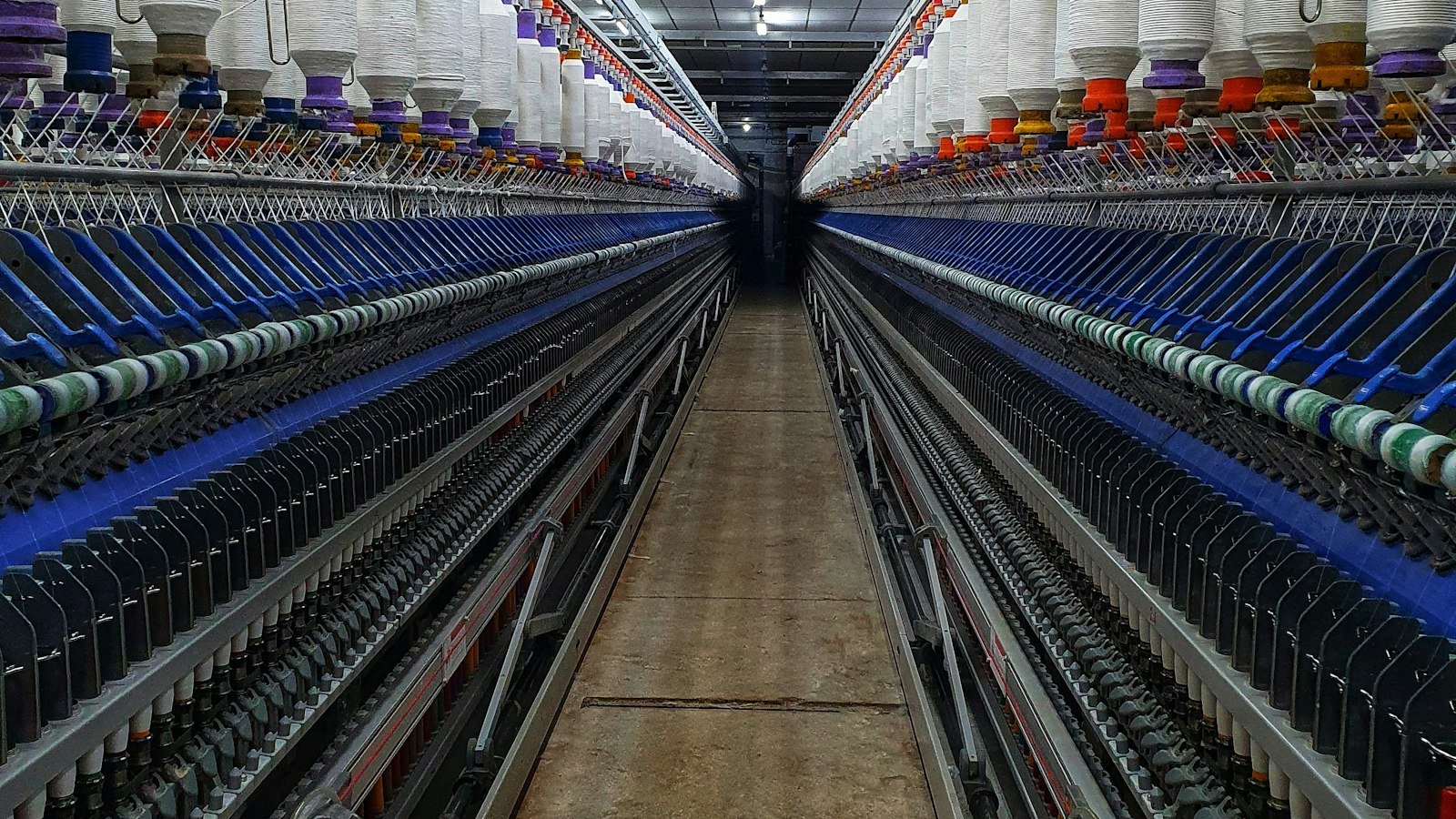
What cannot be recovered is the grease resistance that made C8 attractive for workwear-type thobe programmes. If a customer genuinely needs oil repellency — kitchen staff uniforms, industrial site thobes — the honest answer is a different garment design, not a different finish.
How to Test for PFAS on Thobe Fabric
Use total organic fluorine as a screen and a targeted extractable PFAS panel as confirmation, because a screen catches contamination a named list will never show.
| Test | What it answers | Typical cost | Turnaround |
|---|---|---|---|
| Total organic fluorine by combustion ion chromatography | Is there fluorine on the cloth at all, at what level | USD 120–200 | 3–5 working days |
| ISO 23702-1, organically bound fluorine | Confirms the fluorine is organically bound, not inorganic residue | USD 180–280 | 4–6 working days |
| EN 17681-1 and 17681-2, extractable PFAS | Which individual substances are present and at what concentration | USD 350–600 | 7–10 working days |
| Migration on the finished article | Whether the article passes the limit in the market you sell into | Quoted per method | 7–12 working days |
Three things go wrong in practice:
- Screening without a wash. A finish can pass on greige-plus-finish and fail after five home washes, because the polymer cross-links and releases differently. Always test the washed article.
- Contaminated auxiliaries. A softener, a levelling agent or a loom oil carried over from an earlier fluorochemical lot will produce a positive screen with no fluorocarbon in your own finish recipe.
- Sampling the selvedge. Selveges and end pieces carry a heavier finish add-on than the body. Cut the sample from the middle of the piece, at least a metre from either end.
What to Write Into the Thobe Fabric Purchase Order
A PFAS clause is worth nothing if the rest of the specification is silent, so put the finish, the test and the remedy in the same block.
| Line | Specification |
|---|---|
| Finish type | Fluorine-free C0 soil-release and water-repellent finish, no fluorotelomer |
| Total organic fluorine | ≤ 50 ppm on the finished, washed cloth |
| PFAS migration | ≤ 0.01 mg/m² where the article is sold into the EU |
| Test standard | TOF screen plus EN 17681-1 on the first bulk lot and every fifth lot after |
| Wash preconditioning | 5 washes to ISO 6330, 4N programme, before testing |
| Oil repellency | Declared, not assumed — state the grade you will accept |
| Water repellency | Grade 4 minimum, AATCC 22, after 50 washes |
| Soil release | Grade 3.5 minimum, AATCC 130, after 5 washes |
| Whiteness | L ≥ 93, b ≤ 1.5, measured on the finished cloth |
| Formaldehyde | ≤ 75 ppm, or ≤ 20 ppm for children’s thobes |
| Report ownership | Test report in the buyer’s name, from a laboratory the buyer accepts |
| Remedy | Replacement at the mill’s cost if the first bulk lot fails the screen |
The last line is the one buyers forget. A finish declaration without a remedy clause becomes a conversation about who pays for a container of cloth that cannot be sold into the intended market.
Five Questions to Ask a Factory Before You Specify C0
The answers separate a mill that has already converted its finishing line from one that is quoting a specification it has never run.
- Which finish chemistry do you run today, and when did the line last process a fluorotelomer?
- What are your measured TOF and oil-repellency figures on the exact construction I am buying, after five washes?
- Which laboratory issues the report, and can it be issued in my company name?
- How do you prevent softener and loom-oil cross-contamination between fluorochemical and fluorine-free lots?
- What happens to the shade and the whiteness when the finish changes on a running programme?
A mill that answers the second question with a number rather than a promise is the one to keep. Our own conversion took two finishing campaigns and a full re-approval of every white shade, and the whiteness data changed more than the repellency data did.
If you want to see the documents rather than the claim, our OEKO-TEX certified thobe fabric guide explains which certificates a mill can and cannot issue in a buyer’s name, and the polyester thobe fabric price guide shows how finish and test costs sit inside a per-metre price.
The Reorder Problem Nobody Mentions
The most common PFAS failure we see is not a bad finish, it is a good finish applied in a finishing house that still has fluorochemical drums on the same floor.
Cross-contamination is invisible on the cloth and obvious on the report. Three controls prevent it:
- Dedicated bath and padder for fluorine-free lots, or a documented caustic clean-down between campaigns.
- Separate softener stock, because a fluorochemical softener in the same tank is enough to fail a 50 ppm screen.
- A first-lot screen before bulk, not after, so a contaminated bath is caught on 500 metres instead of 20,000.
For a buyer building a 2027 white programme, the practical sequence is straightforward: re-specify the finish, re-approve the white shade, test the first lot after washing, and write the remedy clause. Everything else is paperwork.

What This Means for a 2027 White Thobe Programme
The finish is a solved problem; the documentation is not. A C0 system delivers the water repellency and the soil release that a white thobe needs, at a lower chemistry cost than the C6 it replaces, and the extra USD 0.02 to 0.06 per metre buys a test report rather than a chemical.
Buyers who move now get a converted line, a settled shade and a clean first lot. Buyers who move in March 2027 get a queue.
If you are preparing a white or cream thobe programme for 2027 and want to know what a fluorine-free finish does to your own construction, send us the GSM, the sett and the finish you are running today. We will send back the measured TOF, spray rating and whiteness figures on that construction, plus a swatch set finished both ways so your own wash test can confirm it.
Request a quote or a C0 swatch set with the market, the season and the finish you need — Riyadh summer stock and a Kuwait winter programme do not take the same specification.
Frequently Asked Questions
What does PFAS-free mean for thobe fabric?
PFAS-free thobe fabric is white robe cloth finished without fluorinated chemistry, so the stain-release and water-repellent effect comes from a silicone, acrylic or polyurethane system instead of a fluorotelomer. In practice a buyer should treat the claim as a test result rather than a marketing phrase: ask for total organic fluorine below 50 ppm and PFAS migration under 0.01 mg/m2 on the finished, washed cloth. A finish can be called C0 and still fail a fluorine screen if the softener bath or the loom oil carried contamination from an earlier lot.
When do the PFAS restrictions actually apply to thobe fabric?
Two dates matter for GCC buyers ordering white robe cloth. The EU REACH restriction on PFAS in apparel textiles applies from 1 February 2027 and sets a migration limit of 0.01 mg/m2 on the finished article. California drops its total organic fluorine limit from 100 ppm to 50 ppm on 1 January 2027, and Washington state applies the same 50 ppm threshold from the same month. Orders that ship in the last quarter of 2026 are usually delivered into a 2027 selling season, which is why the specification has to change now rather than after the deadline.
Does a C0 finish still resist stains on a white thobe?
It resists water-borne staining well and oily staining less well. On our own 130 GSM polyester thobe cloth a fluorine-free finish holds a spray rating of grade 4 after 50 washes to ISO 6330, which is enough for rain, spilled water and food with a water base. Oil repellency is the trade-off: a legacy C8 finish reaches grade 6 by AATCC 118 while a C0 system typically reaches grade 2 to 3, so cooking oil and machine grease will wet out. Buyers who need oil resistance should move to a soil-release polymer plus a tighter sett rather than back to fluorochemistry.
How is PFAS tested on thobe fabric?
Three tests cover almost every request we receive. Total organic fluorine by combustion ion chromatography screens the whole cloth for fluorine and catches anything a targeted list would miss. Extractable PFAS analysis by EN 17681-1 and 17681-2 identifies individual substances when a customer needs a named compound report. Migration testing on the finished article follows the method named in the regulation the buyer is selling into. Screening costs roughly USD 120 to 200 with a three to five day turnaround; a full targeted panel runs USD 350 to 600 and takes seven to ten days.
Can a factory switch a running thobe order to C0 without changing the shade?
Usually yes, but the whiteness has to be re-measured. Fluorochemical finishes sit on the fibre surface and change how light reflects, so removing them typically lifts the measured L* by half a point and can push a brightened white into a violet cast if the optical brightener load was set against the old finish. We re-run the spectrophotometer on the first 200 metres and hold the target at L* 93 or above with b* at 1.5 or below. Shade continuity across lots is the part buyers notice first, long before anyone asks for the fluorine report.
Is PFAS-free thobe fabric more expensive?
The finish itself is cheaper per metre, because C0 chemistry costs less than a C6 fluorotelomer system, but the total cost usually rises by USD 0.02 to 0.06 per metre once you add the soil-release polymer, a second wash-and-test cycle and the third-party fluorine report. On a 3.8 metre thobe that is roughly USD 0.08 to 0.23 per garment. Buyers who consolidate the switch with a reorder and a shade re-approval usually absorb the difference without changing the retail price of the finished thobe.