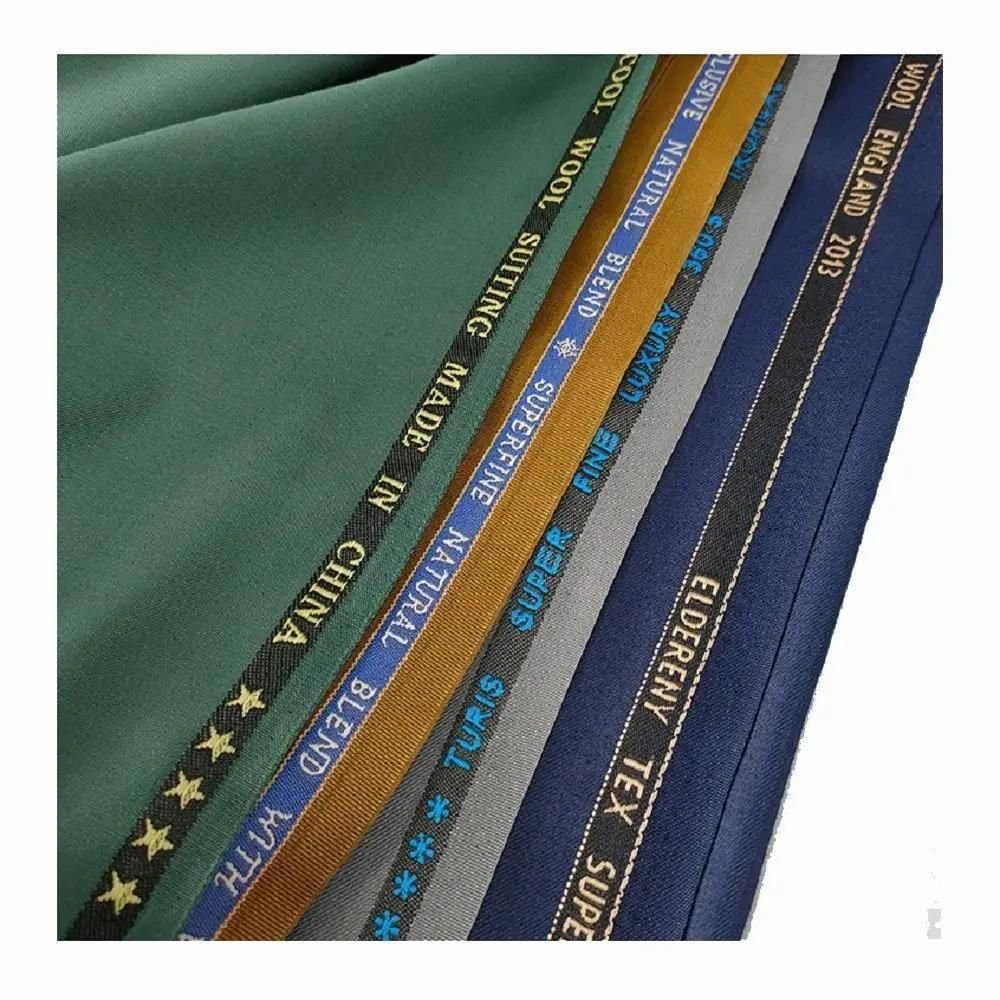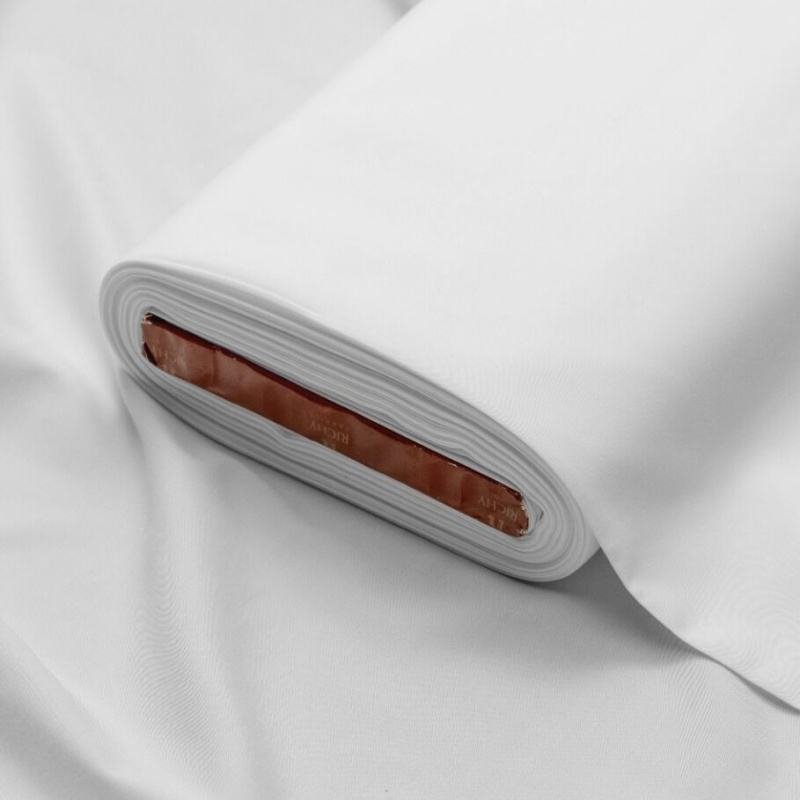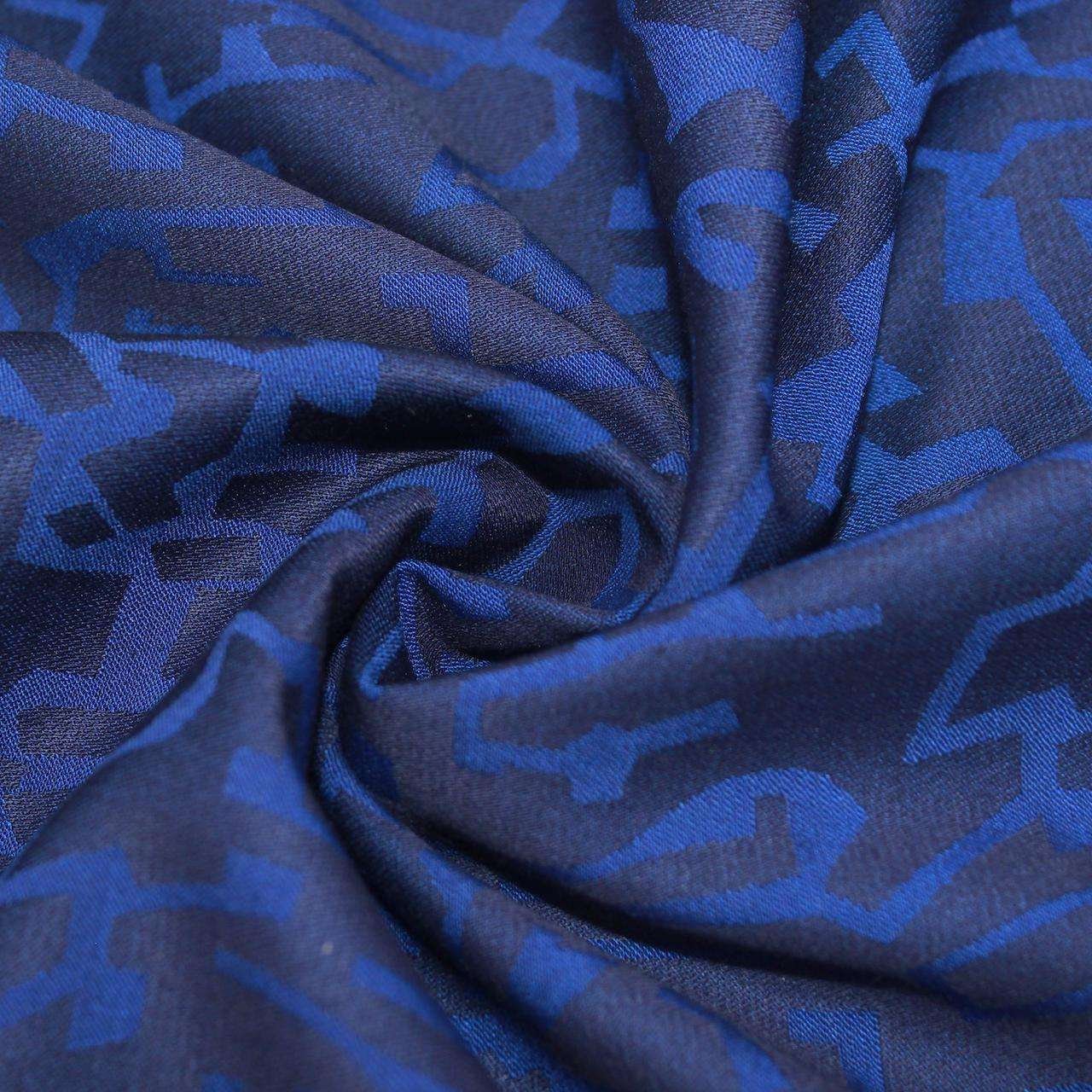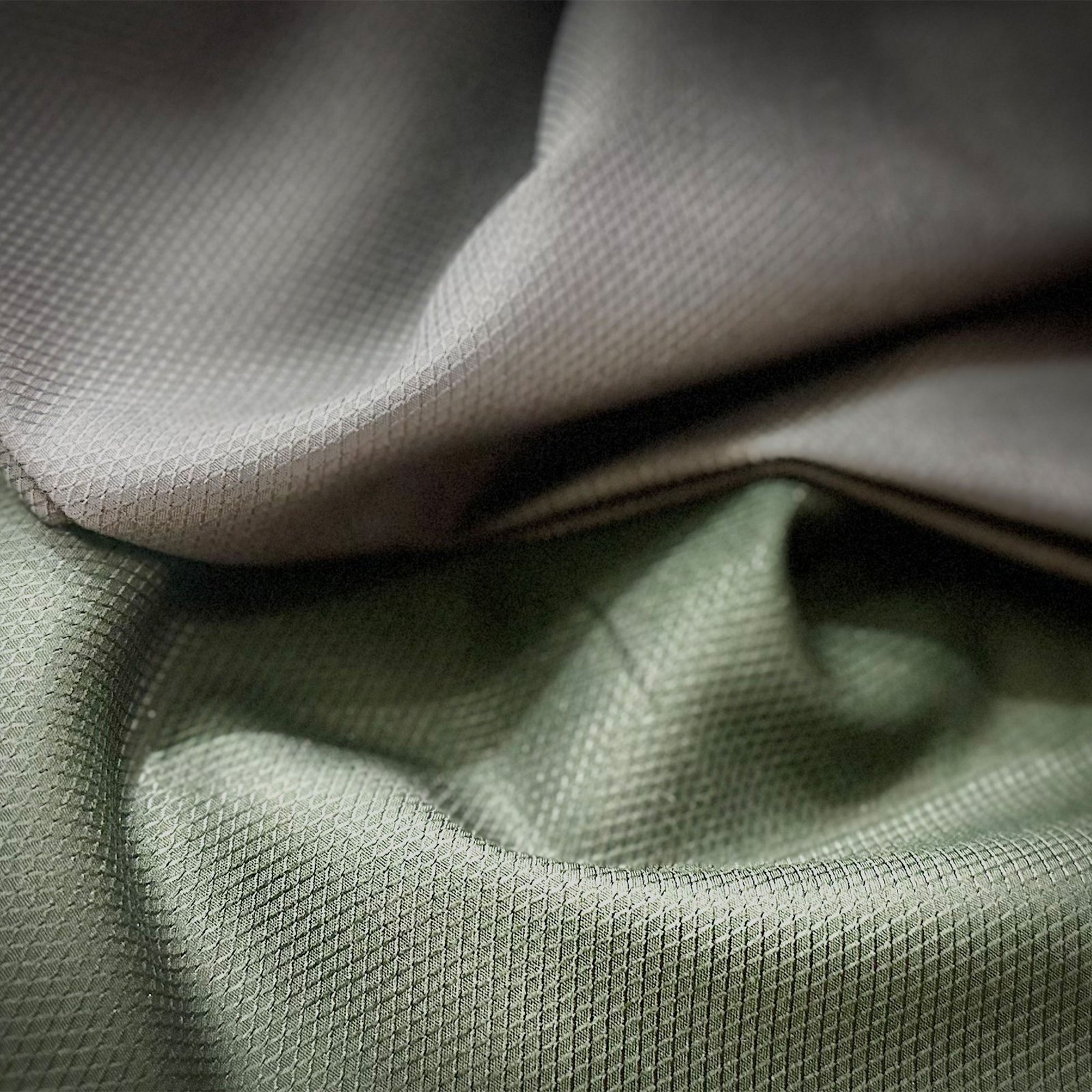
A standard adult Saudi thobe cut from 145 to 150 cm fabric takes 3.4 to 4.2 metres of cloth, so most garment factories budget 3.8 metres per piece and order 45 to 50 metres per dozen once marker waste and shrinkage allowance are added. How much fabric for a thobe you actually need comes down to three variables: the finished length of the garment, the usable width of the cloth you buy, and the allowance the cutter adds for shrinkage and pattern matching. A decade of quoting thobe programmes for wholesalers, garment makers and uniform suppliers across Saudi Arabia and the wider GCC has taught us that consumption, not unit price, decides which bid wins a tender — a four percent yield difference across 30,000 pieces outweighs a four percent difference in the price per metre. If you are still choosing a quality, our roll and container price guide shows what a metre costs at volume; if you already have a size chart, the sample order guide explains how to approve the cloth before the bulk lot is cut.
The Short Answer: How Much Fabric for a Thobe
Budget 3.8 metres of 150 cm cloth per adult thobe, 2.0 to 2.8 metres for a boy’s thobe, and 4.2 to 5.0 metres for a hooded Moroccan djellaba — then add 8 to 12 percent for cutting loss.
These are the consumption figures we work to when a buyer sends a size chart, quoted in metres of usable width after selvedge:
| Garment | Finished length | Metres per piece | Notes |
|---|---|---|---|
| Men’s thobe, slim cut | 140-145 cm | 3.4-3.6 m | Tighter body, short sleeve allowance |
| Men’s thobe, standard | 148-150 cm | 3.8-4.0 m | Most common Gulf retail size |
| Men’s thobe, long or wide cut | 155 cm and above | 4.2-4.5 m | Extra body width plus longer sleeve |
| Emirati kandura | 145-152 cm | 3.6-4.2 m | Narrower body, usually 150 cm cloth |
| Boy’s thobe (ages 6-12) | 90-120 cm | 2.0-2.8 m | Higher waste ratio on a small marker |
| Hooded djellaba | 150-160 cm | 4.2-5.0 m | Hood and wide sleeves add 20-30 cm |
| Matching shimagh from the same quality | – | plus 1.3-1.6 m | Only when cut from the same dye lot |
Per dozen, the arithmetic runs 12 multiplied by 3.8 metres, which is 45.6 garment metres, and a practical fabric order is 50 to 51 metres once cutting loss is included.
Why Fabric Width Decides Your Metres per Garment
A thobe body panel is roughly 75 cm wide when cut, so the whole yield question is whether that panel plus a sleeve, or two sleeves, will fit across the cloth you buy.
| Usable width | Marker layout | Metres per adult thobe | Waste index |
|---|---|---|---|
| 110 cm | Body split into two panels, sleeves nested | 4.6-5.0 | High |
| 145 cm | One panel plus one sleeve, tight | 3.7-3.9 | Medium |
| 150 cm | One panel plus one sleeve, comfortable | 3.6-3.8 | Low |
| 160 cm | Panel plus both sleeves | 3.4-3.6 | Lowest |
| 180 cm double width | Two garments cut side by side | 3.5-3.6 | Low, but higher MOQ |
The commercial point is that a wider cloth at a higher price per metre is often the cheaper answer. Compare 160 cm at $1.10 per metre against 150 cm at $1.00 per metre: the narrow cloth needs 3.8 metres, or $3.80 per garment, while the wide cloth needs 3.5 metres, or $3.85. Width and price have to be compared together, never price alone. It also explains why Gulf factories increasingly ask for 160 cm on plain white thobe qualities while staying at 145 to 150 cm on jacquard, where a wider loom would raise the set-up cost.
How GSM Turns Metres into Kilograms
Weight per garment is metres multiplied by width multiplied by GSM, and that single calculation decides whether a programme ships on weight or on volume.
A 3.8 metre thobe in 150 cm cloth uses 5.7 square metres of cloth, so:
| GSM | Weight per adult thobe | What we ship it for |
|---|---|---|
| 110-120 | 630-680 g | Summer cloth for the Gulf coast |
| 130-140 | 740-800 g | Standard all-season plain weave |
| 150-165 | 855-940 g | Dobby and heavier plain weaves |
| 185-200 | 1.05-1.14 kg | Winter twill and brushed qualities |
| 230-250 | 1.31-1.43 kg | Heavy winter cloth, cool highlands |
A 5,000 piece programme at 135 GSM therefore needs about 19,000 metres of cloth weighing 3.85 tonnes, which is close to a full 20 foot container. A 40 foot high cube holds 42,000 to 52,000 metres of 150 cm cloth, and on lighter qualities the load is limited by volume rather than by weight — a detail worth knowing before you let a forwarder quote a programme by tonnage.
From Roll to Finished Thobe: Five Steps
Cloth becomes a thobe in five stages, and consumption is fixed during the first three — relaxing, testing and spreading — long before a blade touches the fabric.
- Roll inspection and relaxation. Every roll is checked on a backlit inspection table and marked for defects, then left to lie flat for 24 hours so the tensions from weaving and packing relax out of the cloth.
- Shrinkage and relaxation testing. A 1 to 2 metre cut from the actual bulk lot is washed three times at the buyer care label temperature, then measured in warp and weft. This test, not the mill certificate, sets the cutting allowance.
- Marker making. Pattern pieces are nested on the width you actually bought, with allowance for shrinkage and, if the cloth is striped or checked, for matching at the placket and side seams.
- Spreading and cutting. Layers are laid with weights or vacuum, cutting height is kept to what the knife can hold square, and every cut bundle is labelled with size, shade band and piece count.
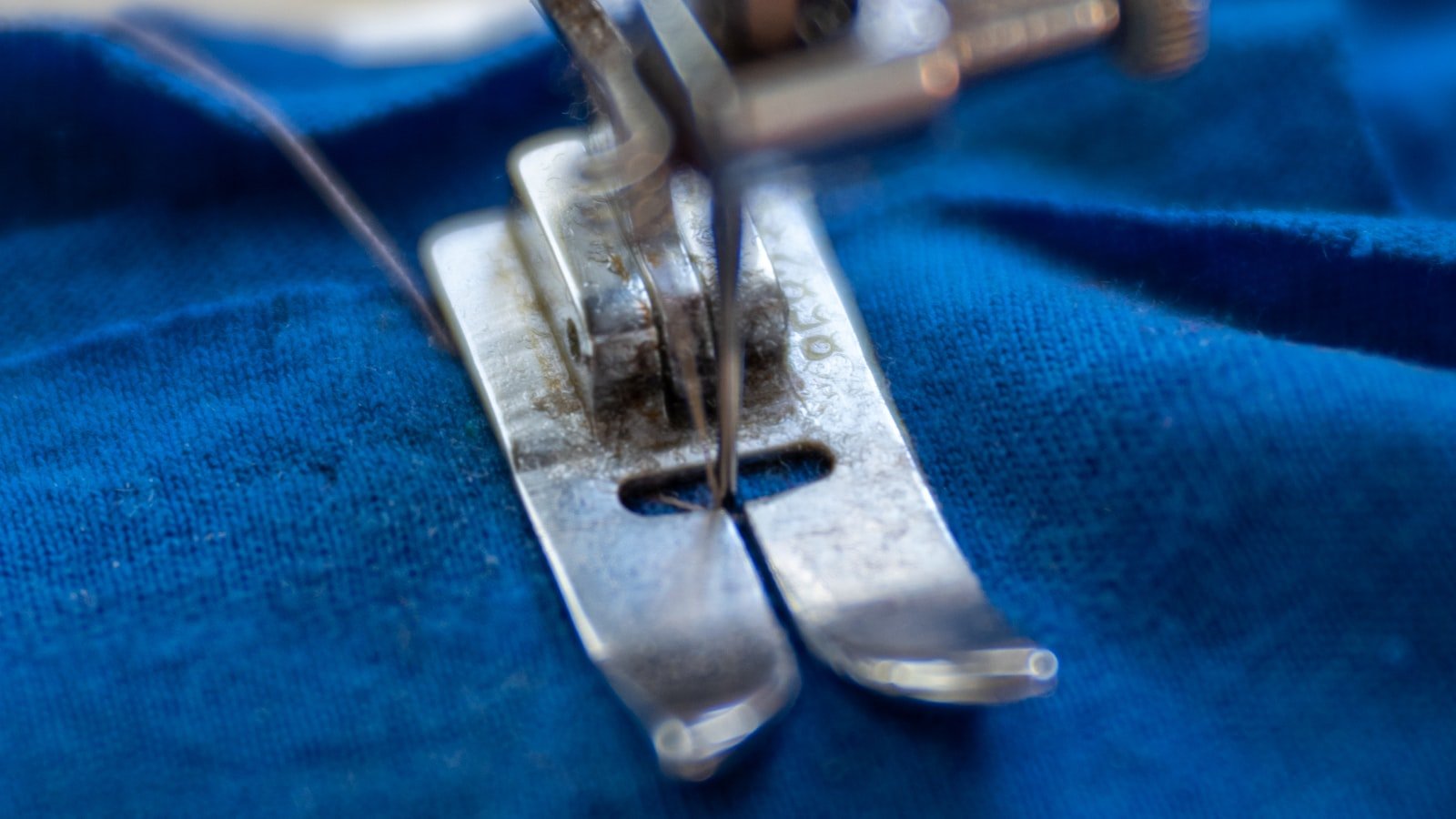
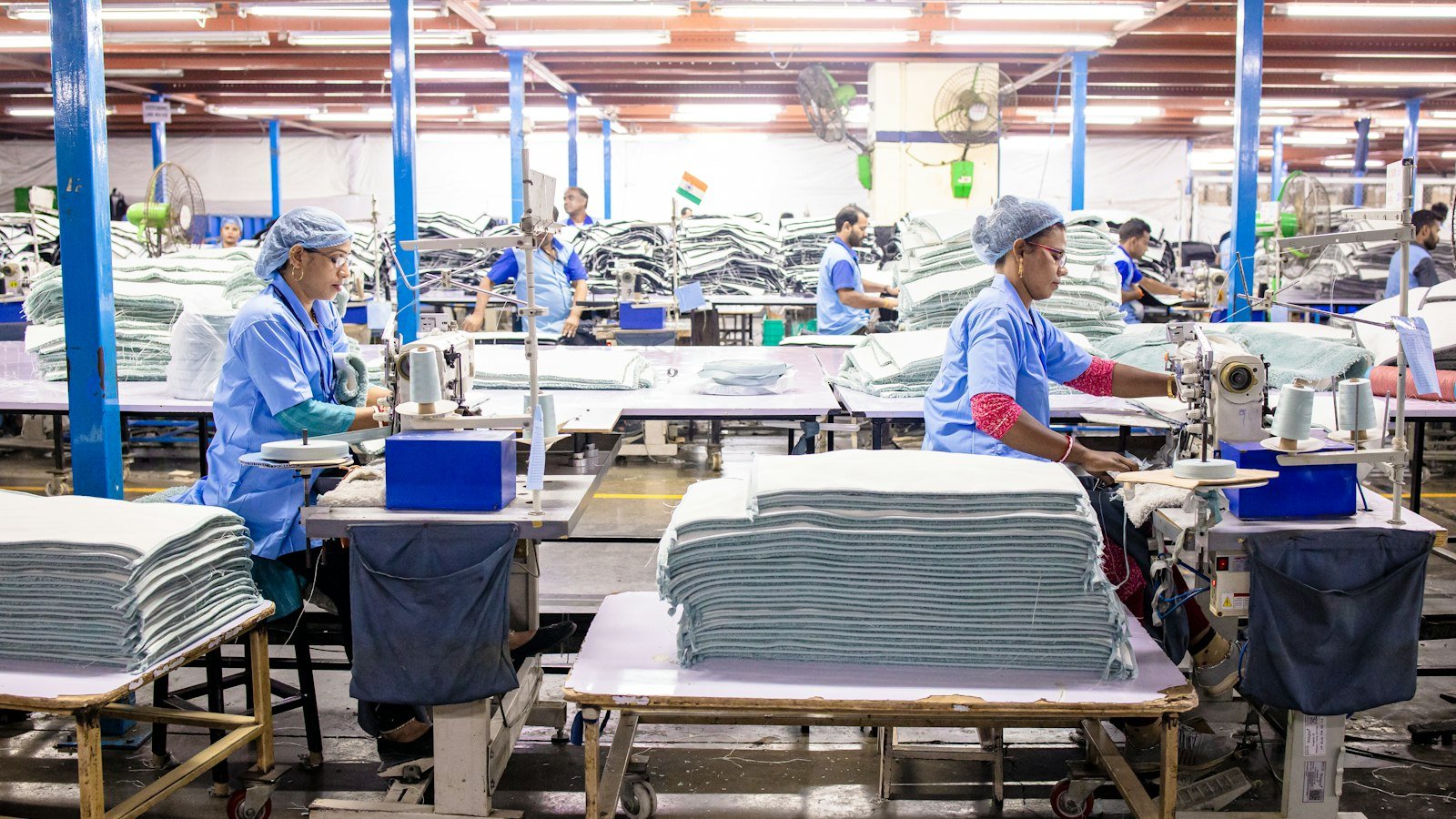
- Stitching, pressing and final measurement. Placket, cuff and sleeve angle are sewn, the garment is pressed, and finished measurements are checked against the size chart per size rather than per bundle.
The steps that save fabric are the boring ones. A factory that skips the relaxation lay and cuts straight off the roll will lose more metres to distorted panels than it ever gains by cutting faster.
Shrinkage and the Cutting Allowance
Sanforized thobe cloth typically moves 2 to 3 percent in the warp after the first wash, so the cutter must add that length back into the pattern or the finished thobe comes up short.
| Fabric state | Warp shrink, first wash | Weft shrink | Allowance to add |
|---|---|---|---|
| Sanforized plain weave polyester | 1.5-2.5% | 1-2% | plus 2-3 cm on a 150 cm body |
| Sanforized TC | 2-3% | 1.5-2.5% | plus 3-4 cm |
| Heat set TR | 1-2% | 1-1.5% | plus 1.5-3 cm |
| Unsanforized greige | 5-8% | 3-5% | plus 8-12 cm, or pre-shrink first |
Two habits protect a programme. First, fix the allowance from a wash test on the bulk lot, not from a generic figure, because two qualities from the same mill can behave differently. Second, keep the first washed sample with its measurements written on it, so a claim three months later can be settled with a number instead of an argument.
Marker Waste: Where 8 to 15 Percent Goes
Marker waste is the cloth between pattern pieces, and on a thobe it normally runs 8 to 12 percent — 15 percent or more when the width does not match the marker, when stripes or checks must be matched, or when cloth is cut one layer at a time.
Where the loss actually comes from:
- Width mismatch. A marker drawn for 145 cm leaves 5 cm dead on a 150 cm roll, and that dead strip costs the same as usable cloth.
- Pattern matching. Matching a yarn dyed stripe or check at the placket, side seams and sleeve seams typically costs 3 to 6 percent.
- One-way nap. Brushed winter cloth must be cut with every piece facing the same direction, which removes the option of nesting pieces head to tail.
- Poor size ratio. A marker carrying one size wastes more than a graded marker carrying three or four.
- End-of-roll loss. The last one or two metres of a roll often carry creases, slack or a defect from the earlier inspection.
Four decisions that recover most of it: order the width your marker was built for, give the mill a full size ratio before weaving, confirm the stripe repeat and match points in writing, and settle the nap direction before the lot is woven rather than after it lands.
What to Send the Mill Before Cutting
A written brief removes most consumption disputes before they start. Send these six items with your enquiry:
- Finished measurements per size and the size ratio you will cut
- GSM, composition and width you intend to buy
- Shrinkage data or the care label the garment must meet
- Whether the garment needs pattern matching, and in which direction
- The number of colours, shade bands and pieces per colour
- Packing ratio, roll length limits and marking requirements
Then ask for a pre-production garment: 1 to 2 metres from the bulk lot, cut and stitched in one size, measured after washing. On plain white thobe cloth this step is what confirms that your 3.8 metre figure is real.
Ordering Cloth to a Consumption Plan
Fabric ordered against a consumption plan, rather than against a round number of metres, is what keeps a thobe programme profitable — the metres you must buy are metres per piece times pieces, plus waste, divided by roll length.
| Quality | GSM | Price per metre | Metres per thobe with 10% waste | Fabric cost per thobe |
|---|---|---|---|---|
| Plain weave polyester | 120-140 | $0.76-$1.35 | 4.2 m | $3.19-$5.67 |
| TC twill, winter | 185-220 | $1.40-$2.10 | 4.2 m | $5.88-$8.82 |
| Dobby | 150-180 | $2.40-$3.60 | 4.2 m | $10.08-$15.12 |
| Jacquard | 160-200 | $3.20-$5.00 | 4.3 m | $13.76-$21.50 |
Stock shades start at 3,000 metres per quality, which is roughly 700 to 800 thobes, and a custom construction starts at 5,000 metres. Payment is 30 percent T/T deposit with the balance against the bill of lading copy, or an irrevocable L/C at sight above $40,000.
Send us your size chart, size ratio and annual volume, and we will return the metres you actually need to order, a season-by-season fabric recommendation and a quotation with the waste factor we would use on our own markers. Request a thobe fabric quotation with your consumption plan, and include the finished length and the width you are considering so we can price both.
Frequently Asked Questions
How much fabric do I need for one thobe?
Budget 3.4 to 4.2 metres of 145 to 150 cm thobe fabric for one adult garment, with 3.8 metres the answer most Gulf factories work to for a standard retail size. A slim cut at 145 cm finished length takes 3.4 to 3.6 metres, a standard 148 to 150 cm thobe takes 3.8 to 4.0 metres, and a long or generously cut thobe takes 4.2 to 4.5 metres. A boys thobe takes 2.0 to 2.8 metres and a hooded djellaba takes 4.2 to 5.0 metres. Those figures are garment metres only, so add 8 to 12 percent for marker waste before you place the fabric order.
How many metres of thobe fabric do I need for one dozen thobes?
One dozen adult thobes needs 45 to 50 metres of 150 cm fabric. The garment metres alone are 12 multiplied by 3.8 metres, which is 45.6 metres, and cutting loss adds another 8 to 12 percent, so a practical order is 50 to 51 metres per dozen. If the same cloth is also used for matching shimagh or headwear, add roughly 15 metres per dozen. For a 5,000 piece programme the arithmetic lands at about 19,000 metres and 3.85 tonnes of cloth at 135 GSM, which is close to a full 20 foot container load.
Does fabric width change how much fabric I need for a thobe?
Fabric width changes consumption more than most buyers expect. At 150 cm usable width one body panel and one sleeve fit across the cloth, giving 3.6 to 3.8 metres per adult thobe. At 160 cm both sleeves are nested beside the panel and consumption drops to 3.4 to 3.6 metres, which often pays for a slightly higher price per metre. At 145 cm the marker is tight and waste rises. At 110 cm the body must be split into two panels, pushing consumption up to 4.6 to 5.0 metres. Always compare width and price together rather than price alone.
What does the fabric for one thobe cost?
At our mill prices of 0.76 to 1.35 US dollars per metre for plain weave polyester, 4.2 metres of cloth including cutting loss costs 3.19 to 5.67 dollars per garment. TC twill for winter at 1.40 to 2.10 dollars per metre works out at 5.88 to 8.82 dollars, dobby at 2.40 to 3.60 dollars at 10.08 to 15.12 dollars, and jacquard at 3.20 to 5.00 dollars at 13.76 to 21.50 dollars. These are FOB Ningbo or Shanghai prices excluding freight, and they move with GSM, yarn count, width and order volume.
How much shrinkage allowance should I add when cutting thobe fabric?
Add 2 to 3 percent to pattern length on sanforized thobe cloth and 8 to 12 centimetres on unsanforized greige. Sanforized plain weave polyester normally moves 1.5 to 2.5 percent in the warp on the first wash, sanforized TC moves 2 to 3 percent, and heat set TR stays inside 1 to 2 percent. Unsanforized greige can move 5 to 8 percent, which is why we never recommend bulk cutting before a wash test. Take 1 to 2 metres from the actual bulk lot, wash it three times at the care label temperature your buyer specifies, then measure the warp and weft yourself.