Thobe fabric MOQ runs from 500 meters per colour for stock qualities to 2,000–3,000 meters per colour for a custom construction or dyeing, and it applies per colour rather than per order. Understanding why the number exists is what lets you negotiate it down without paying a surcharge.
We quote minimums every day from our own looms and dyehouse, and the conversations that go well are the ones where the buyer understands what a setup costs. This is a buyer FAQ rather than a pitch, so the numbers below are the ones we hold ourselves to.
The Short Answer: Thobe Fabric MOQ
A thobe fabric minimum is set by the number of setups an order requires, and setups are counted per colour and per construction rather than per meter.
| Order type | MOQ per colour | Why that number |
|---|---|---|
| Stock colourway, standard quality | 500 m | No dyeing setup; cut from existing production |
| Custom dyed, standard construction | 1,000–2,000 m | One dye batch plus a lab dip round |
| Custom construction (new count, weight or width) | 2,000–3,000 m | Warp beam, reed and loom programme |
| Yarn-dyed stripe or check | 2,500–3,000 m | Dyed yarn committed before the loom |
| Printed, digital | 100–500 m per design | No screen cost on digital |
| Printed, rotary or flat screen | 800–3,000 m per design | Screens or print passes per colour |
If your order spans several colours at different minimums, the practical minimum is the sum of the colour minimums, not the largest single one.
Why a Minimum Exists at All
Most of the cost in a short run is setup, not material, and setup cost is identical whether you buy 300 meters or 3,000.
Four setups drive the number:
- Loom setup. A new construction needs a fresh warp beam, a different reed and a loom programme. Beaming and drawing in takes one to three hours, and the first few hundred meters frequently run off specification while tension settles.
- Dye batch. A dyeing machine needs a minimum liquor volume to circulate cloth and control shade. Below that volume the liquor-to-goods ratio rises, the bath is harder to control and shade consistency across the batch drops.
- Lab dip and approval. A custom shade needs a lab dip, your approval, and sometimes a second round. That cycle costs time and a small quantity of dyed sample regardless of the bulk size.
- Finishing and inspection. A separate finishing pass and a separate inspection lot are needed for every distinct colour and construction.
None of those four costs scale down with a smaller order. That is the whole argument, and it is why a mill that quotes you 200 meters at the bulk price is either running your order at a loss or building the setup into the price already.
The Per-Colour Distinction That Saves Money
An order’s production cost is driven by the number of distinct colour-and-construction combinations, not by total meterage, so six colours in 6,000 meters is six runs.
This is where buyers lose money. A 6,000 meter order in one white is a single efficient run. The same 6,000 meters split into six shades is six separate runs, each with its own dye bath, finishing pass and inspection lot. The meter price for the six-colour version is typically 12–25% higher even though the fibre content is identical.
Three ways to manage it:
- Cut the colour count. Most ranges survive with fewer shades than the design brief proposes.
- Consolidate colours onto one delivery date. Grouping them does not remove the dye setups, but it removes the scheduling and freight overhead and often unlocks better mill scheduling.
- Split the route. Use stock colourways for your highest-volume shades and custom dyeing only for the shades that carry the range identity.
What Counts Toward the Minimum
Four details decide whether your order technically qualifies, and all four should be settled in writing before production starts.
| Item | Typical rule | Why it matters |
|---|---|---|
| Tolerance below minimum | −10% accepted | A 1,000 m colour may ship at 900 m |
| Production overage | +3 to 5% | Confirms whether excess rolls are billed |
| Roll length | 50 m or 100 m standard | Odd lengths raise packing cost |
| Split shipment | Allowed above a threshold | Affects freight, not production |
The overage rule is the one buyers most often overlook. Mills run slightly above the ordered quantity to cover defects and to close rolls at a standard length, and if the purchase order does not state whether that overage is billed and at what price, it becomes a conversation after the goods exist.
How to Lower an MOQ Without a Surcharge
Six routes work, and none of them require the mill to lose money.
- Choose a stock colourway. This removes the dye setup entirely and is the single largest single saving available on a small order.
- Ride an existing production run. If the mill is already running your quality and shade for another customer, a small top-up is often accepted at list price if you can accept their delivery date.
- Accept a longer lead time. Scheduling your small run into a gap costs the mill nothing and costs you only patience.
- Reduce the number of colours. Two shades at 1,500 m each will usually price better than four shades at 750 m.
- Standardise the construction. Keeping yarn count, width and GSM identical across your colours lets the mill reuse the warp beam.
- Take the roll length the mill produces. Demanding a non-standard roll length adds packing time and can push you below the efficiency threshold.
A short-run surcharge of 10–30% is not unreasonable when the minimum cannot be met; it reflects real setup cost. What is unreasonable is a surcharge applied without the buyer being told which setup it covers.
MOQ and Lead Time Go Together
Crossing a volume threshold buys speed as well as price, because larger runs get priority in scheduling.
| Order profile | MOQ | Lead time after deposit |
|---|---|---|
| Stock colourway | 500 m per colour | 7–15 days |
| Custom dyed | 1,000–2,000 m per colour | 25–40 days |
| Custom construction | 2,000–3,000 m per colour | 35–55 days |
| Yarn-dyed stripe or check | 2,500–3,000 m per colour | 45–70 days |
| Digital print on a stock base | 100–500 m per design | 15–25 days plus strike-off |
Those figures assume normal capacity. In the six weeks before Chinese New Year, and in the pre-Ramadan window when Gulf buyers book capacity, add two to three weeks. Our peak season booking guide sets out the calendar and the deposit dates that protect a delivery window.
Sampling Below the Minimum
You can evaluate a quality without meeting any MOQ, and doing so is the cheapest risk reduction available.
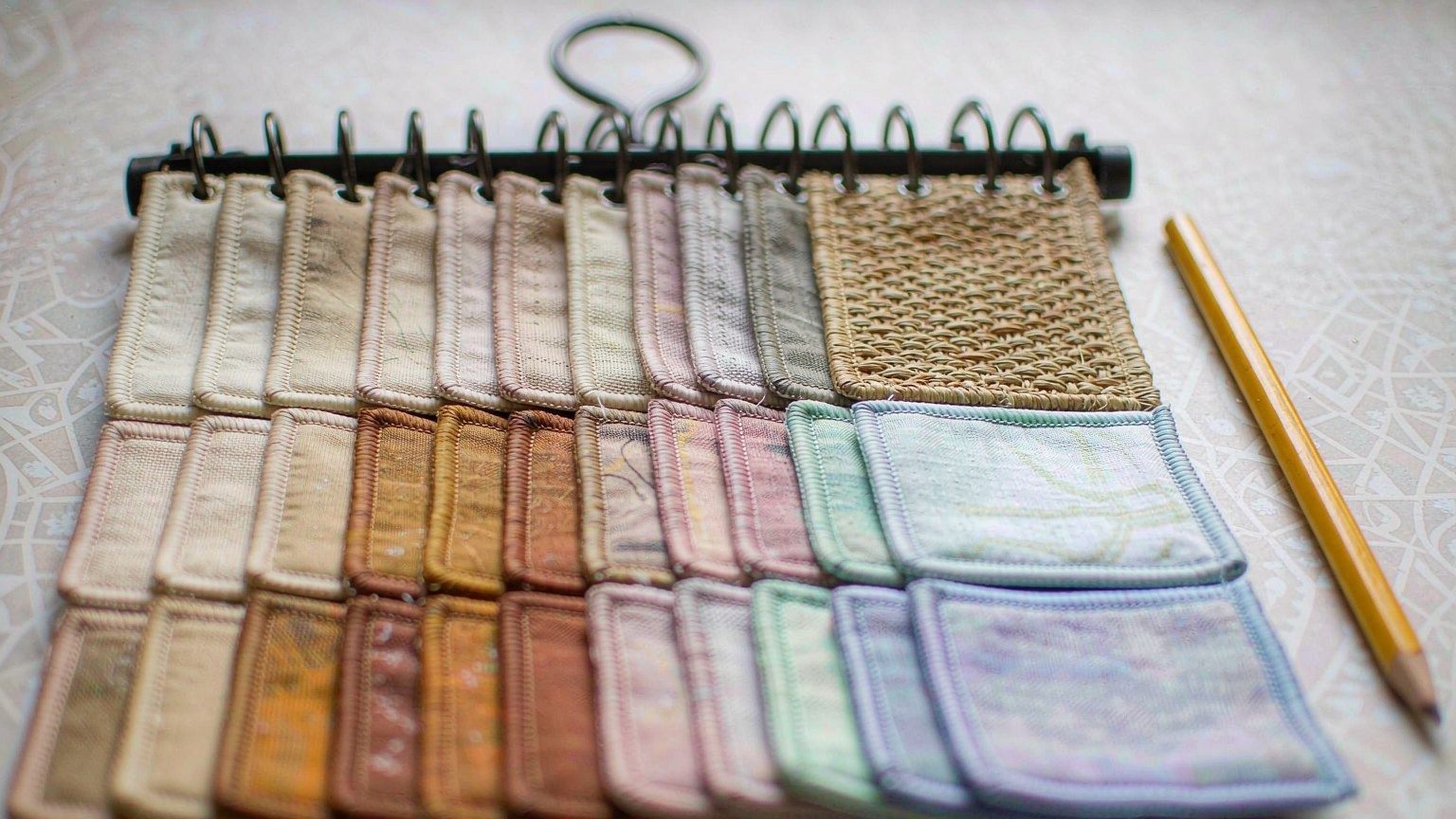
Fabric swatch cards in a mill’s standard qualities ship free against courier cost, typically $30–60, and arrive in a few days. A lab dip for a custom shade costs roughly $30–80 and takes three to five working days per round. Yardage samples of one to five meters are usually charged at a sample price and credited against the bulk order if it follows. Our sample order walkthrough explains the three sample types and when to use each.
That structure means the sequence for a new programme is: swatch card, then lab dip, then a small yardage sample, then bulk. You only meet an MOQ at the last step, after the quality and the shade are already approved.
What to Ask Before You Accept a Minimum
Six questions separate a fair minimum from an arbitrary one.
- Is this per colour or per order? It changes your planning entirely.
- What is the tolerance below the minimum, and does a surcharge apply at the tolerance limit?
- How is production overage billed, and at what price?
- What roll length standard applies, and does an odd length change the price?
- Which setup costs does this minimum cover — dyeing, loom, printing, finishing?
- Can the quantity be split across deliveries without a repricing?
A supplier who can answer all six has a cost model rather than a policy. If your order genuinely sits below a minimum and the surcharge is the blocker, send us the specification and the quantity and we will tell you which route gets you to the bulk price — a stock shade, a shared run or a longer delivery window. If you are developing a private label white and expect to scale, the custom manufacturing process sets out how minimums change once a quality becomes a repeat order, which is when the number starts working in your favour rather than against you.
Frequently Asked Questions
What is the minimum order quantity for thobe fabric?
Minimums are set per colour rather than per order, and they depend on the route. Stock colourways in white and the common thobe shades start at 500 meters per colour from our mill. Custom-dyed fabric, where the shade has to be matched to a lab dip, starts at 1,000 to 2,000 meters per colour because the dye bath has to justify its batch. A fully custom construction with a new yarn count, weight or width needs 2,000 to 3,000 meters, and a yarn-dyed stripe or check runs 2,500 to 3,000 meters because the dyed yarn has to be committed before the loom. Printing adds separate minimums per design rather than per colour.
Why do fabric mills have minimum order quantities at all?
Because most of the cost in a short run is setup rather than material. A loom running a new construction needs a fresh warp beam, a reed and a loom programme, which takes one to three hours and can consume several hundred meters of warp before the cloth is on specification. A dyeing machine needs a batch volume to circulate the cloth and control the shade, and below that volume the liquor ratio rises and consistency falls. Printing needs a screen or a print head pass per colour. Setups cost the same whether the run is 300 meters or 3,000, so short runs carry the whole setup on far fewer meters.
Can I order below the stated minimum?
Sometimes, but expect a surcharge rather than a discount. Below the standard minimum, mills typically apply a short-run charge of 10 to 30 percent on the per-meter price, because the setup cost is being spread across fewer meters. Two routes avoid the surcharge entirely. The first is to choose a stock colourway, which skips the dyeing setup altogether. The second is to piggyback your quantity onto an existing production run of the same quality and colour, which mills are usually willing to do if you can accept their delivery date rather than demanding your own.
Does the minimum apply to the total order or to each colour?
It applies to each colour, and this is the single most misunderstood line on a fabric quotation. An order of 6,000 meters in six colours is not a 6,000 meter order in production terms; it is six 1,000 meter runs, each requiring its own dye bath and setup. That is why a six-colour order of the same total meterage costs more per meter than a one-colour order. If your range needs many shades, consolidating to fewer colours and printing or finishing differently is often the cheaper route.
What happens if my order falls just short of the minimum?
Mills usually accept a tolerance of around 10 percent below the stated minimum before the short-run surcharge applies, so a 1,000 meter colour minimum may be accepted at 900 meters. The practical risk is not the price but the overage: mills frequently run 3 to 5 percent above the ordered quantity to cover defects and roll lengths, and it is worth agreeing in writing whether that overage is billed, and at what price, before production starts. Confirm the tolerance, the overage rule and the roll length standard in the purchase order, not in conversation.