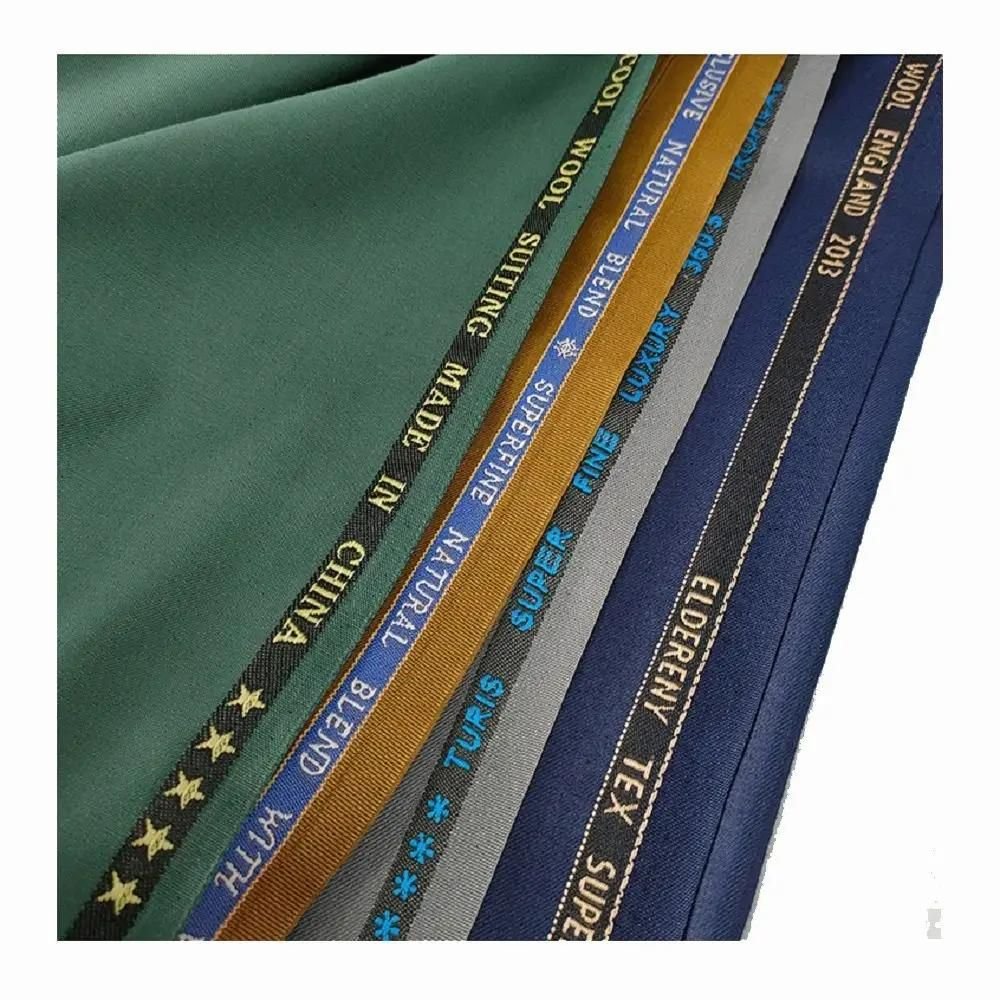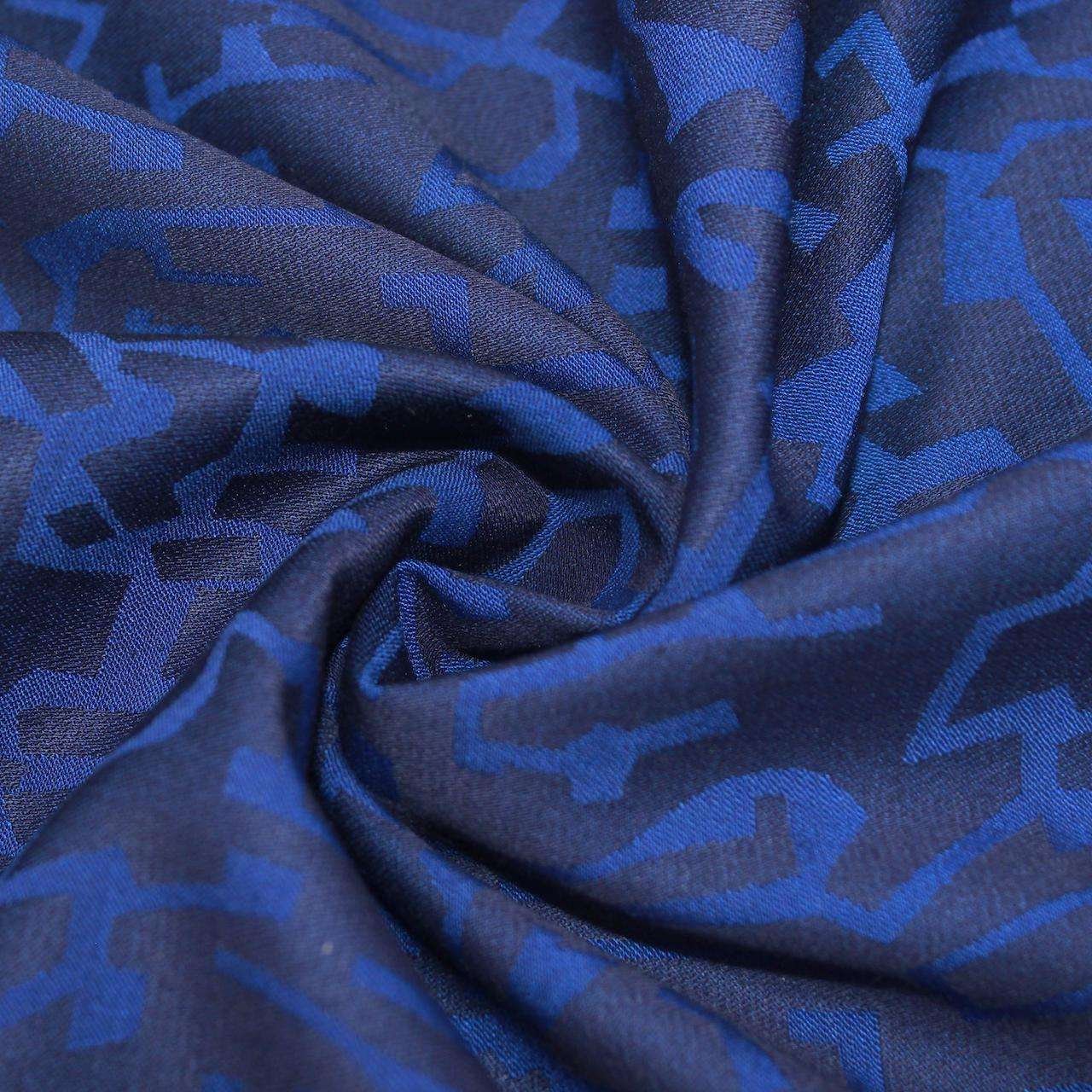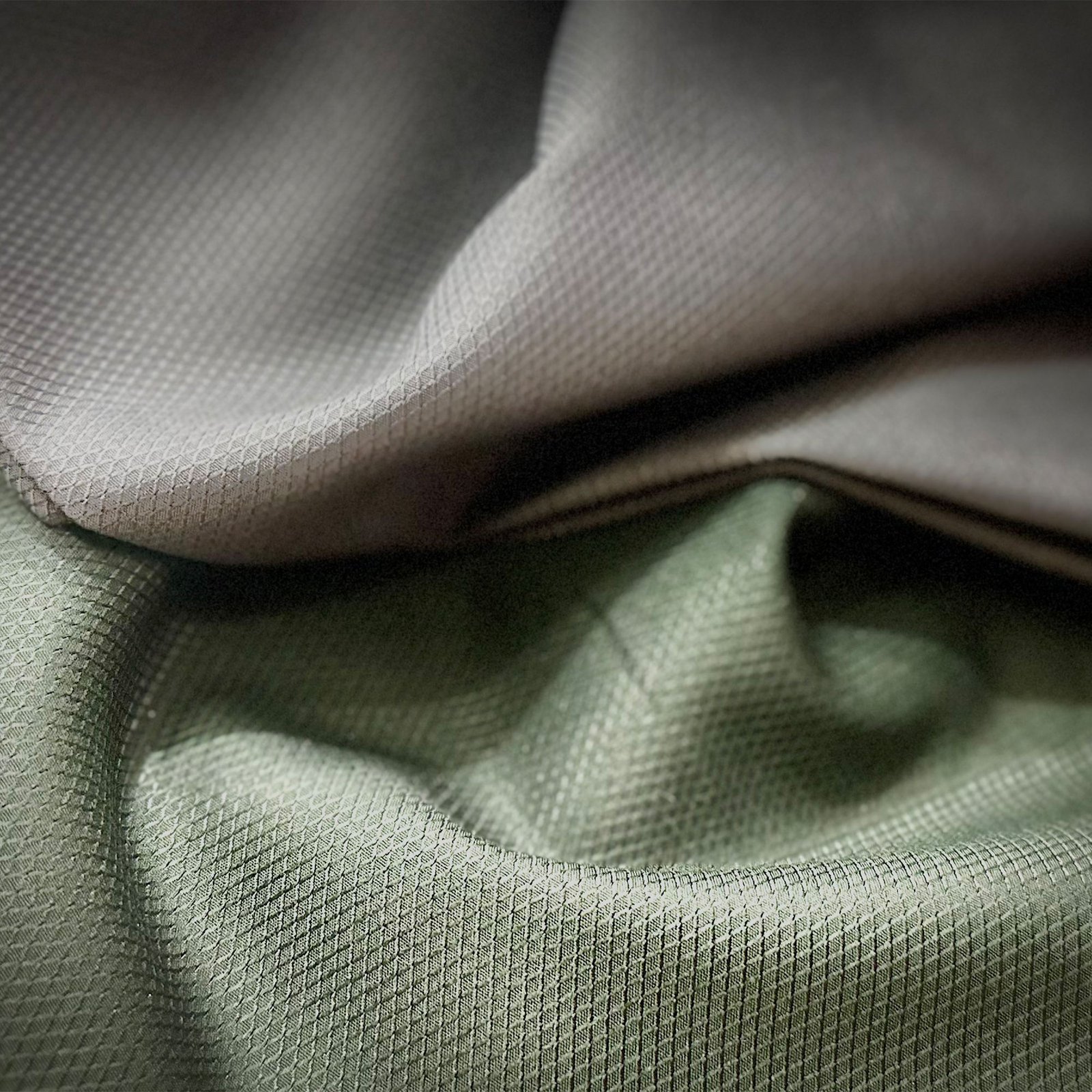
Custom thobe fabric manufacturing is a five-step process — brief, sample, approve, produce, inspect — and for a standard construction in your own colours it takes about 3–5 days for lab dips, 15–20 days for bulk, and roughly 45–70 days from first enquiry to goods at a Gulf warehouse. As a factory-direct thobe fabric mill with ten years of GCC export experience, we run OEM and private-label programmes for Saudi, Emirati and Omani wholesalers and garment factories every month. This guide answers the questions buyers actually ask — MOQ, development time, certification, QC and pricing — so you can brief a factory with confidence and avoid the two most common mistakes: skipping the wash test and approving bulk before the golden sample.
How Custom Thobe Fabric Manufacturing Works
Custom thobe fabric manufacturing follows a fixed sequence: you specify the construction, the mill submits a sample, you approve a golden sample, bulk production runs, and QC inspects before shipment. Each step has a defined output, and a professional factory keeps you informed at every stage.
| Step | What happens | Typical timeline |
|---|---|---|
| 1. Brief | You send composition, GSM, width, finish and colour target | Day 1 |
| 2. Lab dip / sample | Mill develops or matches the colour and hand feel | 3–5 days |
| 3. Approval | You confirm the golden sample and keep it physically | 2–7 days |
| 4. Bulk production | Mill weaves, dyes and finishes; in-line QC checks | 15–25 days |
| 5. Final inspection | AQL 2.5 sampling, roll report, packing and shipment | 2–5 days |
The golden sample is the contract in fabric form. It fixes shade, hand, GSM, width and finish, and bulk is matched against it. A buyer who approves a golden sample on paper but never keeps a physical piece has nothing to compare against when the first roll arrives.
MOQ, Development Time and Pricing: What to Expect
The MOQ for custom thobe fabric is 500–1,000 meters per colour for a stock construction dyed to your colour, rising to 3,000–5,000 meters for a brand-new development. The difference is loom and yarn commitment: a new construction requires the mill to dedicate yarn sourcing and weaving trials, which only makes commercial sense at higher volume.
- Custom colour on stock construction — MOQ 500–1,000 m/colour; development 3–5 days; bulk 15–20 days.
- New blend ratio (e.g. a 55/45 TC) — MOQ 3,000–5,000 m; development 2–3 weeks; bulk 20–30 days.
- New weave (custom dobby or jacquard pattern) — MOQ 3,000–5,000 m; development 3–4 weeks; bulk 25–35 days.
- Width changes (non-standard width) — possible but adds waste and cost; 150–160 cm is the efficient standard.
Pricing follows the same logic. Stock constructions in standard colours sit at roughly $0.76–$1.05 per meter for spun polyester and $0.80–$1.10 for Micro; custom developments add development fees or are amortised into a higher bulk price. The fastest way to lower your unit cost is volume per colour, not volume across colours — a factory prices per shade because each shade is a separate dye batch.

A note on seasonal planning: Gulf wholesale buyers typically brief Ramadan and Eid collections 3–4 months ahead. A development request placed in that window is more likely to be quoted at a standard development fee; last-minute requests carry overtime pricing, because the mill must pull looms from other programmes.
Choosing a Custom Thobe Fabric Factory: The Checklist
Choose a custom thobe fabric factory by verifying five things before you commit: production capability, certification, QC process, communication and reference base. A factory that passes these five checks is a safe long-term partner; a factory that fails any of them is a price risk no matter how competitive the quote.
- Production capability — Ask for dated photos or a live video of thobe fabric on their looms, not catalogue images. Confirm which processes are in-house (weaving, dyeing, finishing) and which are outsourced.
- Certification — OEKO-TEX Standard 100 as a baseline; GOTS and GRS for sustainable lines. Verify the number on the public registry, never accept a PDF photo.
- QC process — Ask for incoming inspection, in-line checks and final AQL sampling. A factory that cannot describe its defect handling has no system to control your order.
- Communication — Time their replies over three emails in a week. Under 24 hours signals an organised export office; over 48 hours signals a broker forwarding orders.
- Reference base — Ask for three buyers in your region or category. A Gulf-focused factory will name Saudi, UAE or Omani customers without hesitation.
We apply the same standard to ourselves: OEKO-TEX-certified production, in-house weaving and finishing, and a seven-day response guarantee on every enquiry. If you are comparing mills, send the same five questions to each and compare the answers side by side — the differences are usually decisive. To test our response speed directly, send your specification through our contact page or reach us on WhatsApp; we reply within one business day with a draft spec sheet.
Certification: What Actually Matters for GCC Buyers
For thobe fabric, OEKO-TEX Standard 100 is the baseline certification, while GOTS and GRS matter only if you sell sustainable lines — and the whiteness and fastness test reports matter more than any certificate. Certification proves a system; test reports prove your specific fabric.
- OEKO-TEX Standard 100 — verifies no harmful substances in the fabric. The standard GCC requirement.
- ISO 9001 — quality management system; a useful proxy for process control.
- GOTS — organic cotton certification, only relevant for organic thobe lines.
- GRS — recycled content certification, relevant if you market recycled polyester thobes.
For white thobe fabric specifically, ask the mill for the whiteness stability and anti-yellowing test report — this is the property that keeps a white thobe white after months of Gulf sunlight and industrial washing, and it is tested, not claimed. Colour fastness to washing (grade 4+ out of 5) is the second report to request. A factory that produces these reports on request has nothing to hide; one that cannot is signalling a problem.
The Two Mistakes That Cost Buyers the Most
The two most expensive mistakes in custom thobe fabric sourcing are skipping the five-wash test and approving bulk without keeping a physical golden sample. Both are cheap to avoid and expensive to discover late.
- Mistake 1: skipping the wash test. A fabric that looks perfect on a sample card can crease, pill or yellow after five machine washes at 40°C. Run the wash test before approving bulk — it predicts every care complaint the end customer will raise.
- Mistake 2: no physical golden sample. Without a kept physical sample, shade arguments become he-said-she-said when bulk arrives. The golden sample is the referee; without it, every dispute goes to inspection reports and shipping documents.
A third, quieter mistake is ordering a “premium” construction when the market needs a daily one. TR at 150–220 GSM drapes beautifully, but it costs more and needs steaming; if your customer base wants zero-iron daily thobes, standard Micro at 110–125 GSM is the right product at the right price. Match the construction to the end market before you negotiate the price — a lower-priced fabric that fits the market outsells a premium fabric that does not.
Start Your Custom Thobe Fabric Programme
The low-risk way to start is a single custom colour on a standard construction: send your target colour, GSM and quantity, and we will submit a lab dip within 3–5 days alongside the wash-test results and a fixed bulk price. From there you scale colour by colour as each shade sells through — the same pattern our long-term Gulf customers use. We are a factory-direct thobe fabric supplier, so the quote you receive is the mill price, not a trading margin. Request your lab dip and golden sample through our contact page or WhatsApp today, and we will confirm the development timeline and MOQ for your specification within one business day.
Frequently Asked Questions
How does custom thobe fabric manufacturing work?
Custom thobe fabric manufacturing works in five steps: you brief the specification (composition, GSM, width, finish and colour), the factory develops or matches a sample, you approve the golden sample, the mill produces the bulk order, and QC inspects before shipment. For a standard construction such as 110-125 GSM spun polyester Micro in a new colour, the process takes 3-5 days for lab dips and 15-20 days for bulk production. For a truly new construction — a new blend ratio or a custom dobby pattern — development takes 2-4 weeks including yarn, weaving and finishing trials. Most buyers start with an existing construction in their own colours, which is faster, cheaper and lower-risk than a full development.
What is the MOQ for custom thobe fabric?
The MOQ for custom thobe fabric depends on the type of customization. For a stock construction dyed in a custom colour, most Chinese thobe fabric factories quote 500-1,000 meters per colour. For a new development such as a custom blend or weave, the MOQ typically rises to 3,000-5,000 meters because the mill must dedicate yarn and loom time. Width matters too: thobe fabric is usually woven at 150-160 cm, and a non-standard width increases waste and cost. In our experience, a buyer who starts with one custom colour on a standard construction gets the fastest quote and the lowest entry barrier; multi-colour ranges are best phased after the first colour sells through.
How long does custom thobe fabric development take?
Custom thobe fabric development takes 2-4 weeks for a new construction and 3-5 days for a lab dip on an existing construction. The timeline breaks down into yarn sourcing (if a new blend is involved), weaving trials, dyeing and finishing, and sample submission. After your approval of the sample, bulk production runs 15-25 days depending on volume, and sea freight to the Gulf adds roughly 20-35 days. A realistic total from first enquiry to goods at a Jeddah or Dubai warehouse is 45-70 days, so buyers who plan around Ramadan or Eid peaks should place development requests 3-4 months ahead. Factories that quote faster usually hold the construction in stock.
What certifications should a thobe fabric factory have?
A reliable thobe fabric factory should hold OEKO-TEX Standard 100 for textile safety and ISO 9001 for quality management, and factories exporting sustainable lines should add GOTS for organic cotton and GRS for recycled polyester. Check the certificate number against the public registry (oeko-tex.com label check, global-standard.org for GOTS) rather than accepting a PDF photo. For thobe fabric specifically, the anti-yellowing finish on white and colour fastness to washing and light are more important than the certificate itself, so ask for test reports on whiteness stability and fastness grades. In our decade of GCC export, buyers rarely ask for more than OEKO-TEX on standard polyester thobe fabric, and it is the certificate we recommend as a baseline.
Can I private label thobe fabric with my own brand?
Yes, private label thobe fabric is a standard service: the factory produces the fabric to your specification, applies your brand to the selvedge, roll labels and packaging, and ships under your own trade name. Private label adds no development time when the construction is standard, and it does not change the MOQ. What changes is the paperwork — you need a registered trademark and, depending on your market, the fabric must meet that country”s labelling rules (composition, care symbols, origin). Some buyers also ask for custom selvedge branding woven into the fabric, which is possible but adds a small weaving set-up cost and is only worthwhile at higher volumes.
How is quality controlled on a custom thobe fabric order?
Quality on a custom thobe fabric order is controlled at three checkpoints: pre-production (yarn and grey fabric inspection), in-line (shade and weaving checks during production) and final inspection (AQL 2.5 sampling before packing). Before shipment the mill should provide a roll report listing shade, width, GSM and defects per roll, and a third-party inspection is available for orders above roughly USD 10,000. The golden sample you approve becomes the reference for bulk: the factory matches shade, hand feel and finish against it, and any deviation is rejected before packing. Buyers who approve a golden sample and keep it physically are the ones who resolve disputes in minutes rather than weeks.