The Short Answer: White Thobe Fabric Stays Opaque at 125 GSM or Above With Roughly 60 Percent Cover
White thobe fabric turns see-through when it drops below about 125 GSM or when the woven cover falls under roughly 60 percent, because opacity in a white robe cloth is decided by how much of the surface the yarns physically occupy, not by how white the cloth looks on the table. Cover, yarn count and light transmission are the three numbers that settle it, and all three can be written onto a purchase order before a single meter is woven.
Every season we ship white robe cloth into Riyadh, Jeddah, Dammam, Dubai, Kuwait City and Doha, and the same complaint comes back from at least one buyer: the fabric looked solid in the sample room and the finished thobes read transparent in the street.
It is almost never a quality failure in the ordinary sense. It is a specification that was written in GSM only, with nothing said about sett, yarn count or the light the cloth would be judged under.
This FAQ answers the questions buyers actually ask us, with the figures we test to.
What Makes White Thobe Fabric See-Through?
Transparency in a white thobe cloth is light passing through the gaps between warp and weft yarns, so anything that enlarges those gaps or thins the yarns makes the cloth read sheer, no matter how bright the white is.
Five causes cover nearly every case we have investigated:
- Weight below the climate threshold — a 100 to 110 GSM quality built for an air-conditioned indoor market shipped into Gulf daylight.
- Open sett — 90 × 58 or 100 × 60 constructions used because they feel cool and cost less per meter.
- Fine yarn substituted for cover — a mill hitting a GSM target with a finer, cheaper yarn, which leaves bigger interstices.
- Bright or trilobal filament — chosen for sparkle and luster, but with less internal light scattering than a semi-dull yarn.
- Over-brightening — a heavy optical brightener load that raises whiteness readings while doing nothing for cover.
The table below maps what a buyer sees to what is actually wrong, which is the fastest route to a correction that holds.
| What you see on the garment | What it actually is | Cloth cause | Specification fix |
|---|---|---|---|
| Hand shadow visible through the body panel | Light passing through interstices | Cover below 65% | Raise picks to 70+ or move up one weight band |
| Grey, dull look in strong sun | Diffuse transmission scattering | Bright filament, low TiO2 | Switch to semi-dull yarn |
| Violet or pink cast indoors | Over-brightened white | Optical brightener overload | Cap brightener, target b* ≤ 1.5 |
| Sheer at the shoulder, solid at the hem | Uneven pick density along the piece | Loom stop marks, tension drift | Pick density tolerance ±2 per inch |
| Transparent after 10 washes | Finish washed out, sett relaxed | Resin and calender only | Pre-shrunk, calender set at the mill |
| Body fine but pockets show through | Pocket bag in a lighter cloth | Trim quality mismatch | Specify pocketing to match cover |
Which GSM Keeps White Thobe Fabric Opaque in Gulf Daylight?
For daily white thobes in Saudi Arabia and the UAE, 125 to 135 GSM in a plain weave is the working floor, and 140 to 160 GSM is the band for formal and ceremonial wear where the garment is worn outdoors for long periods.
The numbers below come from light-box and spectrophotometer checks on our own production, measured as ISO 2471 contrast ratio on the finished, relaxed cloth.
| GSM band | Typical construction | Measured opacity (contrast ratio) | ISO 9237 air permeability | Where it works | Risk |
|---|---|---|---|---|---|
| 95–110 | 90 × 58, 45s | 86–89% | 190–250 mm/s | Lined kandura, indoor retail staff | High in direct sun |
| 110–120 | 100 × 64, 45s | 89–91% | 160–210 mm/s | Cool-feel summer line, short wear | Medium |
| 125–135 | 110 × 70, 45s | 92–94% | 110–160 mm/s | Daily Saudi thobe, school and office | Low |
| 140–155 | 120 × 76, 45s | 94–96% | 90–130 mm/s | Formal white, Eid, wedding season | Very low |
| 160–175 | 130 × 85, 45s | 96–97% | 60–110 mm/s | Winter weight, structured collar programmes | None, but warm |
Two practical notes on this table.
First, the opacity column assumes a semi-dull filament. Substitute a bright yarn at the same GSM and construction and you can lose 2 to 3 points, which is the difference between a clean 93 percent and a complaint.
Second, the air permeability column matters as much as the opacity one. Pushing opacity by closing the sett or calendering hard will pass the light test and fail the wearer, because a thobe that cannot move air at 45 degrees is unwearable.
How Do Yarn Count and Cover Factor Set White Thobe Fabric Opacity?
Cover, not weight, is the direct driver of opacity, and two cloths at the same GSM can differ by six to eight points of contrast ratio purely because one was built at a denser sett in a coarser count.
Cover is calculated from ends and picks per inch against yarn diameter, which falls as the yarn count rises. The working figures we use with buyers:
| Ends × picks | Yarn count | Calculated cover | Expected opacity | Hand |
|---|---|---|---|---|
| 90 × 58 | 45s | 67% | 86–89% | Cool, light, lively |
| 100 × 64 | 45s | 72% | 89–91% | Soft, dry |
| 110 × 70 | 45s | 74% | 92–94% | Balanced |
| 120 × 76 | 45s | 81% | 94–96% | Firm, crisp |
| 130 × 85 | 45s | 83% | 96–97% | Structured |
| 130 × 85 | 60s | 76% | 91–93% | Silky but sheer-ish |
The last row is the trap. A mill can quote “130 × 85, high count, premium yarn” and the buyer hears density, while the finer yarn has actually opened the cloth back up to a 76 percent cover.
This is why we ask for the yarn count in the same sentence as the sett.
Raising cover is also the cheaper lever. Going from 110 × 70 to 120 × 76 usually costs $0.04 to $0.09 per meter, while going up a full weight band from 125 GSM to 150 GSM costs $0.10 to $0.16 per meter and makes the robe warmer.
A buyer who needs opacity and coolness together should buy cover, not weight.
How Is Opacity Measured on White Thobe Fabric?
Opacity on white robe cloth is measured as a contrast ratio to ISO 2471, with a spectrophotometer reading the cloth over a black and a white backing, and it is backed up in practice by a light-box check and an air permeability reading.
| Test | What it gives you | Target for white thobe fabric | When to ask |
|---|---|---|---|
| ISO 2471 contrast ratio | Objective opacity, C = R0 / R∞ | ≥ 93% standard, ≥ 95% premium | Every bulk order |
| Light box, D65, 1,000–1,500 lux | Visual read of hand shadow | No visible shadow through one layer | Lab dip and bulk approval |
| ISO 9237 air permeability | Proxy for openness | 100–160 mm/s at 125–140 GSM | With the light-box check |
| CIE whiteness, D65/10° | White level, L and b | L ≥ 93.5, b ≤ 1.5 | Every dye lot |
| ISO 6330 domestic wash, 5 cycles | Opacity retention | Drop of 2 points or less | First bulk, then annually |
The wash-retention line is the one buyers forget. A resin finish and a calender both add a point or two of opacity, and both wash back toward the greige state over the first five cycles, so a cloth approved at 94 percent can settle at 92 percent in the wardrobe.
If your supply chain approves swatches before washing, ask for the after-wash figure as well.
Does the Weave Structure Change Opacity in White Thobe Fabric?
Yes, and predictably: at the same GSM, plain weave is the most opaque structure, twill loses three to five points because its floats create thin zones, and dobby or jacquard lose more wherever the float length runs long.
That matters because the Gulf market increasingly asks for texture — a self-stripe dobby, a micro-jacquard, a twill with a dry hand — and those cloths are usually specified at the GSM of the plain quality they replace.
The correction is simple. Add 15 to 20 GSM when you move from plain to twill, and 25 to 35 GSM when you move to a dobby or jacquard with floats longer than three yarns.
A 150 to 170 GSM jacquard at 120 × 76 reads about the same as a 125 to 135 GSM plain, and that is the number to put in front of your buyer when the design team asks for texture on a white thobe.
Why a Brighter White Does Not Mean Better Cover
Whiteness and opacity are separate properties, and the trade has spent a lot of money confusing them: optical brighteners lift the blue reflectance that makes a white look brilliant, but they do not block light, so a thin cloth brightened hard still reads transparent in the street.
Three finishing levers actually move opacity, and each has a cost.
- Semi-dull instead of bright yarn — titanium dioxide delustrant scatters light inside the filament, typically adding 2 to 3 points of contrast ratio and removing the plastic sheen. Cost: $0.02 to $0.05 per meter.
- Calendering — flattens yarn crowns and closes interstices, adding 1 to 2 points. Cost: $0.02 to $0.08 per meter, and air permeability drops 20 to 35 percent.
- Tighter sett at the loom — the only lever that raises opacity without touching hand or breathability. Cost: $0.04 to $0.09 per meter.
What does not work is raising the brightener load. Beyond roughly 0.3 percent on weight it produces a violet cast under warm light, pushes b* negative past −2.0, and makes the cloth look cheaper rather than whiter.
For the whiteness side of the specification, the targets we hold are CIE L of 93.5 or above with b within 1.5, verified per dye lot.
What Do Buyers Get Wrong When They Check White Thobe Fabric?
Most opacity disputes come from three testing habits: judging the cloth indoors, judging a folded edge, and judging the greige instead of the finished piece.
The five-minute protocol that has saved the most claims for us:
- Cut a single layer, 30 × 30 cm. Folds double the cloth and hide the problem.
- Take it to a window or outdoors at midday. Not a showroom, not a phone torch.
- Look for the shadow of your hand, then for the outline of the fabric behind it. If you can see either, it is too open for a white body panel.
- Check a piece from the middle of the roll. Selvedge and roll-end pieces are woven at different tension.
- Wash the swatch five times at 40 degrees, dry it flat, and repeat. This is the figure your customer will live with.
The other recurring error is approving the cloth on a summer line and shipping it into a winter or formal programme, where the same GSM has to carry a structured collar and heavier decoration.
Which Specs Belong on the Purchase Order for White Thobe Fabric
Write the opacity requirement as measurable values rather than as a phrase like “not transparent”, because a mill cannot reject a subjective instruction and a buyer cannot claim against one.
| PO line | Value to state |
|---|---|
| Composition | 100% polyester, or P/V 65/35, stated to ±2% |
| Weight | GSM to ±3%, measured on finished relaxed cloth |
| Construction | Ends × picks per inch, tolerance ±2 |
| Yarn | Denier or count, semi-dull, with TiO2 route stated |
| Width | 150 cm usable, ±2 cm |
| Opacity | ISO 2471 contrast ratio ≥ 93%, or ≥ 95% premium |
| Whiteness | CIE L ≥ 93.5, b ≤ 1.5, D65/10° |
| Air permeability | ISO 9237, 100–160 mm/s at 125–140 GSM |
| Shrinkage | ≤ 1.5% warp and weft after ISO 6330 |
| Colour fastness | ISO 105-C06 ≥ 4, ISO 105-X12 ≥ 4 |
| Finishing | Pre-shrunk, calender level stated, no chlorine bleach |
| Packing | Roll length, poly wrap, desiccant, roll-end marking |
A supplier who will not accept the opacity and air-permeability lines on a PO is telling you something useful about how the order will be run.
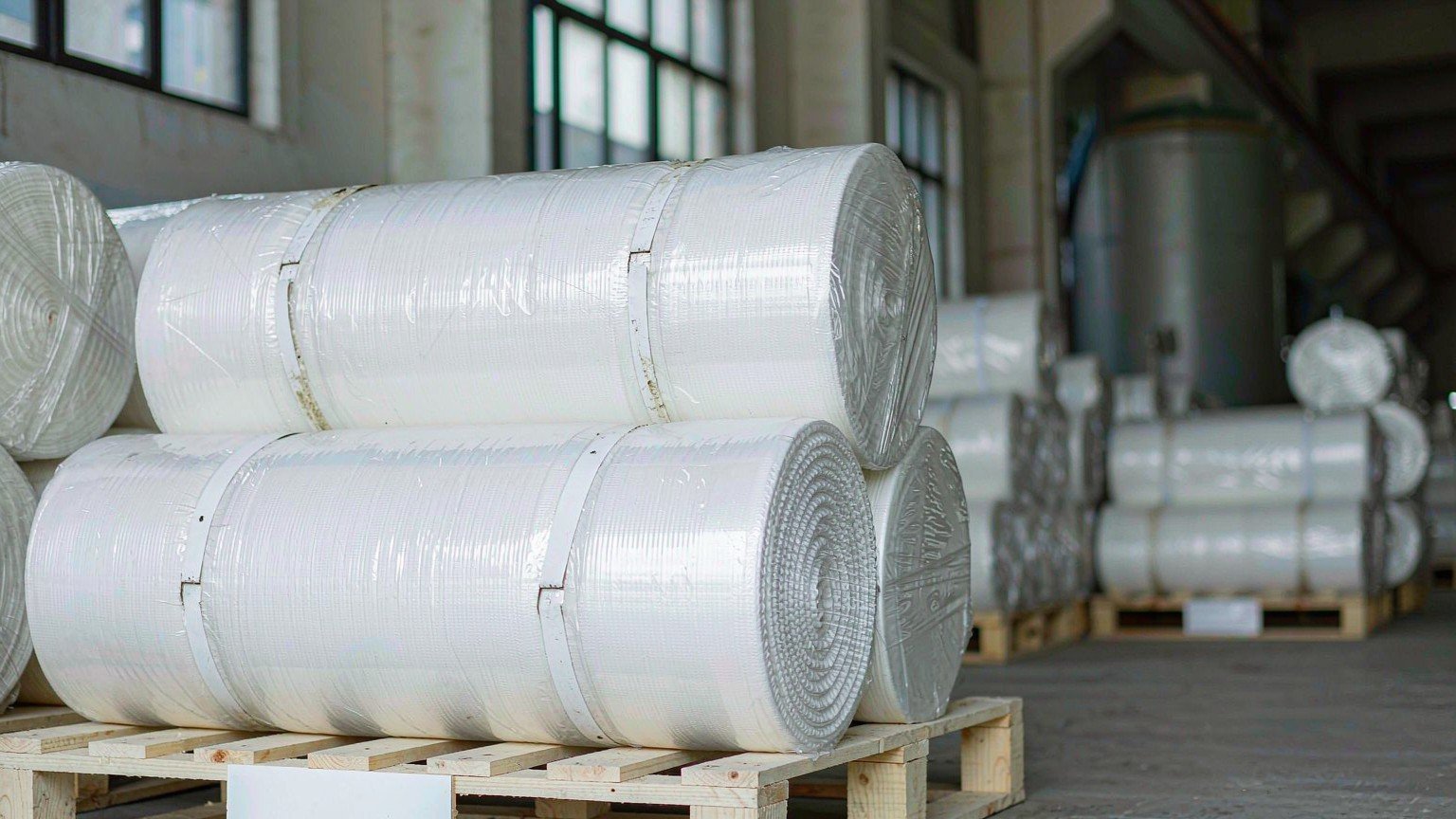
If you want to compare this against supplier behaviour rather than fabric behaviour, our shortlist of bulk thobe fabric suppliers covers the vetting questions that separate a mill from a trader.
What Does Opacity Cost per Meter?
The opacity upgrade is small against the cost of a claim: raising a white thobe cloth from an open 105 GSM to an opaque 130 GSM adds roughly $0.12 to $0.29 per meter, which is $0.46 to $1.10 per finished thobe at a 3.8 meter consumption.
| Quality | GSM / construction | Price per meter | Opacity | Best for |
|---|---|---|---|---|
| Light summer | 100–110, 90 × 58 | $0.76–0.88 | 86–89% | Lined kandura, budget retail |
| Standard opaque | 125–135, 110 × 70 | $0.88–1.05 | 92–94% | Daily Saudi and Emirati white |
| Formal opaque | 140–155, 120 × 76 | $1.05–1.25 | 94–96% | Eid, wedding, ceremonial |
| Textured opaque | 150–170, dobby 120 × 76 | $1.15–1.45 | 94–96% | Self-stripe and jacquard programmes |
Set that against the arithmetic of a complaint. A 3,000 piece order at 3.8 meters per thobe uses 11,400 meters; the $0.15 per meter opacity upgrade costs $1,710, while a single rejected container or a 3 percent replacement run costs several times more once air freight and re-cutting are counted.
Our current price bands by construction are published in the polyester thobe fabric price guide if you need the per-meter structure behind these figures.
How Do You Verify White Thobe Fabric Opacity Before Bulk?
Verify in three stages — swatch, pilot, and bulk — and make the light-box check part of the bulk inspection rather than an extra step at the end.
The sequence we run with buyers placing a first order:
- Swatch stage. Send 30 × 30 cm pieces of the two or three candidate constructions, one layer each, with the measured contrast ratio printed on the card.
- Pilot stage. Weave 300 to 500 meters at the final sett, wash five swatches to ISO 6330, and re-measure opacity after wash.
- Bulk stage. Inspect 10 percent of rolls on a light table at 1,000 lux, with a 4-point system and a pick-density count every 20 meters to catch tension drift.
Where opacity fails on bulk, the cause is usually visible at inspection as density banding rather than as a uniform drop, and that is a loom or tension problem that should be corrected in the weaving shed rather than compensated in finishing.
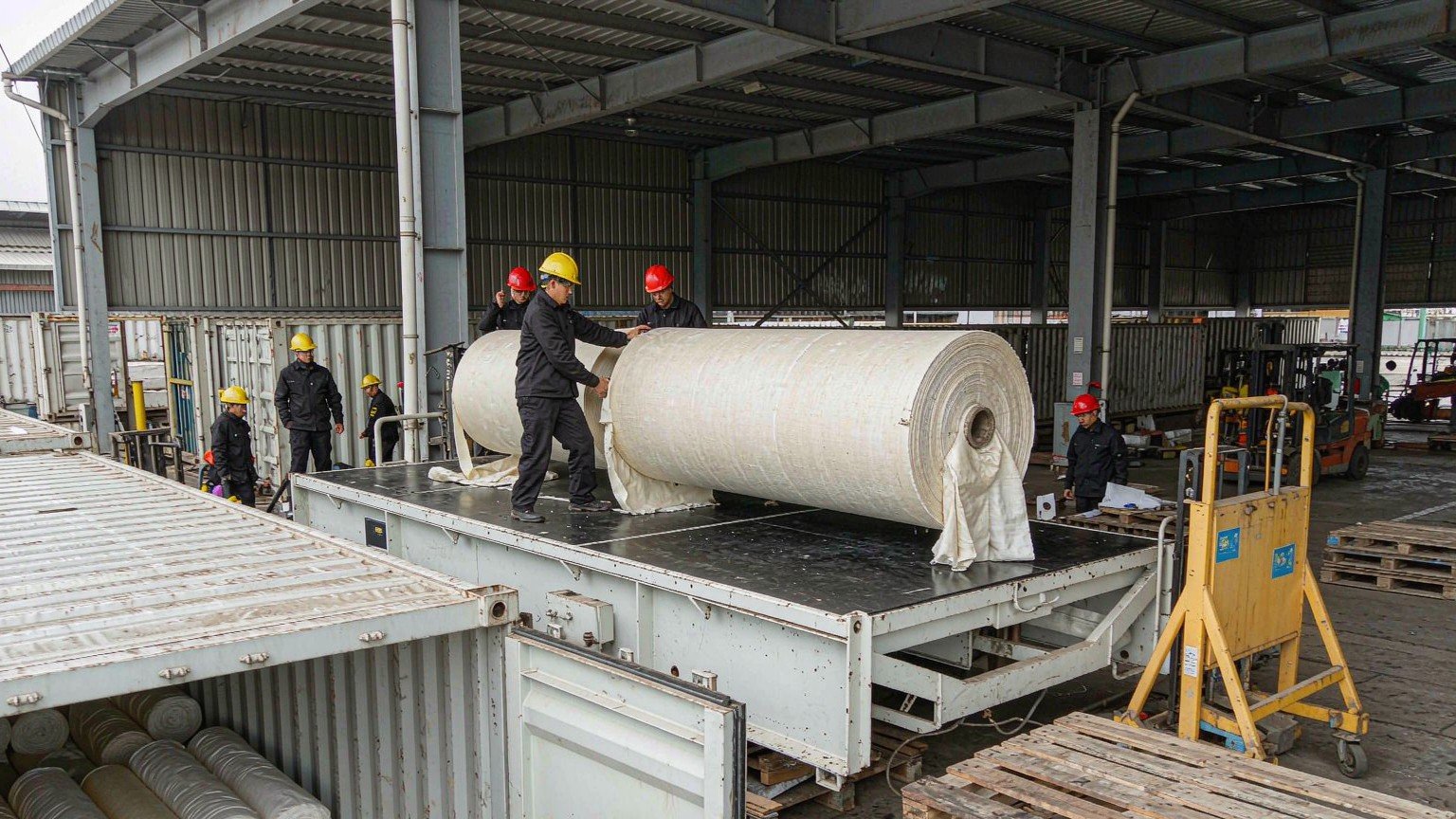
Getting White Thobe Fabric Opacity Right the First Time
The whole subject comes down to three numbers written into a purchase order: 125 to 135 GSM as the floor for Gulf daylight, 110 × 70 or denser as the sett, and 93 percent or higher as the ISO 2471 contrast ratio.
Buyers who specify all three stop arguing about transparency and start arguing about price, which is a better conversation to have.
If you are building a white thobe programme for Saudi Arabia, the UAE, Kuwait or Qatar and want the opacity of your own construction measured rather than estimated, send us the GSM, the ends and picks, and the yarn you have in mind. We will run the light-box and spectrophotometer checks on a woven sample and ship the swatches with the figures attached.
Request a quote or a swatch set and tell us the market and the season you are buying for — the answers differ between a Riyadh summer and a Kuwait winter programme.
Frequently Asked Questions
What GSM should white thobe fabric be to avoid being see-through?
For a Saudi or Emirati white thobe worn in direct sun, 125 to 135 GSM in a plain weave is the practical floor for daily wear, and 140 to 160 GSM is the safe band for formal and ceremonial pieces. Below 120 GSM the cloth only holds up when the construction is unusually dense or the garment is lined. A 100 to 110 GSM summer quality can reach acceptable cover if it is built at 110 picks or more in a fine count, but it leaves very little margin, and most complaints we see from Jeddah and Riyadh buyers trace back to a first order placed at 105 to 115 GSM on an open construction.
Why does white thobe fabric look transparent in sunlight but fine indoors?
Because the light level is not comparable. A fabric showroom or office sits at roughly 300 to 500 lux, while midday sun in Riyadh or Dubai exceeds 100,000 lux, which is more than 200 times the indoor level. Transmission through the interstices of a woven cloth scales with the incident light, so a cloth that reads solid on a table can read transparent outdoors. Always judge white thobe fabric against a bright window, a light box or direct sun, never under showroom LEDs, and check the single-layer body panel rather than a folded edge where two layers overlap.
Does a higher thread count make white thobe fabric more opaque?
Thread count raises opacity only when the yarn count stays the same, because cover depends on how much of the surface the yarns physically occupy. A 130 by 85 cloth in a 45s count covers about 83 percent of the surface, while a 120 by 72 cloth in the same count covers about 81 percent and a 90 by 58 cloth only about 67 percent. If a mill raises thread count by moving to a much finer yarn, the interstitial gaps stay large and opacity barely moves. That is why buyers should specify ends per inch, picks per inch and the yarn count together, not thread count alone.
How do I test white thobe fabric opacity before ordering bulk?
Three tests, in order. First, the window test: hold a single layer of the swatch against bright daylight and look for the outline of your hand; if you can read the shadow, the cloth is too open for a white thobe. Second, the instrument test: ask for ISO 2471 contrast ratio, where the target for white robe cloth is 93 percent or above, and 95 percent for premium programmes. Third, the proxy test: request ISO 9237 air permeability, which normally reads 100 to 160 mm per second for opaque 125 to 140 GSM qualities and rises above 180 mm per second on open, see-through qualities.
Is 100 percent polyester or a polyester-viscose blend more opaque in white?
At the same GSM and the same thread count, a 100 percent polyester filament quality is usually the more opaque of the two, because filament yarns are uniform in diameter and pack tightly, while viscose staple yarns are hairier and bulkier and force the mill to open the sett. Viscose-rich blends do give a softer, more liquid drape and a warmer hand, and they dye to a softer white. If a buyer wants the P/V look in a white thobe, we normally recommend 65/35 at 135 to 150 GSM rather than dropping to 120 GSM, because the viscose blend at low weight is where transparency complaints cluster.
Can optical brighteners make thin white thobe fabric look thicker?
No, and this is the most expensive misunderstanding in the white thobe trade. Optical brighteners raise reflectance in the blue end of the spectrum, so L-star and the visual impression of whiteness climb, but the ISO 2471 contrast ratio barely moves because brighteners do not block light, they re-emit it. Over-brightened cloth also develops a violet cast under warm indoor light and can look thinner under desert sun. What does raise opacity is a semi-dull yarn with titanium dioxide delustrant, which scatters light inside the filament, plus a tighter sett, plus a light calender.