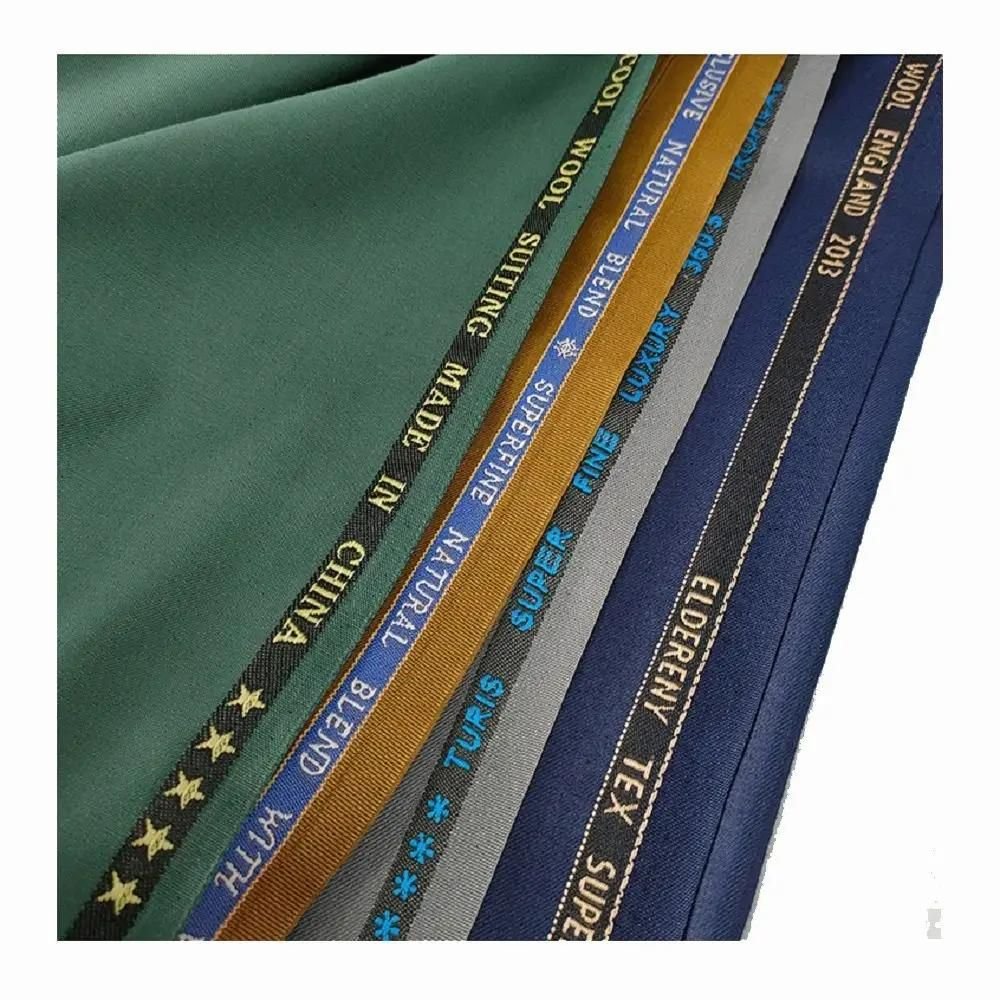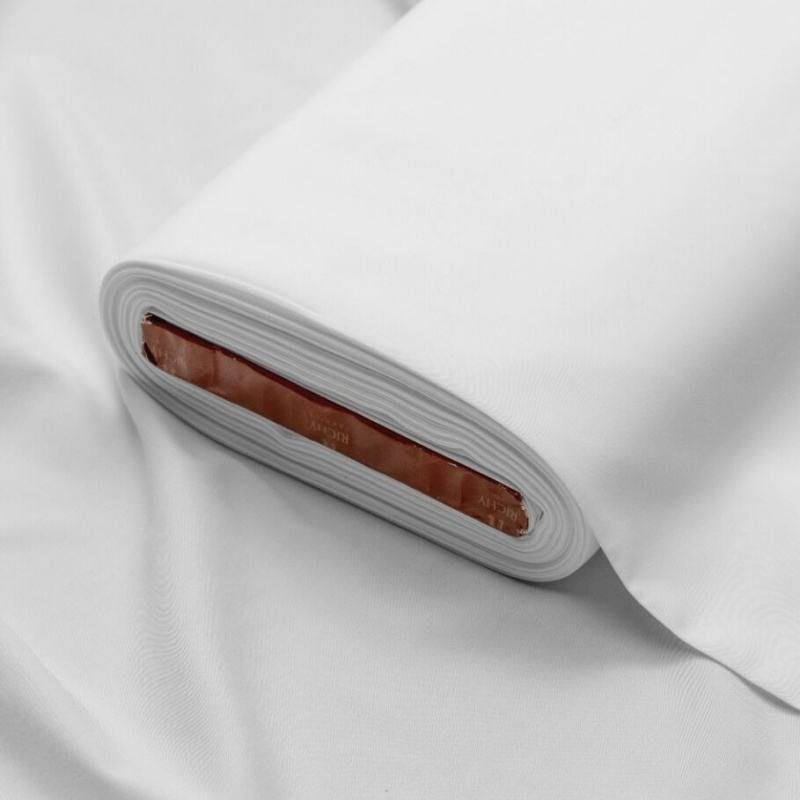
The Emirati kandura is sewn from lightweight woven white fabric, and the practical range for UAE garment factories runs from 100 percent cotton and TC cotton-polyester blends at 110-150 GSM for daily summer wear to premium Japanese-standard polyester and TR fabrics at 150-220 GSM for formal and winter garments. If you supply UAE retail brands, uniform programmes or wholesale kandura lines, matching the fabric to the season and the end use decides whether your garment feels right to the Emirati customer. We have exported white shirting for kanduras and thobes to the UAE for ten years, and this guide explains the fabric options, the whiteness standards UAE buyers expect, and how to order from a mill that can hold the same shade roll after roll.
Why the Kandura Needs Its Own Fabric Specification
The kandura looks like a simple white robe, but its fabric spec is different from an ordinary shirt because the garment is long, collarless, worn next to the skin in extreme heat, and judged on whiteness and drape before anything else. A UAE buyer evaluating a kandura checks three things in the first seconds: how white the cloth is, how it falls, and how it feels against the neck and arms. That means the fabric decision is not a minor trim choice — it sets the perceived quality of the whole garment.
Two characteristics of the Emirati kandura shape the fabric choice:
- Length and width. A kandura is a full-length garment, so factories normally use shirting-width cloth of about 150 cm and cut roughly 2.5 to 3 meters per adult garment. Width consistency matters as much as the fibre because cutting errors waste expensive white cloth.
- Collarless construction and the tarboosh tassel. Because there is no structured collar, the fabric edge at the neck is visible and must be clean, soft and dimensionally stable. The traditional tassel (tarboosh) is attached at the chest, so the cloth around it must not pucker after washing.
This is why our advice to UAE garment makers is always the same: choose the fabric for the finished kandura, not for a generic “white shirt” programme, and put the whiteness and drape requirements in writing before sampling.
The Main Kandura Fabric Options Compared
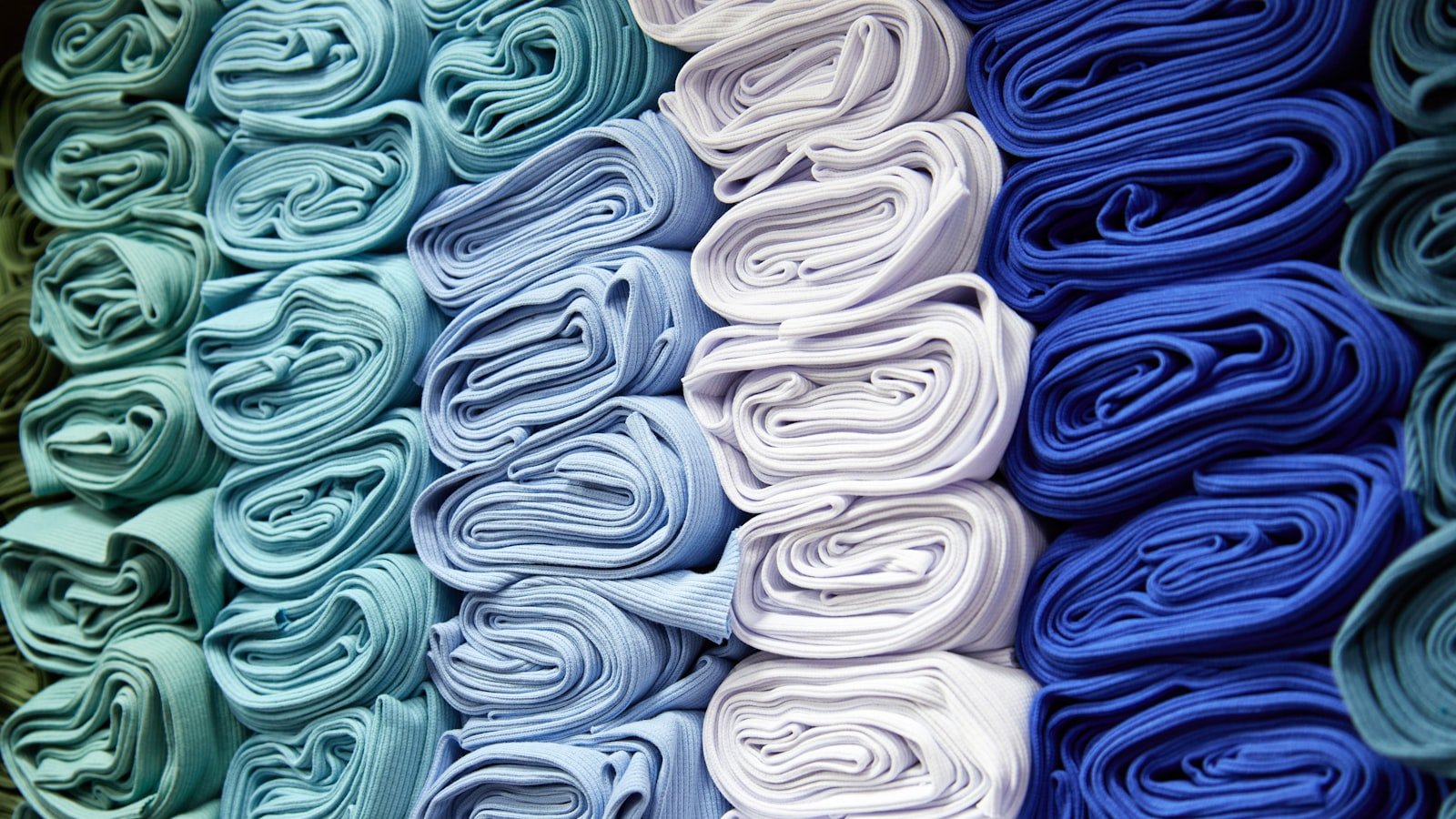
Four fabric families cover nearly all kandura production in the UAE: 100 percent cotton for daily and premium wear, TC cotton-polyester for easy-care everyday garments, TR and micro polyester for office and formal wear, and premium Japanese-standard polyester for occasions. Each has a different balance of breathability, whiteness retention, drape and cost.
| Fabric | Composition | Typical GSM | Best use | Key benefit | Main trade-off |
|---|---|---|---|---|---|
| 100% cotton | Cotton, often combed | 120-160 | Daily wear, premium lines | Breathable, natural comfort | Needs ironing, shrinks if not pre-shrunk |
| TC cotton-polyester | 65/35 or 80/20 | 120-160 | Uniforms, everyday | Easy care, fewer wrinkles | Less breathable than pure cotton |
| TR polyester-viscose | 60-80% polyester / viscose | 130-180 | Office, formal | Soft drape, elegant surface | Weaker when wet, care sensitive |
| Micro polyester | 100% polyester micro | 100-140 | Summer office wear | Very light, wrinkle-free | Less absorbent in humidity |
| Japanese-standard poly | 100% polyester, premium | 120-180 | Events, official occasions | Crisp, silky, holds whiteness | Higher price |
The table is the starting map we use when a UAE customer says “I need white kandura fabric.” The next three questions never change: what season, what end use, and what whiteness level does the brand promise.
Kandura Fabric Weight: GSM by Season and End Use
Kandura fabric weight should be matched to the season and the setting: 110-140 GSM for summer and daily wear, 150-220 GSM for winter, formal and premium garments, with heavier cloth reserved for structured event pieces. In the UAE the practical distinction is less about temperature extremes and more about where the kandura is worn:
| End use | Recommended GSM | Fabric guidance |
|---|---|---|
| Summer daily wear | 110-140 | Cotton voile, fine cotton or light TC; maximum breathability |
| Air-conditioned office | 120-160 | TC blends or micro polyester; easy care, good whiteness |
| Winter daily wear | 150-200 | Heavier cotton or TR; comfortable in cooler months |
| Formal / event / gala | 160-220 | Premium polyester or jacquard; structured drape, crisp surface |
| Religious occasions (Eid, Friday prayers) | 130-180 | Cotton or premium poly; bright white, comfortable |
Weight drives price and sewing behaviour more than any other variable. Heavier cloth needs stronger seams and different needles, so a factory should confirm the GSM with its production team before cutting a range, not after receiving the goods.
Whiteness: The Standard UAE Buyers Judge First
Whiteness is a specification, not a feeling: for white kandura fabric buyers should define the shade target, the optical brightening level and the yellowing resistance, and mills should prove them with a swatch and test report before bulk. In the Gulf market “white” covers several distinct shades, from a cool bright white with a blue cast to a warm natural white. The most popular kandura white is a bright, clean shade with high reflectance, because it photographs as crisp and premium.
Practical whiteness points to agree with your supplier:
- Shade reference. Ask for a shade band or a standard such as a specified whiteness index, and keep a master swatch for comparison against production.
- Optical brightening agents (OBA). OBAs make white look brighter, but they can yellow with age or heat. Decide with the buyer how much brightener is acceptable.
- Yellowing resistance. Test for yellowing after washing and after storage in warm humid warehouses, a common problem for UAE stock.
- Batch consistency. Reorders must match the original shade, which is why a mill with controlled dyeing and finishing matters for repeat programmes.
If you have not thought about whiteness in these terms before, this is the single most valuable upgrade you can make to a kandura line — brands feel the difference immediately.
Cotton vs Polyester for Kandura: What UAE Buyers Choose
Cotton wins on comfort and tradition, polyester wins on easy care and durability, and TC blends capture most of the practical middle ground, so the best choice depends on the brand position and price point. Our experience with UAE retail and uniform buyers:
- Premium and traditional lines usually use 100 percent cotton or cotton-rich blends. Emirati customers know cotton, and brands use it to signal quality.
- Uniform and corporate programmes overwhelmingly choose TC or micro polyester because they stay white and smooth with minimal ironing across many washes.
- Formal and event kanduras favour TR or Japanese-standard polyester for the smooth, elegant drape that photographs well for weddings and official occasions.
A useful test is to sew the same pattern in cotton and in the synthetic candidate and compare after five washes: the cotton will soften and crease, the synthetic will stay crisp, and the decision usually makes itself.
How UAE Factories and Wholesalers Should Buy Kandura Fabric
For volume, UAE garment factories and wholesalers get the best combination of price, whiteness control and customisation by buying factory-direct from a verified China mill rather than through local traders, but small and urgent orders belong with local distributors. The UAE market is served by wholesalers in Dubai and Abu Dhabi who hold stock and deliver in days, and by China mills that sell direct with FOB pricing from about $0.76 to $1.80 per meter depending on construction.
The economics are simple:
- Local UAE distributor: fast delivery, low minimums, but landed cost plus a 10-25 percent markup or more.
- China factory direct: the cheapest source above the factory MOQ of roughly 2,000-3,000 meters per colour, with full control over whiteness, width and finishing. Production takes 15-35 days plus 18-25 days sea freight to Jebel Ali, so order 6-8 weeks ahead of your season.
For a deeper comparison of these supply routes, our guide to thobe fabric suppliers in Saudi Arabia and the Gulf explains the local-versus-direct decision in detail, and our wholesale online ordering page covers the full price, MOQ, payment and sample terms we offer UAE importers.
A Practical Kandura Fabric Ordering Checklist
A professional kandura fabric order is a written specification followed by samples, test reports and a signed bulk contract — not a phone call. The checklist we give every UAE customer:
- Construction and width — plain or twill, finished width (typically 150 cm for kandura cutting).
- Fibre content — exact percentages, e.g. 100% cotton or 65/35 TC.
- Finished GSM — measured after finishing, ideally on a GSM cutter.
- Whiteness target — shade reference plus OBA and yellowing limits.
- Shrinkage and colour fastness — written targets with ISO test reports.
- Finish — easy-care, anti-wrinkle or soft-touch finish where required.
- A physical swatch — 1-3 meters per colourway to match against bulk delivery.
Send these seven points to the mill and you remove most of the risk from a first kandura order.
FAQ: Kandura Fabric Buying Guide
- What fabric is used for a kandura? Lightweight woven white fabric: 100% cotton, TC cotton-polyester blends, TR and micro polyester, and premium Japanese-standard polyester, chosen by season and end use.
- What is the best fabric for a kandura in summer? Breathable 110-140 GSM cloth — cotton voile or fine combed cotton for daily wear, TC blends when easy care matters.
- Is kandura fabric different from thobe fabric? They are the same woven white shirting family; the differences are cultural and practical (collarless cut, tassel, drape and whiteness preferences), so brief the mill on the finished garment.
- How much does kandura fabric cost per meter? Roughly $0.76-$1.10 for entry micro polyester, $0.98-$1.50 for TC and TR, and $1.20-$1.80 for premium Japanese-standard and jacquard FOB China.
- How do I order white kandura fabric from a China factory? Specify construction, GSM, width and whiteness, approve pre-production samples, sign a proforma invoice on T/T or L/C terms, then run production with inspection and shipping to Jebel Ali.
The kandura market rewards factories that treat fabric as a specification: match GSM to the season, define whiteness precisely, and buy direct once your volume crosses the mill MOQ. Tell our export team your target garment, season and volume through the contact page and we will send swatches and a written quotation for your white kandura programme.
Frequently Asked Questions
What fabric is used for a kandura?
The kandura is traditionally sewn from lightweight, breathable woven white fabric. In the UAE market today the most common choices are 100 percent cotton for daily and premium wear, cotton-polyester TC blends at around 65/35 or 80/20 for easy-care everyday garments, and polyester or TR polyester-viscose fabrics for formal and event kanduras that need a smooth drape and wrinkle resistance. Premium Japanese-standard polyester is popular for gala and official occasions because it keeps a crisp, silky surface all day. Summer kanduras typically use 110-140 GSM cloth while winter and formal versions run 150-220 GSM. A UAE garment factory choosing between these should weigh breathability and whiteness against easy care and cost, because the same cut looks different in cotton than in polyester.
What is the best fabric for a kandura in summer?
For UAE summer heat the best kandura fabrics are breathable, lightweight woven cloths around 110-140 GSM. Cotton voile and fine combed cotton are the traditional choice because they absorb moisture and let air move, and many Emirati men prefer cotton for daily wear. TC cotton-polyester blends at 65/35 are a practical alternative when buyers want less ironing with most of cottons comfort. On the synthetic side, lightweight micro polyester and TR fabrics are widely used for office and formal kanduras because they stay smooth and hold whiteness, though they trap more heat than cotton in extreme humidity. Our factory recommendation for a hot-weather daily kandura programme is 100 percent cotton or a cotton-rich TC at 120-140 GSM, with easy-care blends reserved for garments that are worn mainly in air-conditioned settings.
Is kandura fabric different from thobe fabric?
Kandura fabric and thobe fabric are technically the same product family of white woven shirting, and many mills weave one range for both garments. The differences that matter are cultural and practical rather than structural. The Emirati kandura is collarless, often finished with a tassel called a tarboosh, and cut in a relaxed straight silhouette, while the Saudi thobe typically has a shirt collar and a slightly more fitted body. Because both garments are long and worn against the skin in the same Gulf climate, they use similar lightweight white cloth, but UAE garment factories sometimes order slightly different widths, stiffness and whiteness levels depending on their pattern. When you brief a fabric mill, describe the final garment rather than just the name so the supplier recommends the right drape and finish.
How much does kandura fabric cost per meter?
Kandura fabric prices from a China factory-direct mill currently range from about $0.76 to $1.10 per meter for entry spun-polyester micro, $0.98 to $1.50 for TC cotton-polyester blends and TR polyester-viscose, and $1.20 to $1.80 for premium Japanese-standard and jacquard constructions. The price depends on fibre content, GSM, width and finishing; plain cotton and basic blends sit at the lower end while high-count cotton and premium polyester sit higher. A UAE wholesaler or garment factory ordering more than about 2,000-3,000 meters per colour pays the factory price, whereas small orders through a local Dubai or Abu Dhabi distributor carry a markup of 10 to 25 percent or more. The best way to compare is to request FOB quotes on an identical written specification rather than comparing headline numbers.
How do I order white kandura fabric from a China factory?
Ordering white kandura fabric from a China factory follows a standard four-step process. First, send your specification: construction, fibre content, GSM, width, whiteness target and quantity. Second, request pre-production samples so you can approve the hand feel, shade and drape against your garment pattern. Third, confirm the bulk order with a proforma invoice stating price, MOQ, payment terms and delivery date; factories typically work on T/T with a 30 percent deposit and 70 percent against shipping documents, or L/C at sight for larger contracts. Fourth, arrange production, inspection and shipping, normally 15-35 days of production plus 18-25 days of sea freight to Jebel Ali. Ask for shade-band samples and a whiteness reference before bulk so the delivered rolls match your approved standard.