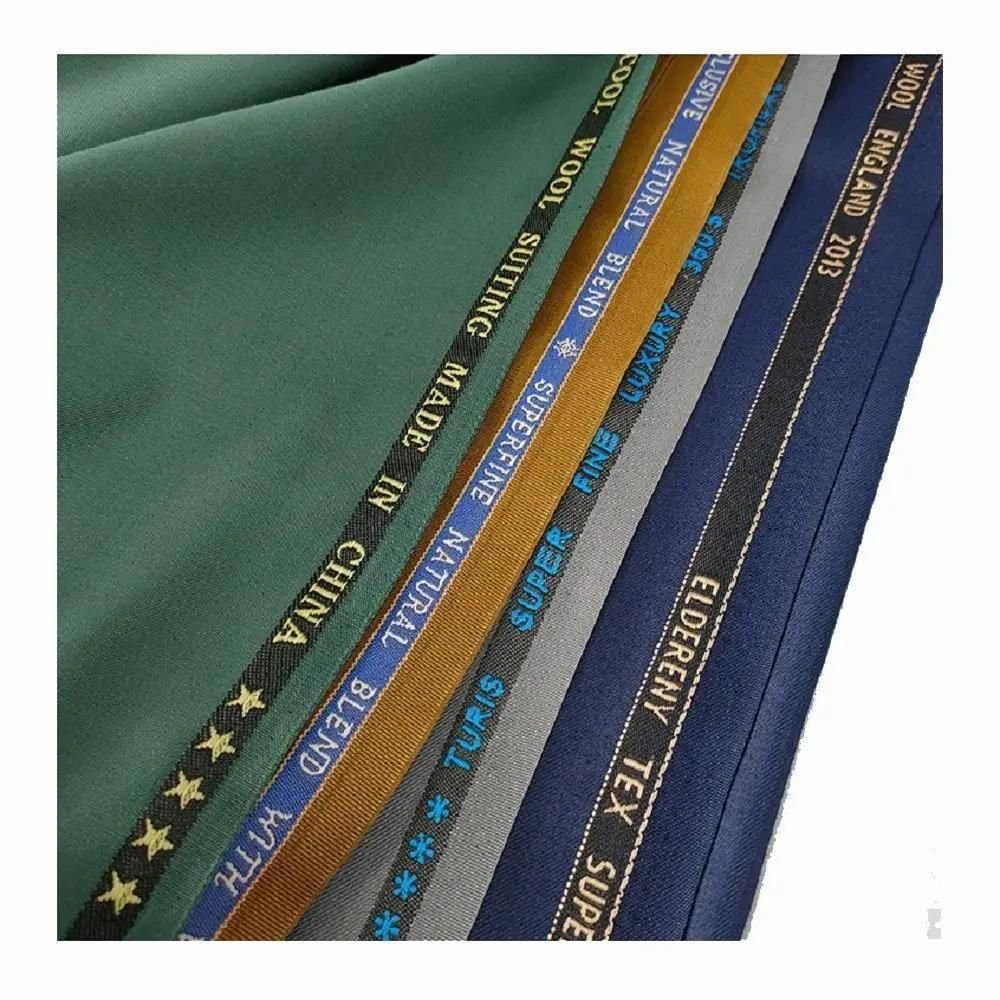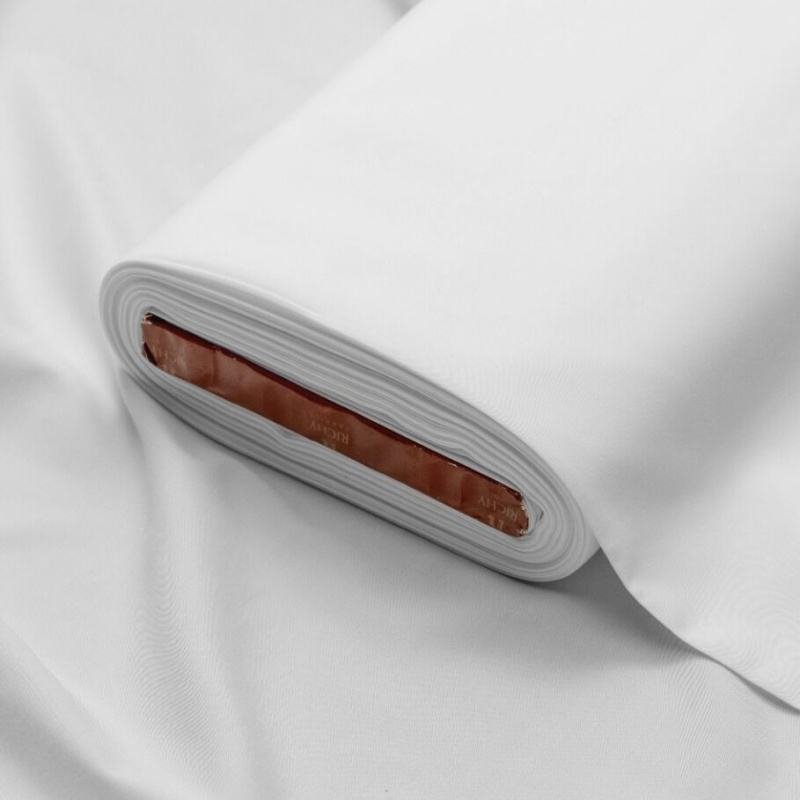
The Short Answer: Thobe Fabric Shade Variation Is a Tolerance You Write Down
Thobe fabric shade variation is the measured colour difference between two production lots of the same white or dyed robe cloth, and it is controlled by putting a ΔE CMC limit, a D65 viewing condition and a shade-band rule on the purchase order rather than by asking a mill to match the last order.
Two lots of the same construction, the same 130 GSM, the same 150 cm width, dyed to the same recipe, will still differ. That is normal textile behaviour, not a fault.
What is not normal is discovering it after 40,000 metres have gone through the cutting room.
We have shipped white, beige, grey and navy robe cloth into Riyadh, Jeddah, Dammam, Dubai, Kuwait City, Doha and Manama for more than ten years. The complaint that comes back most often is not pilling and not shrinkage. It is: this roll does not match the one I bought in March.
Why Two Lots of the Same Thobe Cloth Never Match Exactly
Shade drift comes from six variables in the finishing line rather than from the dye formula, and five of them sit under the mill’s control.
Buyers tend to assume the recipe is the variable. In a modern dyehouse the recipe repeats closely, and the drift creeps in elsewhere:
- Optical brightener dose. White thobe cloth is not bleached to white; it is bleached and then optically whitened. A 0.2 g/L shift in the pad bath moves CIE whiteness by two to four points.
- Stenter and calender temperature. Every 5 °C on the stenter changes how polyester surface reflects light, and a different calender bowl pressure changes it again.
- Bath pH and water hardness. A 0.2 pH drift moves reactive and disperse shades by 0.3 to 0.8 ΔE, and hardness above 150 ppm dulls the ground.
- Yarn lot and delustrant. Semi-dull polyester carries titanium dioxide; a different TiO2 level between yarn lots scatters light differently before the cloth is dyed.
- Resin and softener add-on. A cross-linking resin at higher wet pick-up pulls L down and b up, so the cloth reads creamier.
- Lot size. A 600 m lot and an 1,800 m lot do not behave the same in the same machine, because bath ratio and dwell time differ.
None of these is a defect. Each one is a number that can be specified, which is the whole point of writing a shade clause instead of exchanging adjectives.
The Five Numbers That Belong on the Purchase Order
A thobe order that names five values — ΔE CMC, CIE L, b, whiteness index and shade band count — removes most shade arguments before the first metre is woven.
| Value | Test method | What to write on the PO | Typical robe cloth |
|---|---|---|---|
| Colour difference to sealed standard | ISO 105-J03, ΔE CMC(2:1) | ≤ 1.0 on optical white and pale beige; ≤ 1.5 on grey, navy, olive | 0.5–0.9 inside one lot |
| Lightness | CIE L*, D65, 10° observer | White 92.5–94.5, lot-to-lot drift ≤ 0.5 | 93.2–94.0 |
| Yellowness | CIE b* | White −1.5 to +1.0, drift ≤ 0.5 | −0.8 to +0.4 |
| Whiteness index | CIE WI, ISO 105-J02 | ≥ 145 for retail white, ≥ 155 for premium | 148–160 |
| Shade bands per order | Visual grading to a physical band | One band under 3,000 m, maximum two above | 1–2 |
Most buyers stop at colour difference and count the job done. One number is not enough.
Two lots can both sit at ΔE 0.8 and still be separated by a visible yellowness step, because the difference calculation averages a drift in one direction against a drift in another. Lightness and b* catch that, and whiteness index catches the brightener drift that all three miss.
Where Variation Hides Inside a Single Roll
A lot is consistent against the standard but not uniform across its own length and width, and that is the variation a cutting room actually meets.
Three patterns turn up on the inspection table:
- End-to-end shading. The first 20 m and the last 20 m of a 1,200 m lot can sit 0.4 ΔE apart, because the pad bath depletes and the stenter cools at the ends of the run.
- Side-to-side shading. Selvedge against centre can differ visibly on a wide stenter when the pin chains and the weft straightener are not trimmed together.
- Face direction. Calendered and brushed cloth has a direction; panels cut the opposite way read as two shades under shop lighting.
The place this becomes a complaint is the seam. A sleeve cut from the end of a roll and a body cut from the start of the same roll look fine on the table and wrong once the seam puts them edge to edge.
There is no way to eliminate it. There is a way to grade it: measure every roll, group rolls into shade bands, print the band on the roll ticket, and instruct the cutting room to lay one band at a time.
How Much Cloth Fits in One Dye Lot
On 130 GSM robe cloth at 150 cm width, one production lot normally runs 1,200 to 1,800 m, so a 20,000 m programme is twelve to sixteen lots whether anyone mentions it or not.
| Order quantity | Lots at 1,500 m | Practical consequence |
|---|---|---|
| 1,000 m | 1 | One lot, one band, no risk |
| 3,000 m | 2 | Ask for both lots inside the same band |
| 10,000 m | 6–7 | Reserve a parent lot and draw from it |
| 20,000 m+ | 12–16 | Split delivery by lot, one band per pallet |
The number that saves a programme is the parent lot. A mill holding 3,000 m of the original run can supply a mid-season top-up from that run instead of dyeing a new one.
Ask for it in writing, with a storage period and a note on who pays if the reserve is never called off.
Approving a Lab Dip So That It Holds
A lab dip is only a standard if it is approved on the finished cloth, measured instrumentally, and kept sealed in three places.
The sequence we run with buyers:
- Dip on the production construction, then finish it through the same stenter and calender route as bulk, because an uncalendered dip matches nothing.
- Measure L, a and b* and record the values beside the signature; a signature without numbers cannot be rechecked a season later.
- View under D65 at 45/0 geometry, then again under a warm shop illuminant to catch metamerism.
- Have three people judge it, because individual colour vision varies more than most buyers expect.
- Keep a sealed 10 cm square with the mill, the buyer and the cutting room, retained for the life of the programme plus one year.
Where a buyer cannot travel to sign, courier three dyed samples from the same bath and approve one of them in writing.
Shade Sorting, Roll Tickets and Packing
Shade sorting decides whether a programme runs smoothly, and it costs nothing when it is agreed before the order instead of after the claim.
What to put in the packing clause:
- Every roll carries its lot number and shade band on the ticket.
- The packing list states band and lot for each roll, not only a total quantity.
- One band per pallet, or bands separated with a marker layer.
- Roll ends flagged where the end-to-end difference exceeds 0.3 ΔE, so the cutting room trims before laying.
- A 5 m retained sample per lot, held for twelve months.
Most mills can do all five. Very few do them unless the order asks.
What a Mismatched Lot Costs at the Cutting Table
A mismatch that forces separate cutting costs far more than the fabric, and the arithmetic is easy to run before the order goes out.
Take a 20,000 m white programme at USD 0.95 per metre. If 15 percent of the cloth has to be cut as a separate band, with its own marker, its own bundle tickets and an extra 3 percent consumption on that portion, the added cost lands somewhere between USD 900 and USD 1,400 across the run.
If the mismatch is found after the shirts are sewn, the loss is not cloth, it is garments.
Against that, reserving a parent lot and paying for graded rolls adds roughly USD 0.01 to 0.02 per metre, which on 20,000 m is USD 200 to 400. The cheapest option is the one that gets written into the order.
How We Handle Repeat Orders on Robe Cloth
On repeat white and beige programmes we reserve the parent lot, re-approve the first lot of every campaign, and ship by shade band.
Our own practice:
- A 5 m retained sample and a sealed swatch from every lot, held for twelve months.
- Brightener dosing logged per lot, so a whiteness drift can be traced to the pad bath instead of guessed at.
- The first lot of each campaign measured against the buyer’s sealed standard before shipment, with L, b and whiteness figures sent inside the documents.
- A pre-shipment shade report on request, free on the first lot of a season.
That is the practical difference between a supplier who sends cloth and a supplier who sends cloth a cutting room can run without questions.
Five Questions to Ask Before a Repeat Order
Shade problems are almost always set up at the reorder, months before they appear. These five questions map the risk in a single email:
- Will this order use the same lot as the last one, and if not, what is the lot range?
- What are the measured L, b and whiteness values of the new lot against my sealed standard?
- How many lots will the order be split into, and can they all sit inside one band?
- Will graded rolls be marked on the ticket and stated on the packing list?
- What happens if a roll fails the tolerance — replacement, credit, or a second-grade price?
A supplier who answers all five in writing is telling you what their line can actually hold.
Why Optical White Is Harder to Match Than Grey or Navy
White is the hardest shade in the thobe range because it has no dye to hide behind, and every optical effect on the cloth shows directly as a visible step.
A mid-grey or a navy carries enough depth to mask a 0.5 ΔE drift. Optical white does not, for three reasons:
- Brightener saturation. White sits near the top of the lightness scale, where small additions of optical brightener produce large visible jumps rather than gradual change.
- No hue to average. In dyed shades, a drift in one direction is partly countered by the other coordinates; on white, the yellowness axis is the only signal and it reads immediately.
- Lighting dependence. Brightener fluorescence depends on the UV content of the light source. A white that matches under D65 can step apart under warm shop lighting, which is where the customer sees it.
This is why the whiteness figure and the yellowness figure matter more on white programmes than the difference figure alone.
What This Means for Your Next Reorder
Shade variation cannot be removed from textile production. What can be removed is the argument about it, by replacing adjectives with numbers: difference against a sealed standard, lightness and yellowness for white, a whiteness floor, a band count and a lot reserve.
Those five lines turn a subjective conversation into a pass or fail, and they cost nothing at the quotation stage.
For a buyer building a 2027 white programme, the sequence is short: seal a standard, write the numbers, reserve the lot, grade the rolls, keep the samples.
If you are running white, beige or grey robe cloth and want to see what lot-to-lot data looks like on your own construction, send us the GSM, the width and the shade reference. We will send back the measured colour difference, lightness and whiteness spread across our last three lots of that quality, plus a graded swatch set so your own inspection can confirm it.
Request a quote or a graded swatch set with the market, the season and the shade you need — a Riyadh summer white and a Kuwait winter cream do not carry the same tolerance.
Before the order ships, the pre-bulk quality checks we run on thobe fabric cover the rest of the inspection list, and the bulk supplier shortlist guide sets out what to verify before you commit a season to one mill. If the white also has to survive pressing, the calendering guide explains why the finish changes the reading.
Frequently Asked Questions
What causes shade variation between thobe fabric orders?
Six variables move the shade, and only one of them is the dye recipe. Optical brightener dose on white cloth, stenter and calender temperature, dye bath pH and water hardness, the titanium dioxide level in different polyester yarn lots, resin and softener add-on, and the size of the lot all shift the finished colour. A 0.2 g/L change in optical brightener moves CIE whiteness by two to four points, which is visible beside a roll from an earlier campaign. None of these is a defect. Each one can be measured and written into a purchase order as a tolerance rather than left as a verbal expectation.
What colour tolerance should I write for white thobe fabric?
Write four numbers, not one. Specify colour difference to a sealed standard at 1.0 or under using the CMC 2 to 1 formula, lightness between 92.5 and 94.5 with a lot to lot drift of no more than 0.5, yellowness between minus 1.5 and plus 1.0, and a CIE whiteness index of at least 145 for retail white or 155 for premium. Difference alone is not enough because two lots can sit at 0.8 and still be separated by a visible yellowness step, one bright blue white and the other cream. Lightness and yellowness catch that drift.
How many metres are in one dye lot of thobe fabric?
On 130 GSM robe cloth at 150 cm width, one production lot normally runs 1,200 to 1,800 metres, depending on the machine and the bath ratio. That means a 20,000 metre programme is twelve to sixteen lots whether the mill says so or not, and a 3,000 metre order is two lots. Ask for the lot count before the order is confirmed, ask for all lots to sit inside one shade band, and ask the mill to reserve a parent lot of 3,000 metres if the programme is likely to be topped up mid season.
Can a mill guarantee an exact shade match on a reorder?
No, and a supplier who promises it is describing complaint handling rather than dyeing. What a mill can do is re-dye to the same recipe, keep the optical brightener dosing log, hold a sealed retained sample of the previous lot, and measure the first lot of the new campaign against that sample before shipment. That turns a subjective argument into a pass or fail against an instrument reading. Buyers who need exact continuity should reserve a parent lot and draw from it, which costs roughly one to two cents per metre and removes the problem entirely.
How should shade be checked when thobe fabric arrives?
Check on receipt, not after cutting. Grade every roll against the sealed standard under D65 at 45 degree viewing, record the band on the roll ticket, and compare the roll ticket against the packing list. Flag any roll where the end to end difference exceeds 0.3 so your cutting room trims before laying. Then cut all panels of one garment from a single band, because a sleeve from the end of a roll beside a body from the start of the same roll looks wrong once the seam puts them edge to edge, even when both pass inspection on the table.