
To an outsider, the traditional white robes worn by men across the Arabian Peninsula might look identical. However, to a discerning local buyer, a clothing brand owner, or a textile wholesaler, the differences are monumental. The traditional garments—known as the Thobe in Saudi Arabia and the Kandura (or Dishdasha) in the United Arab Emirates—possess completely distinct structural designs, regional aesthetics, and functional requirements. For businesses importing wholesale Thobe fabrics, understanding these differences is crucial. Choosing the wrong fabric profile can mean the difference between a sold-out festive collection and dead stock. In this ultimate guide, we break down the definitive fabric requirements for Saudi and Emirati traditional wear to help you make informed bulk purchasing decisions.
Part 1: Saudi Thobe Fabric Requirements – Structure, Crispness, and Prestige
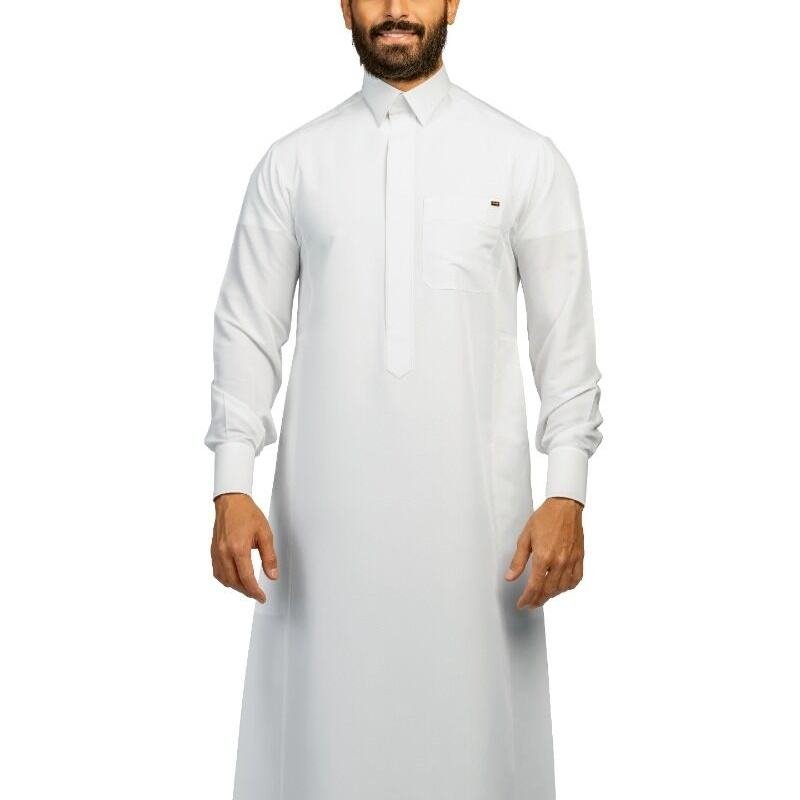
The hallmark of a premium Saudi Thobe is its immaculate, tailored silhouette. Unlike other regional styles, a classic Saudi Thobe is a highly structured garment featuring a stiff, stand-up collar (often with two buttons) and rigid cuffs resembling a Western dress shirt.
Because of this architectural design, Saudi Thobes require heavier, stable, and rigid fabrics that can hold a sharp iron crease and maintain a crisp, authoritative drape throughout the day.
Finishing: Hard-twist or high-twist yarns are highly sought after. This advanced weaving technique gives the cloth a “bone” texture (a firm, structured body) that resists collapsing even in high-humidity coastal areas like Jeddah.
Material Composition: The absolute market favorites are premium spun-polyester fabrics or high-grade Polyester-Viscose (PV) blends. The viscose content adds a natural, breathable hand-feel reminiscent of cotton, while the engineered polyester ensures the fabric remains completely wrinkle-free—a non-negotiable trait for Saudi professionals.
Weight Profile: Heavy to medium weight is key. The ideal range is between 180gsm and 220gsm.
Part 2: Emirati Kandura Fabric Requirements – Fluidity, Elegance, and Comfort
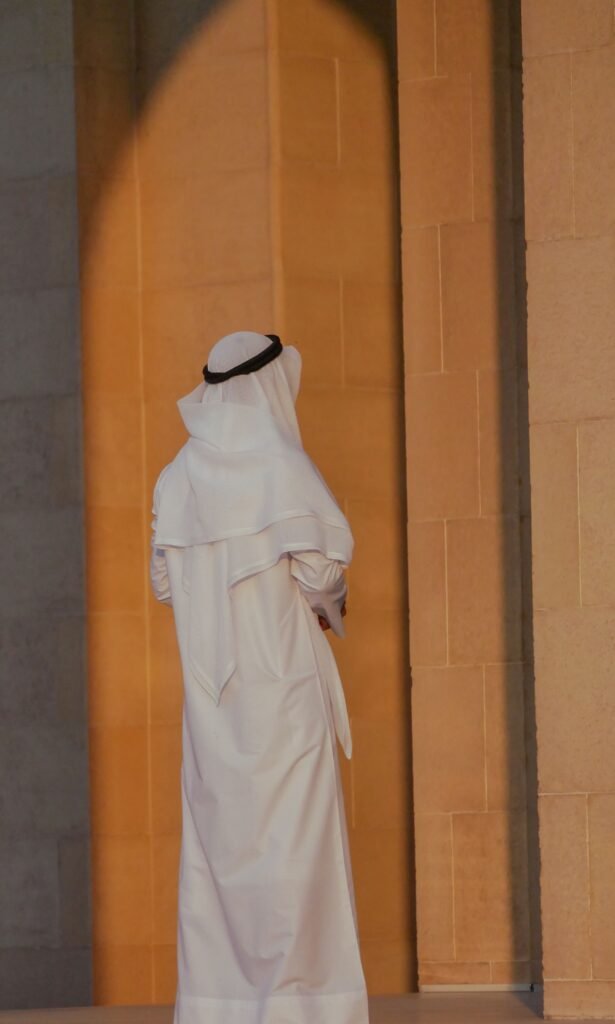
In stark contrast to the Saudi counterpart, the Emirati Kandura is celebrated for its minimalistic, flowing elegance. The Emirati style features a collarless neckline, often finished with a subtle round stitch, and a long, decorative woven tassel known as the Tarboosh hanging down the front.
Because it lacks internal stiffeners and heavy collars, the Emirati Kandura requires ultra-soft, fluid fabrics with maximum drape. The garment is meant to move gracefully with the wind, providing a cooling effect in the extreme UAE summer heat.
Finishing: Air-jet loom weaving and soft-silicon chemical finishing are applied to maximize the fluid “water-like” cascade of the fabric, ensuring the Tarboosh tassel rests beautifully against a completely smooth chest surface.
Material Composition: Premium filament polyester and silky microfiber synthetics dominate this segment. Importers consistently look for Japanese-Quality Filament Polyester, which is globally renowned for its milk-smooth texture, subtle matte luster, and lightweight breathability.
Weight Profile: Light to medium weight is preferred to achieve that floating aesthetic. The standard specification ranges strictly between 150gsm and 170gsm

Part 3: Color Differences That Bulk Buyers Must Know
It isn’t just the texture and weight that differ; color preferences vary significantly by geography.
- In Saudi Arabia: While Pure White (Optical White) remains the gold standard for formal and corporate attire, there is a booming demand for luxury “Nuanced Whites” during Ramadan and Eid. Wholesalers should stock up on Warm Cream, Light Ivory, and Off-White.
- In the UAE: The palette expands much quicker. While bright white is standard for summer, Emiratis frequently embrace darker tones, earthy hues, and pastels during winter or casual gatherings, including soft greys, olive greens, and desert sand tones.
Conclusion & Sourcing Action Plan
For textile business owners, tailors, and garment factories, success in the Middle Eastern market depends entirely on fabric specialization. Offering a stiff Saudi fabric to a Dubai brand, or a flimsy, ultra-light filament fabric to a Riyadh tailor will result in rejected samples.
At our factory, we manufacture and source premium, certified Thobe fabrics engineered specifically for both distinct markets. We eliminate the guesswork from your supply chain by providing consistent dye lots, flawless air-jet weaves, and full international compliance.
Ready to evaluate the quality for yourself? Don’t rely on digital screens. Contact our wholesale team today to request our Free Sample Folders. We will ship our latest fabric swatch catalogs directly to your doorstep in Riyadh, Jeddah, Dubai, or Doha, complete with detailed spec sheets and weight certifications.